

Pakistan is seeking a stable foothold in the Gulf
Through the Mecca Pact, Islamabad aims to turn military cooperation with Saudi Arabia and Turkey into political influence and industrial opportunities. However, the burden of debt, energy costs and economic dependence on the Gulf are limiting its room for manoeuvre
by Charlye Ghezzi
 Aggiungi Il Sole 24 Ore
ai preferiti su Google
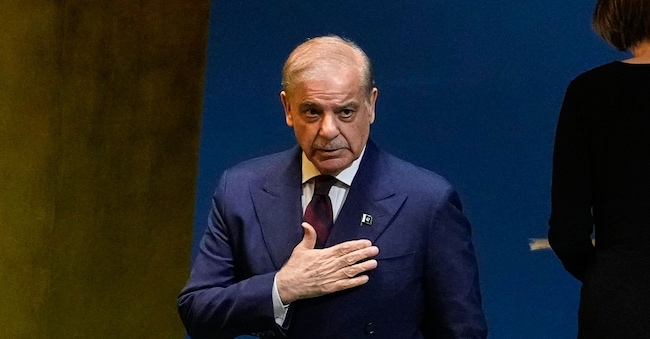
Pakistan is attempting to transform its contribution to Gulf security into a position that will endure beyond emergencies. At stake is the prospect of securing ongoing influence, predictable revenue and industrial responsibilities through permanent military cooperation,
The most significant provision of the Mecca Pact, signed by Saudi Arabia, Pakistan and Turkey on 7 August 2026, concerns the establishment of an organisation capable of linking political consultation with military assistance. On 5 October, meeting in Riyadh, the three governments appointed retired Pakistani General Nauman Mahmood as the first Secretary-General, with a three-year term, and approved measures for the rapid deployment of the agreed capabilities in Saudi Arabia. The decision links implementation to the approved agreements and national legislation: collective solidarity therefore continues to be channelled through state responsibilities and authorisations.
For Islamabad, this distinction determines the value of the entire operation. A useful and recognised role can become a source of influence. A military presence lacking sufficiently defined financial and operational boundaries, on the other hand, can turn into a commitment that is difficult to scale back. Pakistan will become more important if its partners continue to require its expertise even once the immediate crisis has subsided; it will become more exposed if every new crisis demands further resources without increasing its decision-making power.
The budget
The Pakistani federal budget for 2026–27 provides for total expenditure of 18,771 billion rupees, of which 8,054 billion is earmarked for debt interest, 3,000 billion for the main defence budget and 1,000 billion for the federal development programme. Interest payments account for approximately 42.9 per cent of the projected expenditure. These are budgeted figures, not final accounts, but they demonstrate how essential it is to assess the marginal cost of any additional commitment.
Remittances also link Pakistan’s economic stability to the Gulf. The central bank recorded $3.6 billion in September 2026 and $10.9 billion in the first quarter of the 2026–27 financial year. Saudi Arabia contributed $8,99.1 million, whilst the UAE contributed $748.5 million: together, this accounts for approximately 45.8 per cent of the rounded monthly total. These are remittances to families, not payments in return for military cooperation. Their scale demonstrates, however, that stability in the Gulf has a direct impact on consumption and the availability of foreign currency in Pakistan.

