Plant-based consumption

Plant-based foods, sales up 7.6% driven by private labels

According to calculations by The Good Food Institute Europe, the plant-based segment generated a turnover of 639 million in 2024: "Growth reflects consolidated demand, not just price increases".

by Alexis Paparo

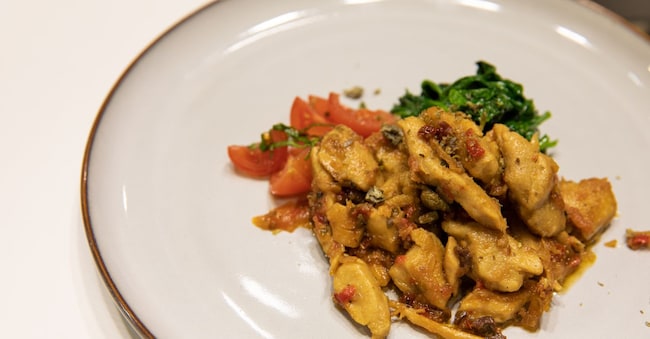
Una proposta plant based di Planted

5' min read

5' min read

More mature and at the same time in great evolution. In 2024, the Italian retail market for plant-based foods reached 639 million euros, registering +16.4 % over 2022 and +7.6 % over 2023. This is what emerges from data from the market research company Circana analysed by the non-profit think tank The Good Food Institute Europe in the report 'Insights into the plant-based food retail market in Italy'. The data confirm that, after the strong inflation between the end of 2022 and the beginning of 2023, prices have stabilised, in some cases with slight reductions: growth therefore reflects consolidated demand, not just price increases.

The report analysed five categories, vegetable alternatives to meat, vegetable drinks, cheese, yoghurt and cream. Sales per unit grew by 10 % between 2023 and 2024 and by 13.6 % between 2022 and 2024, reaching 316 million units. Volume (in kg) also increased by 6.9 % over the two-year period, accelerating between 2023 and 2024 (+6.5 %).

Loading...

The growth of private label products was sustained: their sales volume rose by 17.4 % between 2022 and 2024, while b>branded products recorded a slight decline (-1.5 %). "The trend reflects two main dynamics," explains Francesca Gallelli, policy manager for Italy at GFI Europe, "the maturation of the market, which pushes retailers to invest in own-brand lines, and the greater convenience compared to branded products, even if taste and quality remain essential elements.

Indeed, in some categories - vegetable alternatives to meat and cheese in the lead - factors such as taste or texture make price less of an influence on purchase intention. Many companies - from the Swiss Planted to the Italian MartinoRossi, FelsineoVeg and Dreamfarm - are working on this very point, at the same time shortening labels, simplifying ingredients and improving the nutritional profile of products, also thanks to techniques such as fermentation.

Going into the details of the various segments, vegetable beverages account for 50.7 % of the total plant-based value in 2024 and lead the market. They reached 11.5 % of the value and 8 % of the volume of the entire milk replacer segment. Furthermore, between 2023 and 2024, the volume of plant-based products increased (+5.9), while that of animal milk decreased (-2.7). In second place,plant-based 'meat' accounted for 35.7 % of the plant-based market, with +29.5 % in value between 2022 and 2024. Between 2023 and 2024, the segment posted +14.7 % in sales and +16 % in volume, while unit sales grew by 32.1 % and volume by 24.9 % between 2022 and 2024.

'With policies that incentivise local supply chains, the plant-based sector can foster a more sustainable food system and strengthen national food sovereignty,' adds Gallelli. An example of this is the Gorizia-based Biolab, with a turnover of 22 million in 2024 (+175 % on 2020) realised 70% by producing on behalf of large-scale distribution brands, also working closely with Friulian farmers. And that's not all: in January the company took over and converted a slicing centre in San Daniele, safeguarding 32 jobs.

Also tofu, tempeh and seitan - products that are less processed than ready-made meals and cheaper, but more difficult to approach because it is necessary to learn how to cook them in order to make the most of them - recorded +72% in value and +77% in volume between 2022 and 2024, although they remained in the minority (3.3 million kg compared to 17 million kg of vegetable meat in 2024). Alternatives to plant-based cheese, still a niche, nevertheless doubled in value and recorded +90% in volume from 2022 to 2024. In 2024, 85.1 % of volume sales are attributable to brands.

The debate on the creation of plant-based products is open: 'In many cases,' Gallelli concludes, 'in plant-based alternatives, industrial processing is essential to obtain flavour, texture and nutrients comparable to those of the processed animal meat they are intended to replace. Although these are processed foods, the nutritional profile is often favourable, as found in a recent analysis by the Physicians Association for Nutrition (PAN): high protein content, presence of fibre, low saturated fat and sugar. The challenge is not to eliminate processing, but to innovate responsibly'. Meanwhile, investment flows confirm the steadily growing interest in the sector: in 2024, unlisted European companies active in plant-based, cultured meat and fermentation raised approximately EUR 470 million, +23% compared to 2023, and EUR 63 million in public funding (+137%).

The International Conference

"Promoting a shift towards a flexitarian approach, reducing the consumption of animal-based foods and increasing the consumption of plant-based foods - particularly healthy foods - can promote long-term wellbeing and reduce the risk of developing diseases linked to a poor diet," explains Professor Ian Rowland of Reading University, a leading researcher on the impact of plant-based diets and phytochemicals on health. Rowland is one of the experts called to speak at Danone's International Conference on 16 June at the Global Research & Innovation Centre in Paris-Saclay. The aim is to address global public health challenges through nutritional innovation, with a focus on the evolution of plant-based nutrition. "Numerous scientific studies have demonstrated the beneficial effects of plant-based healthy diets in numerous areas: weight control, reduction of cardiovascular risk, improvement of blood sugar, metabolic syndrome, cholesterol levels and even overall mortality," Rowland adds.

But what are the key factors for ensuring the intake of all essential nutrients in an increasingly plant-based diet? "It is necessary to ensure adequate intake of key essential nutrients - such as calcium, vitamin D and vitamin B12. Plant foods can play a key role in a balanced diet, offering a valuable opportunity to meet nutritional needs, especially in contexts where nutritional deficiencies are already present in part of the population. Common deficiencies include iodine, vitamin D, calcium and vitamin B12, with particular attention to calcium and vitamin B12 for those who avoid or limit dairy products'. Some plant-based foods are classified as ultra-processed (UPF), i.e. with a high content of fat, sugar and salt: 'it is true that some plant-based UPFs also have these characteristics, but at the same time many plant-based foods - such as plain drinks and unsweetened vegetable yoghurts - have a favourable nutritional profile, with a good content of fibre, polyunsaturated fatty acids and low saturated fat. It is essential to evaluate the individual food on the basis of its nutritional content, and not solely on the degree of processing,' Rowland concludes.

Copyright reserved ©

Brand connect

Loading...

Newsletter

Notizie e approfondimenti sugli avvenimenti politici, economici e finanziari.

Iscriviti