
Poland on the ballot: more than just the election of a new president
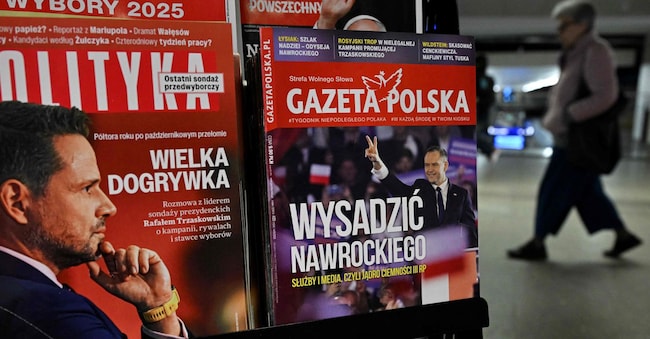
The challenge pits Rafal Trzaskowski, liberal mayor of Warsaw and candidate of the Civic Coalition (KO), against Karol Nawrocki, candidate supported by the conservative and nationalist Law and Justice (PiS) party

2' min read
2' min read
Polls have been open since 7am on Sunday morning in Poland for the election of a new president of the Republic. The challenge pits Rafal Trzaskowski, the liberal mayor of Warsaw and candidate of the Civic Coalition (KO), against Karol Nawrocki, a candidate backed by the conservative and nationalist Law and Justice (PiS) party. Although the role of the Polish president is largely ceremonial, he exerts some influence on foreign and defence policy and has crucial veto power over new legislation. This power can only be revoked with a three-fifths majority in parliament, which the current government does not possess.
"Up for grabs" is the chance for Tusk's government - which backs Trzaskowski, the pro-European Warsaw mayor - to make progress on election promises on rule of law and social issues, including abortion and LGBT rights, after eighteen months of difficult cohabitation with the opposition president, Andrzej Duda.
Polling stations will close at 9pm, with exit polls to follow soon afterwards.
A victory for Nawrocki, a historian and former amateur boxer, would prolong the current stalemate, making it difficult for the executive to pass meaningful reforms before the 2027 parliamentary elections.
"Referendum" on government
"Tusk knows what is at stake and knows that if Nawrocki wins, he will end up with a government in trouble for the next two years. And it will be worse than with Duda, because Nawrocki will come in fresh, with a new mandate from what has effectively turned into a referendum on the government,' said Professor Aleks Szczerbiak, a lecturer in Central and Eastern European politics at the University of Sussex.

