Elections

EU countries on the ballot: how the elections went and who won in Romania, Portugal and Poland

In Romania the pro-EU candidate wins, in Portugal the centre-right does not have a majority, in Poland it goes to the runoff

Aggiornato il 19 maggio alle ore 7:37

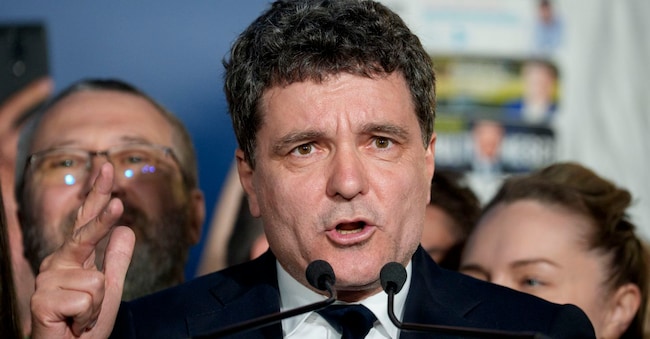
 Nicusor Dan (Epa/ROBERT GHEMENT)

3' min read

3' min read

The pro-EU candidate and reformist mayor of Bucharest Nicusor Dan won the presidential elections in Romania. Dan's victory seemed clear already from the exit polls, which however Simion, a Trump admirer, had contested. 'I am the president,' the sovereignist candidate had declared, raising fears of a night marked by chaos. The exit polls, however, were swift and certified the victory of Dan, who with 99% of the counts obtained54.2% of the preferences, against Simion's 45.8%.

The nationalist admitted his defeat. European leaders applauded: 'An open Romania won in a strong EU'.

Loading...

Who is Nicosor Dan

The two-term mayor of the capital, whohas made a name for himself in the fight against corrupt property developers, said that voters seeking 'profound change, functioning state institutions, less corruption, a prosperous economy and a society based on dialogue, not hatred, have won'.

Analysts described the Romanian elections as the most important in the country's post-communist history, with significant implications for the country's strategic orientation and economic prospects, as well as for the unity of the European Union.

How the first round went in Romania

.

Simion won the first round on 4 May, triggering the collapse of the Romanian government of the centre-left Social Democrats and the centre-right Liberals (NLP).

The new president will appoint the next prime minister and influence the formation of a new coalition.

Voter turnout, which had been 53% in the first round, came to almost 65% in the runoff, with young people and Romanians living abroad in particular voting in significantly higher numbers, according to official figures.

Analysts predicted that a high turnout would favour Dan.

Centre-right wins in Portugal

The Democratic Alliance (Ad), Portugal's incumbent centre-right party, won the country's third early general election in three years, but once again fell far short of a majority, with the Socialists, who performed disappointingly, left vying for second place with the far-right Chega party, which achieved a record-breaking 22% of the vote

With 99% of the ballots cast, the Ad - led by Prime Minister Luís Montenegro - obtained 32.1% of the vote and 86 seats in Portugal's 230-seat legislative assembly, well below the 116 needed to obtain a majority.

The Socialist Party (PS) obtained 23.4% of the vote, trailing Chega with 22.6%. Both parties will have 58 seats in parliament.

Tripolar Portugal: complicated majority

.

Votes from abroad, which will be counted in the coming days, could still put Chega in second place: in that case, the Socialists would be the third largest party in the country for the first time in almost 40 years. 

Despite not having obtained a majority, Montenegro told a crowd of supporters this morning that he had received a clear and reinforced mandate from the Portuguese people to govern. 'The people want this government and this prime minister,' he commented. Montenegro added that the Socialist Party was apparently not willing to negotiate any deal with a large majority and that it would keep its promise not to make any deals with Chega. 'Let us work,' he added.

Chega's leader, André Ventura, said that his party's impressive result at the polls - well above the 18% of the vote it got last time - put an end to 50 years of conservative and socialist governments and 'killed bipartisanship in Portugal'.

'We didn't win this election, but we made history,' he pointed out to a packed hall of jubilant supporters.

Ballot in 2 weeks in Poland

The pro-European centrist Rafal Trzaskowski and the historic Karol Nawrocki, backed by the populist right, each secured around 30% of the vote in a tight first round of the Polish presidential election. The vote paves the way for a runoff in a fortnight' time that will force voters to choose between completely different visions of the country's future.

An exit poll by the Ipsos institute, published yesterday at the close of voting, indicated that Trzaskowski, mayor of Warsaw and candidate of Prime Minister Donald Tusk's civic coalition, had obtained 30.8% of the vote in the first round.

Behind him was Nawrocki, supported by the Law and Justice party (PiS), with 29.1% of the vote.

Trzaskowski had long been the favourite to win the election, but his lead over Nawrocki had narrowed in recent weeks.

Copyright reserved ©

Brand connect

Loading...

Newsletter

Notizie e approfondimenti sugli avvenimenti politici, economici e finanziari.

Iscriviti