
Pollution, why cloud seeding experiments in India do not work
New Delhi, having archived the festive season, is in a blanket of fine dust. And the 'cloud seeding' promoted by the Modi government is not yielding results

From our correspondent
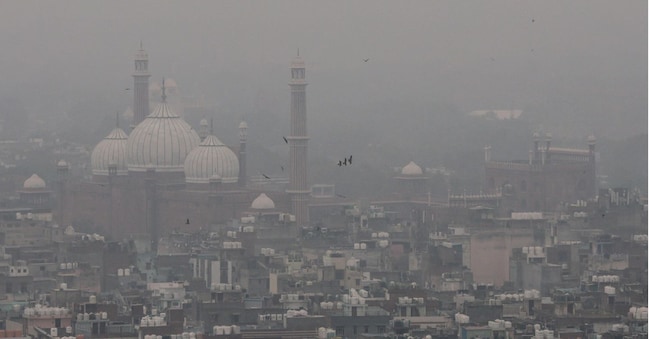
NEW DELHI - To look at the glass half full, one could say that in Delhi, never before has it been as difficult as it is these weeks to get a sunburn, even being in the open air all day. Although there is not a cloud in the sky, the sun is but a pale circle, a shy, blurred bulb whose slanting, sickly light caresses the skin without ever burning it.
Again this year, as every year after the autumn festival season, the Indian capital finds itself grappling with incredibly high levels of pollution. Believing the policy, something should have changed this time. For years, the Bharatiya Janata Party (BJP) of Narendra Modi - now in government not only nationally, but also in Delhi - has claimed that the city's catastrophic environmental situation was the fault of the ineptitude of its administrators, who have been in opposition for a few months now. Novices in politics, incapable of thinking big and without faith in progress.
The solution, we were told, would be cloud seeding, i.e. the creation of rain on command, so as to cut down on particulate matter and give Delhi residents back the privilege of being able to walk or do yoga in the parks early in the morning, knowing that they will not shorten their life expectancy this way.
Instead, the cloud seeding failed. After numerous postponements, the rain-on-demand experiments came to nothing because without a certain level of humidity at altitude, there is no chance that the dispersion of silver iodide and sodium chloride particles in the atmosphere will lead to precipitation. Not only clouds are needed, which in the cool, dry Delhi winters are rare, but clouds are also needed at low altitudes because the small touring planes used in cloud seeding above certain altitudes cannot be pushed.


