
Accountants: deadlines to be revised, stop in August
De Nuccio calls for a moratorium until 16 September for summer obligations and automatic postponement in the event of computer blackouts. 'Irpef must now be reduced for the middle class'

3' min read
3' min read
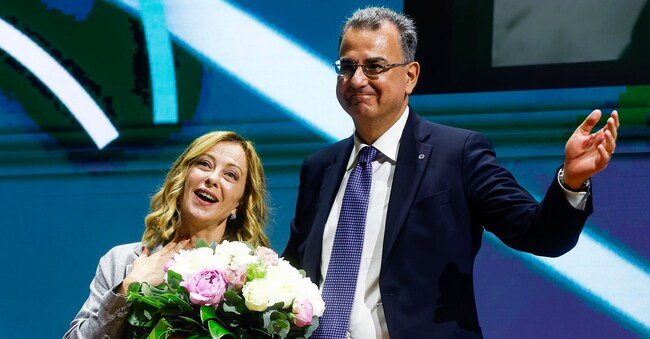
A fairer and more rational tax system, with "radical pruning" of obligations, a moratorium on deadlines extended until mid-September, the reduction of the tax pressure on the middle class thanks to the recovery of evasion, and a tax machine that does not jam and allows for an effective dialogue with taxpayers and the professionals who assist them. This is the agenda for the coming months that the president of the National Council of Chartered Accountants and Accounting Experts, Elbano de Nuccio, set out in front of an audience of colleagues attending the States General of Chartered Accountants, yesterday at the Nuvola in Rome. An appointment that has now become traditional, which yesterday for the first time saw the presence of the Prime Minister, Giorgia Meloni, who was greeted by long applause and a standing ovation from the audience.
Cutting compliance
.At the centre of the debate this year is of course the fiscal reform described by de Nuccio as 'of great quality on the simplification front in terms of regulatory texts, procedures and sanctions'. But much remains to be done. For example, to rationalise the calendar of deadlines. De Nuccio called for a clear cut in fulfilments, but did not hide the fact that this 'is often hindered by the pressing need for revenue'. In the meantime, however - this is the proposal - a structural moratorium on all deadlines expiring from 1 to 31 August can be put in place immediately. The aim is a postponement to 16 September to guarantee taxpayers (and the accountants who assist them) 'a well-deserved summer rest'.
But this is not enough. For accountants, the work of tax reform must be completed with the intervention on the Irpef curve of the middle class. The most urgent intervention is on that 11.2 per cent of taxpayers who declare an income between €40,000 and €120,000, i.e. the bracket that holds together the lower-middle and upper-middle classes and pays 36.4 per cent of the total Irpef. The priority therefore becomes investing 'every euro recovered from the fight against evasion' in cutting taxes for the middle class.
Collaboration with Revenue
.The number one of the accountants spoke of a fair relationship with the Revenue Agency, but he also emphasised the daily difficulties of taxpayers and professionals. "The tax machine is too often unable to respond to citizens and to dialogue with professionals," he emphasised, citing the latest blockage of the Inland Revenue website in the first days of sending the pre-filled form. This is why the president calls for 'extraordinary maintenance of computer systems and an automatic extension' of deadlines when such incidents occur, without the need to request it each time.
The dialogue with the peripheral offices of the Inland Revenue is also still difficult. The director of the Inland Revenue, Vincenzo Carbone, was asked by the president to open the peripheral offices to dialogue with accountants "not only through a computer screen". An appeal to which Carbone himself immediately responded from the stage: 'Dialogue with accountants is always enriching,' he said, 'we will try to develop a preferential channel for professionals, if we have the necessary staff. Carbone recalled that in the last four years the workforce has been reduced by ten thousand, but new entries by competition are expected. From the stage de Nuccio responded to the internal attacks that, he said, come from those who aspire to lead the category. 'I am not saying that there are no problems, but the results obtained are important and have a driving effect. To the professionals of dissent I say that we are a strong category, which has raised its head and regained centrality; criticism is fine but when it is constructive, and accompanied by proposals if the criticism delegitimises then it is sabotage."


