
Productivity and welfare come from the centrality of environmental policies
Focus also on the resources allocated by the EU for the CAP and the issue of access to credit

Key points
Putting forests, forests and the environment at the centre of national and international policies. Not only in the name of the protection of natural heritage, but also of the impacts that their valorisation would have on the economy, the production chain and public health.
Environmental policies to be enhanced
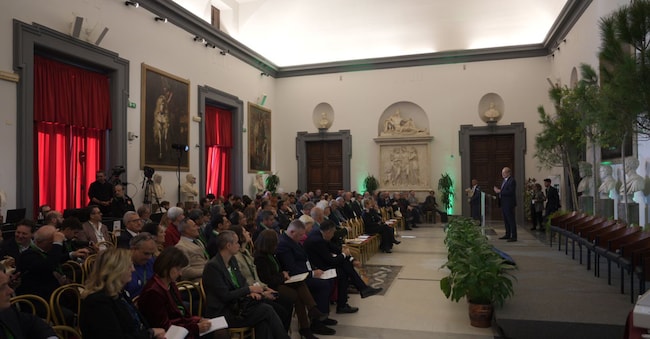
The imperative that animated the second day of work at the 19th National Congress of Agronomists and Foresters is loud and clear. And it aims to further tighten the meshes of a synergy between sector professionals and institutions to set up interdisciplinary environmental policies, fuelled by scientific research and increasingly attentive to the dimension of local realities.
"Safeguarding the environment and forests requires a choral commitment from all players in the sector," emphasised Paolo Baccolo, Conaf councillor. "We need subsidiarity, integration between public and private. And, in this context, agronomists and foresters are essential: they are the historical memory of past actions and protagonists in the construction of a positive relationship between man and the environment. They are the ones who bring expertise to the tables of decision-makers and will hopefully play an increasingly strategic role in the future'.
Critical issues
Notwithstanding the proposals and intentions, there remain several criticisms to be resolved: Michele Candotti, chief of staff of the UN Development Programme (UNDP), put them on the table. Who, among the reasons for the current crisis of the environmental policy programmes, turned the spotlight on the "discrepancy between negotiation times and response times" and "the scarcity of funds for implementation".
Pac and European Funding
Resources were also discussed from a European perspective. In the multiannual financial framework, proposed in July and valid from 2028 to 2034, the EU Commission has also included measures relating to the Common Agricultural Policy (CAP). "For Italy, a dowry of 31 billion has been proposed as a guaranteed minimum to be allocated to farmers' income support," explained Pasquale Di Rubbo, deputy head of the Policy Perspectives Unit at the Directorate-General for Agriculture and Rural Development in Brussels. "There will also be 47.1 billion of unprogrammed funds that can be allocated for example to training and advice."

