
Restricted right to strike in the logistics sector responsible for the road transport of essential goods
It is up to the trade unions to check whether the company’s activities fall within the scope of those protected
by Giada Benincasa
 Aggiungi Il Sole 24 Ore
ai preferiti su Google
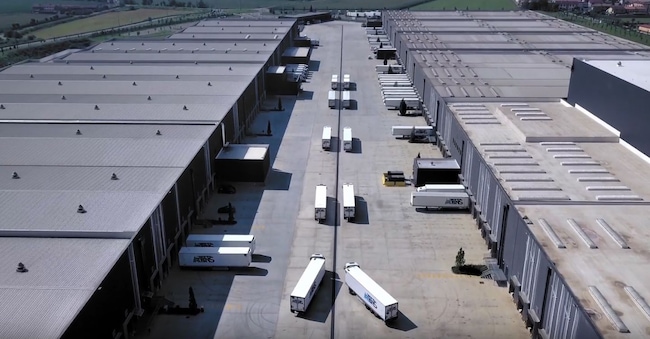
Strike action relating tologistics essential to road freight transport are subject to Law 146/1990 when they affect the movement of goods whose distribution constitutes an essential public service. This was decided by the Guarantee Commission on Strikes in Essential Public Services in Resolution 26/201, adopted at its meeting on 6 July.
The story
The case arose in the context of a trade union dispute, involving protest actions that resulted in the physical blockage of vehicle access points to a site, thereby wholly or partially preventing the entry and exit of vehicles used for the handling of goods. The company had reported that the site handles foodstuffs, including perishable goods, intended also for customers operating catering services in hospitals and schools.
The Justice Committee’s position
This is the crux of the decision. The Commission refers to Article 1(2)(a) of Law 146/1990, which includes among essential public servicesthe supply of energy, energy products, natural resources and essential goods. Building on Policy Resolution 26/88 of 11 March 2026, the Authority reiterates that the regulatory reference to ‘supply’ – and not merely to ‘transport’ – allows for the inclusion of the entire range of activities organised to ensurethe flow of goods from origin to final delivery. From this perspective, logistics is not merely an activity that is instrumental to or ancillary to transport, but a functionally integrated segment of the distribution chain for essential goods.
The application of the regulations on essential public services no longer depends solely on the goods being destined for specific protected communities, such as hospitals, schools or care facilities, but on the nature of the goods being transported. Where energy, energy products, natural resources or essential goods are concerned, the provisions of Law 146/1990 may also apply to the logistics phase. According to the Authority, the fact that the undertaking also transported other types of goods is not decisive. The coexistence of essential and non-essential flows does not allow the collective action to be exempted from the provisions of Law 146/1990, unless the activities are clearly distinct and autonomous in structural and functional terms.
Violations
Hence the alleged breaches: failure to follow the preliminary cooling-off and conciliation procedures, failure to comply with the notice period, failure to determine in advance the duration of the industrial action, and failure to guarantee essential services. The Commission refers, in particular, to the implementing clause contained in the National Collective Labour Agreement for Freight and Shipping of 1 March 1991, deemed appropriate by the Authority, which requires, amongst other things, the transport of medicines and supplies for hospitals and care homes, and the transport of essential foodstuffs.

