
Schneider Group saves vicuña and gets record fibre
After 18 years of investment and research, the first superfine vicuña bale was obtained. The managing director: 'We save animals and protect the culture and history of local communities'.

3' min read
3' min read
The Incas considered them divine animals and their fleece was only intended for the robes of kings. But when the Conquistadors burst into South American history, centuries of extermination began for the vicuñe: the chaco, the very ancient non-violent shearing technique practised by the Incas, had been replaced by mere killings to conquer that fur as precious as it was scarce. The small camelid seemed destined for extinction until the Andean countries created the first nature reserves in the 1970s.
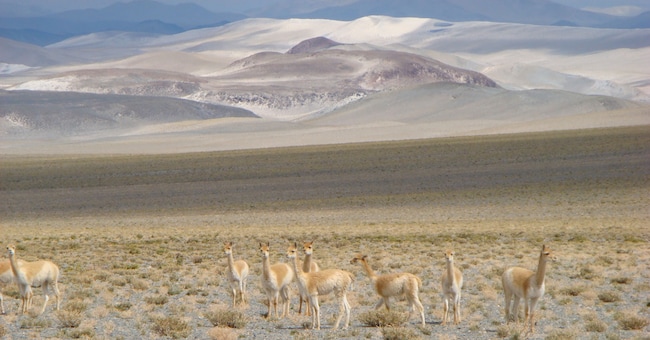
In one of these, the Reserva de la Biosfera de Laguna Grande, 650 thousand hectares of arid land at an altitude of 4 thousand metres in the Andes, on the border between Argentina and Chile, the Schneider Textile Group purchased 100 thousand hectares in 2007 to protect the vicuñas and to be able to harvest their fleece, bringing the forgotten art of chaco back to life, making it contemporary: "We had to secure the area, free it from poachers, manage to ensure that the vicuñas could live peacefully, reproduce and increase in numbers, then manage and equip the land to allow them to live freely and peacefully and be able to have facilities to gather them once a year for shearing," explains Laura Ros, adress of the group founded in 1922 and rooted in the Biella district -. We have learnt how to rally them, it's not easy. As soon as they smell humans, even downwind, they flee. Shearing also requires a lot of skill: special brushes are needed, veterinarians must be present to prevent dangerous stress for them. The shearing must be very gentle and fast, to free them immediately'.
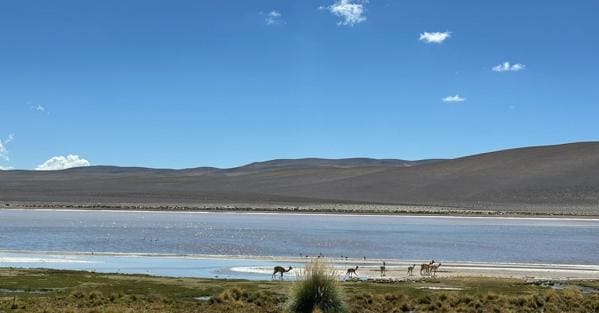
There was also a shortage of shearers: Schneider then brought artisans from the Andean communities to Patagonia to train them, where it has been running a training programme for wool trades in cooperation with local institutes for years, as well as some fifteen farms for the production of organic wool, and owns a wool combing factory. Today, after 18 years of investment, work and passion, Schneider has been rewarded with a record-breaking result: the first bale of Argentinian Vicuña Superfine, with an exceptional fineness of 11.7 microns and a length of 29.3 mm, in a warm shade reminiscent of caramel but also of the sand of those high deserts.
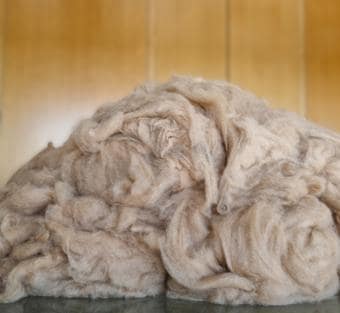
This took years of patient harvesting, sorting and 'ejarratura', a process that separates the more horny fibres from the softer, finer ones, in the Verrone combing plant, a manufacturer of excellence owned by the Schneider Group, which has nine sites (including four production plants) in seven countries around the world, a production capacity of 14,500 tonnes of wool and more than 600 tonnes of special fibres, and a turnover of around 170 million euro in 2023.

But the prized vicuña is not only a source of wealth for the group: 'We give 20 per cent of the shearing to the local government so that they can distribute it to local artisans to enable them to feed their textile traditions. We have not only helped to save an animal from extinction, but also helped communities to improve their standard of living'.


