
The Housing Plan is now law: streamlined procedures for private individuals and 60,000 social housing units to be refurbished
The Senate has approved the bill implementing the Government’s measure to tackle the housing crisis
by Flavia Landolfi and Giuseppe Latour
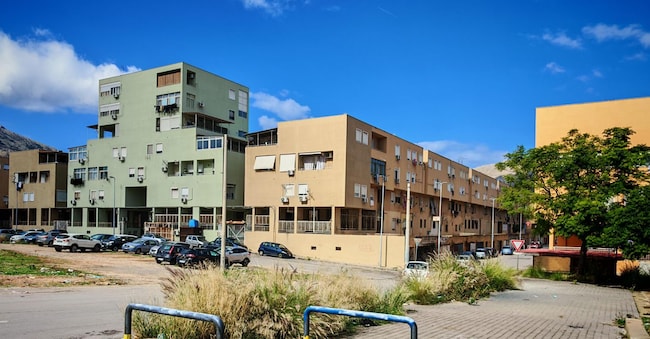
The Housing Plan is now law. Following its passage through the Chamber of Deputies, the Senate has just approved the decree governing the government’s programme to tackle the housing crisis. The programme will focus on the refurbishment of 60,000 social housing units and a major simplification drive to stimulate private investment.
The three pillars
The measure, which has been finalised in the Chamber of Deputies, will thus be published in the Official Gazette without any significant changes from the original version. The three pillars on which the Government based its approach have been confirmed: the first concerns renewal of social housing, on which Commissioner Felice Squitieri is already working; the second concerns the Housing Fund managed by Invimit, which will shortly finalise its regulations; the third will focus on the contribution from the private sector, through subsidised housing schemes.
The role of foreign funds
It is precisely in this chapter that one of the most significant changes was introduced during the conversion process. It concerns the fast-track procedure for funds from abroad, as provided for in the first version of the decree. Initially, in fact, the most significant simplifications in the decree were reserved for transactions involving at least one billion in foreign funds. This restriction has been removed, although the one-billion threshold remains in place for accessing the administrative fast track. In short, there remains a substantial barrier to simplifications for small and medium-sized projects, a change requested, amongst others, by ANCE member companies.
Focus on hotels and commercial buildings
Also under the third pillar, there is an amendment that will make investments more sustainable. Projects may, in fact, provide for ‘the development of a variety of uses, both residential and non-residential’. In such cases, the minimum percentage requirement of 70% for social housing – which must be met to qualify for the simplifications set out in the decree – will be calculated solely on the basis of the residential component: that is, by comparing properties sold at market prices with those sold at controlled prices. Investments ‘intended for non-residential uses’ will be excluded from this calculation. Therefore, the floor area allocated to hotels or commercial buildings will be excluded from the calculation.
Price caps for civil servants
Among the amendments approved during the parliamentary debate is the expansion of the pool of potential beneficiaries of rent-controlled housing. In addition to the categories already covered, civil servants working in essential services – such as teachers, healthcare staff and law enforcement officers.


