
Shein and its low valuation: from traceability to tariffs, here are the threats to its business
The NGO Public Eye has examined the more than 400 pages of the document submitted today for the IPO in Hong Kong, looking at the figures, strategies and controversial points

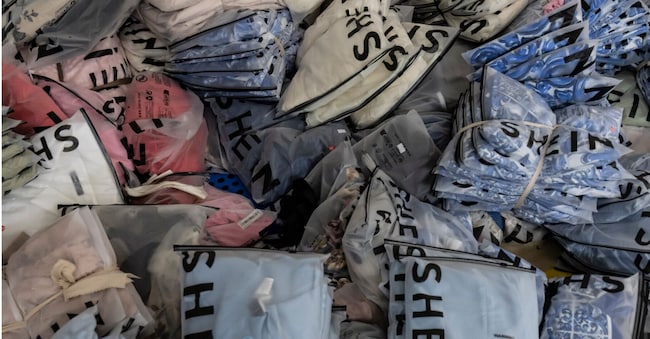
Following failed attempts in the United States and London, Shein has decided to list on the stock exchange in Hong Kong. But whilst in 2022 the company – founded in 2008 by entrepreneur Chris Wu and selling its ultra-fast fashion in 160 markets – was valued at around $100 billion, today that figure stands at around $27 billion. A massive slump.
For the first time, coinciding with the announced flotation, an official document has revealed Shein’s figures and strategies; the company had previously been reluctant to disclose official data. Its founder himself has made very few public appearances, and there are no known interviews with him: last February, he attended a conference in Guangzhou, the heart of the textile district where Shein manufactures most of its garments, to announce that he would invest 10 billion yuan – equivalent to approximately 1.45 billion dollars – to create a ‘high-tech fashion hub’.
A great deal of information, however, is contained in the 463 pages of the Post-Hearing Information Pack, a draft information document that is published on the HKEXnews website when a company’s application for an initial public offering receives in-principle approval from the Hong Kong Stock Exchange. This document has been examined in detail by the Swiss NGO Public Eye – which has previously investigated Shein – highlighting, first and foremost, that the company has requested an exemption from full disclosure requirements.
Let’s start, however, with what has been disclosed: for the first time, Shein has provided official figures for its revenue, amounting to 41.8 billion dollars in 2025 – a figure that places it on a par with Inditex and Nike, both of which have turnovers of around 40 billion. However, whilst the Spanish and US groups report having 164,000 and 73,000 employees respectively, Shein has just 18,000. This is a substantial difference that reflects the Chinese company’s distinct business model, with all the implications that entails.
From its very inception, in fact, Shein has been a sales platform rather than a manufacturing company: the garments sold worldwide are produced by a network of around 7,500 contract manufacturers, who in turn may use other suppliers, making the control system across the various stages less rigid. Logistics and transport are not directly controlled either, just like design: Shein states that it has just 370 in-house designers, whilst offering 4,700 new ‘styles’ every day.


