
Green silver, who certifies it and who extracts it from industrial waste
There are 300 Italian companies that are members of the Responsible Jewellery Council. Confindustria-Federorafi estimates silver exports in 2025 of 1 billion euro

3' min read
3' min read
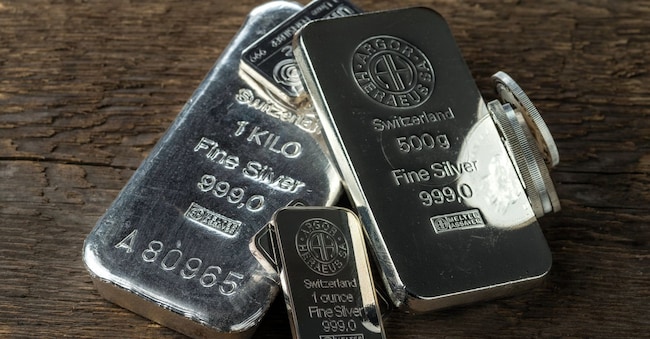
One billion euro in exports. Gold is going strong, but the precious metal of the moment is silver, so much so that Confindustria-Federorafi estimates for 2025 indicate the possibility of silver reaching one billion in exports, after the 893 million of 2024. The sector is constantly evolving: silver, unlike gold, is a very different material in terms of sustainability and companies are also adapting from this point of view.
Sustainability in the industry
."Silver extraction is more complex than for gold, but in Italy the techniques are very advanced," explains Stefano De Pascale, president of Confindustria-Federorafi. "We can estimate one billion in exports by 2025, which means that companies are now at the cutting edge: there are systems and certifications from which one cannot escape. There are more than 300 Italian companies, which also deal with silver, that are members of the Responsible Jewellery Council (Rjc), the body that monitors the sustainability of companies: there are 3,000 worldwide, which means that Italy is at the top. Those who buy silver cannot do so from war zones, it is now a conditio sine qua non: in our country there is a good share of recovered silver'. The poles of the sector, like gold, remain Veneto, Tuscany, Sicily and Marche.
Silver and sustainability: examples
The focus on circular economy and sustainability is one of the prerogatives of Karizia, the company founded by Luigi Marostica and based in Bassano del Grappa (Vicenza). Karizia is part of Rjc and produces silver. "This year,' explains Marostica, 'we are closing our fifth sustainability report. In the not too distant past, we certified ourselves in Rjc: all the silver we buy is certified and is all recycled silver. This means that it does not come from illegal mines or war zones. These are guarantees for our customers: moreover, we only buy from Italy'. Much has changed over the years: 'With the new furnaces, the smelting we achieve is faster and with less consumption,' he adds.
That silver is a more sustainable metal is also confirmed by Fabiani Gioiellerie, which works extensively with this material: 'Unlike gold,' says CEO Emiliano Fabiani, 'silver has greater versatility and a higher recycling potential, characteristics that make it more sustainable. By now, those who choose silver are not only buying an aesthetic object but also a sustainable good'. And the sector is also growing because the demand for silver, Fabiani notes, 'is also driven by industrial applications related to sustainable power generation, such as photovoltaic panels, and electric mobility, particularly car batteries'.
Italpreziosi of Arezzo, led by Ivana Ciabatti, is a benefit company and B Corp: 'We have an office directly dedicated to sustainability,' says the ceo. 'We only work with mines that are environmentally friendly, we also buy industrial waste and put it back on the market in a perfect balance of circular economy. Over the years we have also invested in state-of-the-art machinery. On the future there is room for improvement in training, in raising awareness. But Italy is already a step ahead of the others'.

