
So limited editions help reach new consumers
A strategy used by famous brands such as Nutella, Nespresso, Giovanni Rana, Levissima, CocaCola and Mulino Bianco; sometimes with non-food brands: Baci Perugina and D&G or Pringles and SuperMario
Manuela Soressi
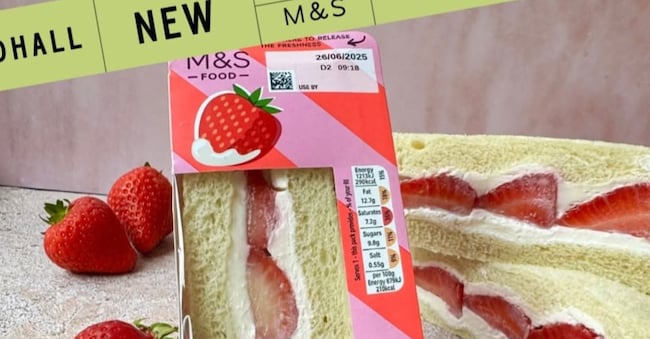
In the beginning it was Christmas and Valentine's Day. Then came Halloween and the Giro d'Italia. And now 'limited edition' food products are also spreading to other special occasions, such as birthdays, so much so that the Birthday cake sandwich launched by Marks and Spencer in the UK is considered one of the most successful new products of 2025. This confirms the relevance of the limited edition policy, which originated in the United States in the world of luxury and has then also settled very well in a universe that is anything but exclusive, such as the mass consumption of food. Especially since it has become an effective marketing tool.
daniele Tirelli, lecturer in product innovation, consumption & marketing at the IULM in Milan, explains: "The increased use of limited editions is due to the reversal of the classic industrial strategy, which only introduced new products capable of generating large sales volumes. Now that private labels and co-packers have become more aggressive, companies have to offer a lot of micro-innovation to maintain and occupy shelf space. Moreover, now that launching a new food product is extremely expensive and the probability of success is very low, limited editions represent an economically sustainable innovation. On the one hand, the evolution of technology and robotics makes it easy to modify recipes and to intervene on existing equipment even for small productions, and on the other hand, the fact that they are variants of brands already known and present in large-scale distribution makes their arrival on the shelves easier than a mere extension.
And so the special editions bring everyone together. The brand demonstrates its ability to renew itself, to stimulate anticipation, to retain its customers and to bring in new buyers, even stimulating buzz on social media. The consumer is teased with the surprise effect and 'hooked' with the unrepeatability of the proposal that he perceives as exclusive, while buyers see it as a tool that enriches the assortment with distinctive products while also expanding the occasions and seasons of consumption.
Unprecedented taste variations, special packaging and capsule collections created together with non-food brands (such as Pringles/Super Mario), popular chefs (such as San Carlo/Cracco) or fashion labels (such as Baci Perugina/Dolce&Gabbana): limited editions are occasionally or regularly used by numerous large companies and famous brands, such as Nutella and Nespresso, Giovanni Rana and Levissima, Coca-Cola and Mulino Bianco.

