
Souleymane Keita: how to enhance the modernity of West Africa
Gallery owner Cécile Fakhoury represents the artist's legacy, starting with an important collection of works held by her family

3' min read
3' min read
Senegal gained its independence from French rule on 4 April 1960. The return home of Léopold Senghor, the first president of independent Senegal, was marked by major institutional, economic and cultural changes. Senghor, himself a writer and poet, gave a strong impulse to the arts and culture and in a framework of general renewal and experimentation, among the various initiatives, the Festival Mondial des Arts Nègres was inaugurated in 1966, a germinal event featuring the artists of the collective l'Ecole de Dakar, and the opening in the city of Thiès, of the Manifacture Sénégales des Art Decoratif created to produce tapestries and textile works of art.
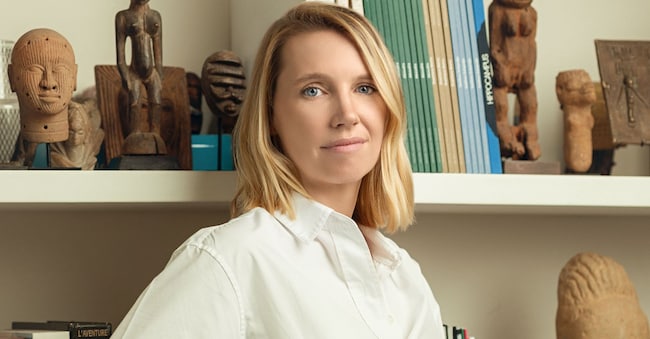
For some time now, gallery owner Cécile Fakhoury has been engaged in a work of research and enhancement of West African modernity, today Fakhoury represents the summer of one of Senegal's most successful modern artists, Souleymane Keita (1947- 2014), and tells Arteconomy24 how it went. Cécile she has opened three galleries, two of which are in Africa, her first in Abijan in Côte d'Ivoire, the second in Dakar in Senegal and then in Paris, where she represents mainly contemporary African artists and for some time now has been curating the Souleymane Keita modern artist...
"In 2012, when I opened the Cécile Fakhoury Gallery in Abidjan, my idea was immediately clear: to create a contemporary art gallery on the African continent," explains the gallery owner. Not a gallery of 'contemporary African art' in the reductive sense of the term, but a creative space anchored in the territory, capable of dialoguing with the international art scene. Everything took place very quickly in the relationship with artists on the continent and in the diaspora, then through a series of researches and meetings, my gaze also turned to modernity, so the link between contemporary artists and modern African artists became increasingly obvious. And, yes, since 2021 the gallery has been representing the legacy of Souleymane Keïta, it was with him that we started a work to explore artistic modernities in West Africa."
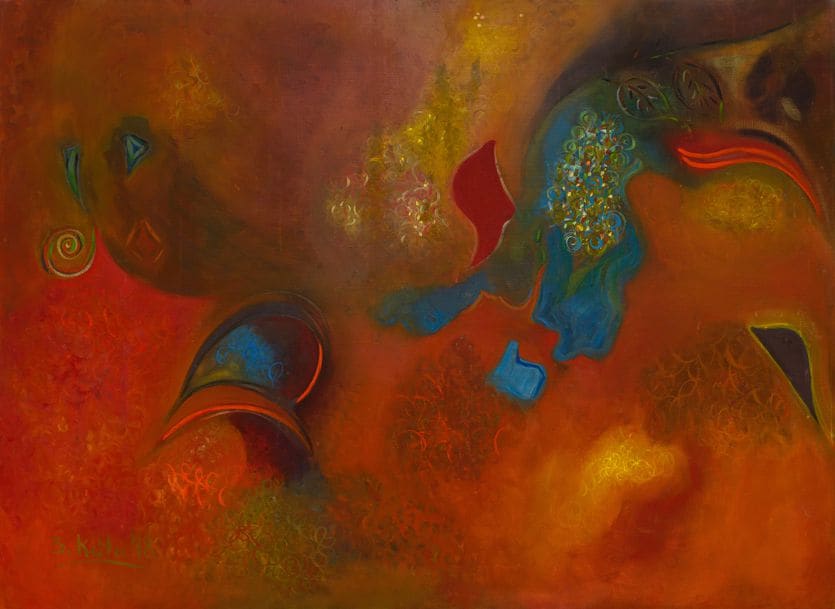
How are you working with the summer of Souleymane Keita? It is a kind of work that requires total commitment, a long, complex, meticulous process that demands time and resources and goes beyond the realisation of an exhibition or sale. We do not look for immediate returns, but for the long term. In the case of the works of modern artists from sub-Saharan Africa, it is crucial to build a solid recognition for the artist, to have the work inscribed in art history, and this is done through research, publications, exhibitions. For Souleymane Keïta, we were fortunate to start from a solid base. An important collection of works had been preserved by his family, his wife and children. A good number of historical works had already been authenticated, which was very helpful. But we are only at the beginning of the work we intend to do on modernity in West Africa. Each project requires its own, separate and ambitious commitment, which we want to realise with care, patience and perseverance. For now, we have chosen to dedicate this energy to Souleymane Keïta.
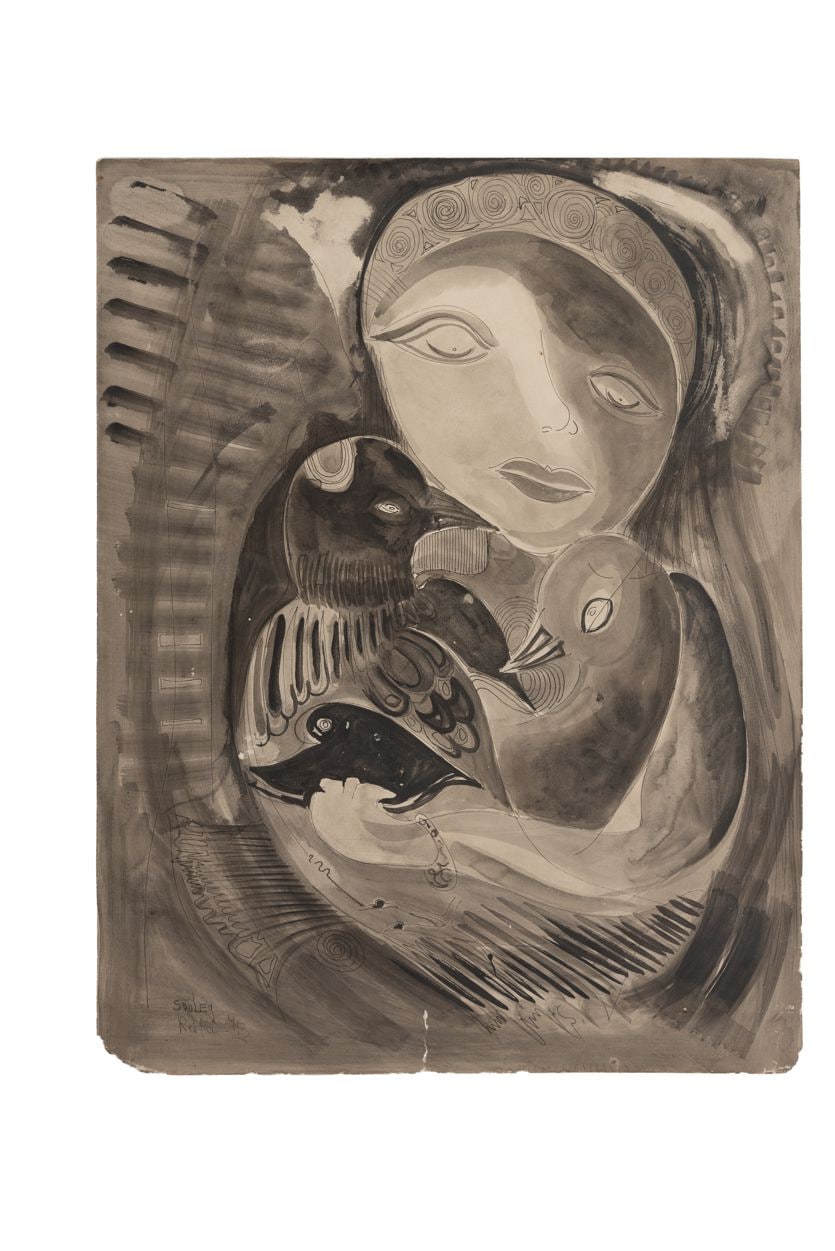
Who is more interested in the works of modern artists in Senegal, private individuals or museums?"In Senegal, there is a network of well-informed passionate collectors who are interested in modernism, then there are also some historical collectors who knew the artists personally and bought their works from the early years. This constitutes an important basis. Regarding institutions, there is a growing interest, one example, the Michael Rockefeller Wings that reopened at the Met in New York has dedicated a large space to African art, the historical one, but also modern art.

And in Dakar?The Musée des Civilisations Noires has dedicated several exhibitions to the artists of the Ecole de Dakar or to artists such as Iba N'Diaye. This work of historical reinterpretation is essential: it contributes to the construction of a collective artistic memory and to the transmission of a heritage that is still too little appreciated.
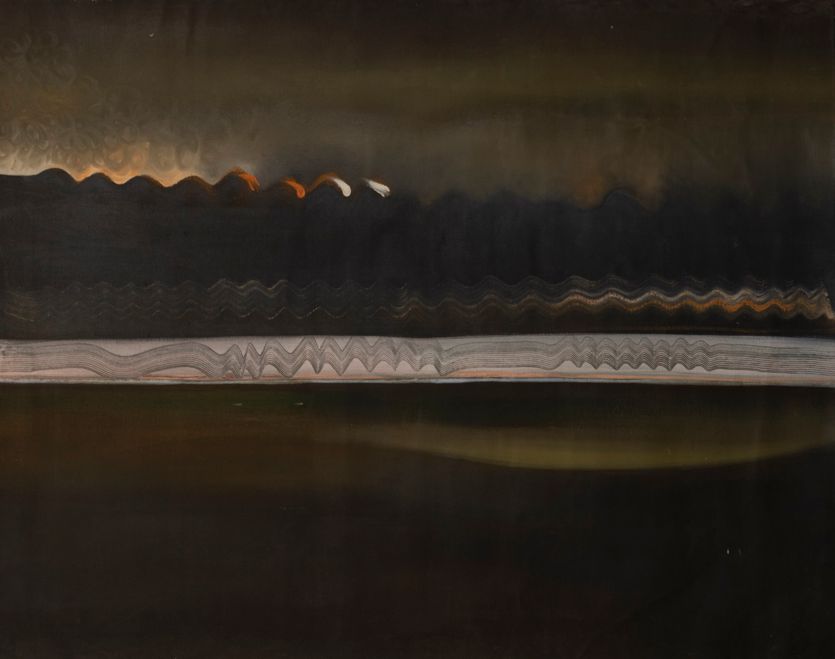
The value of Souleymane Keita's canvases? The price of his works ranges from 30 thousand to 100 thousand euro and depends on the date of execution, the size, the uniqueness of the work,.

