The Pompidou with 'Paris Noir' opens up to African modernity
Before the five-year restoration campaign, the French museum narrates the art of the artists who came to work in Paris from different countries of the continent

5' min read
5' min read
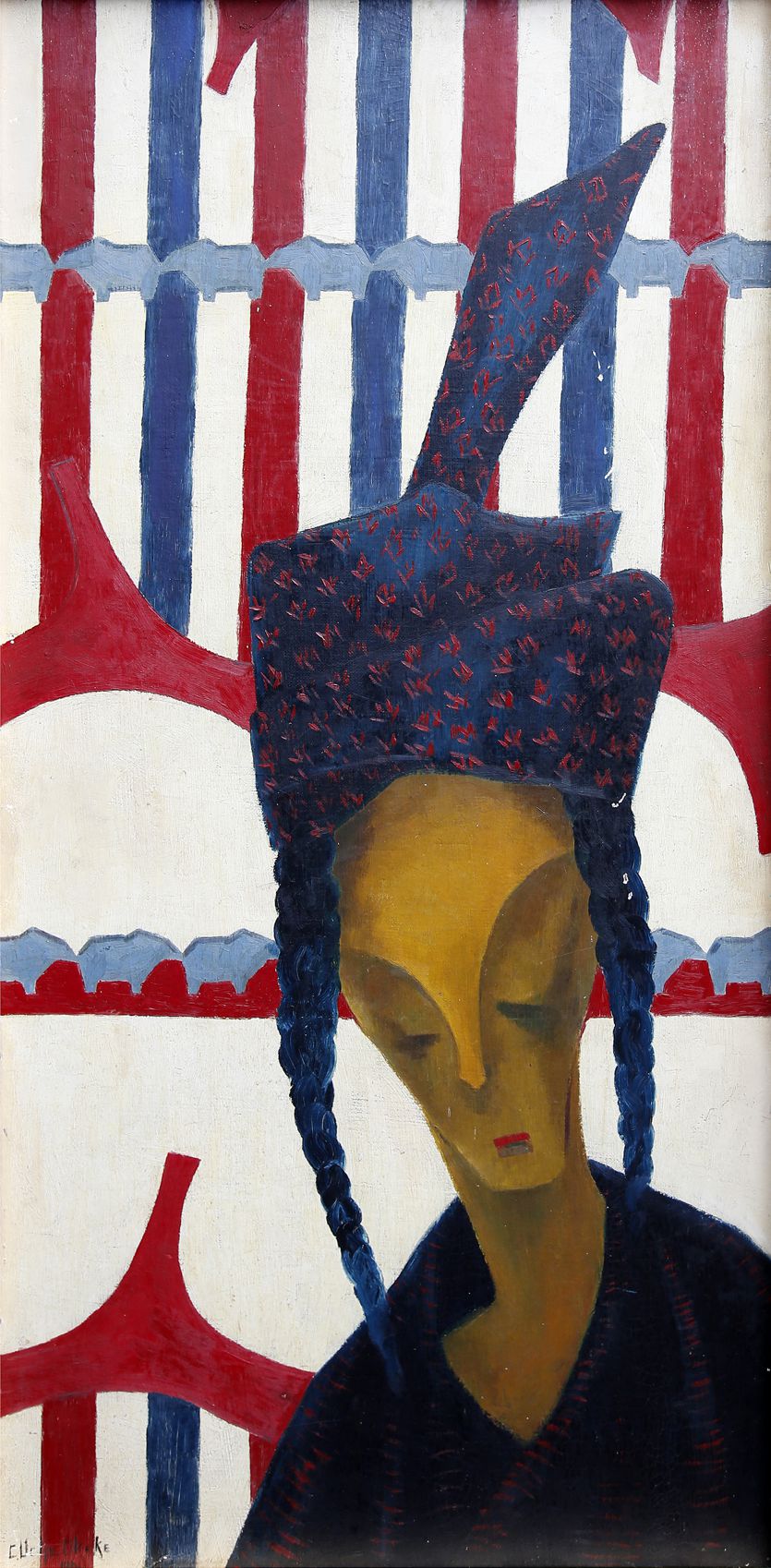
For some years now, more and more museums have been engaged in researching and documenting the history of modern art in numerous non-Western countries in order to complete a narrative that today is only partly written down. In this perspective, several institutions have chosen the model of temporary exhibitions, as is the case of the Centre Pompidou in Paris, which, before being closed for restoration for five years (from 30 June next), is proposing with the collective "Paris Noir" a profound reflection dedicated to the work of a vast selection of modern black, Caribbean, African, Brazilian, Latin American, and Afro-American artists, who in the aftermath of the Second World War chose to live in Paris for a period of their lives in order to work and establish themselves or to escape political and gender persecution.
From Senegal to Nigeria
Highlighted at 'Paris Noir' was the presence of modern artists from Senegal and Nigeria, authors who in the fertile years of independence - 1960s from France the former and from the United Kingdom the latter - gathered around the strong idea of Pan-Africanism or Negritude to claim their African identity, in a context of valorisation of the different traditional cultures, denied during the long years of colonialism.
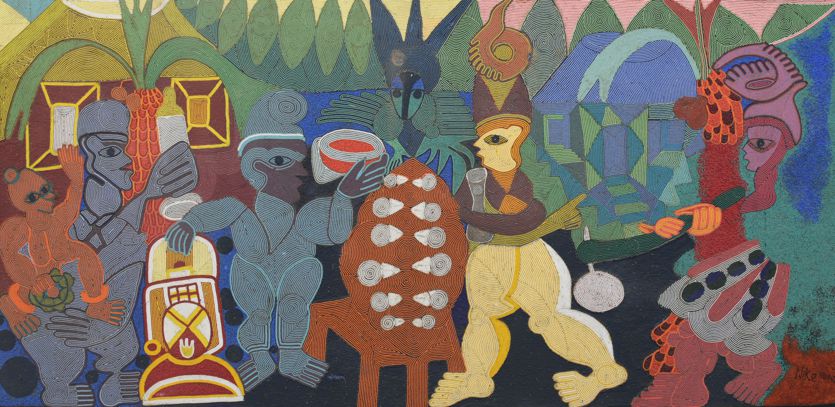
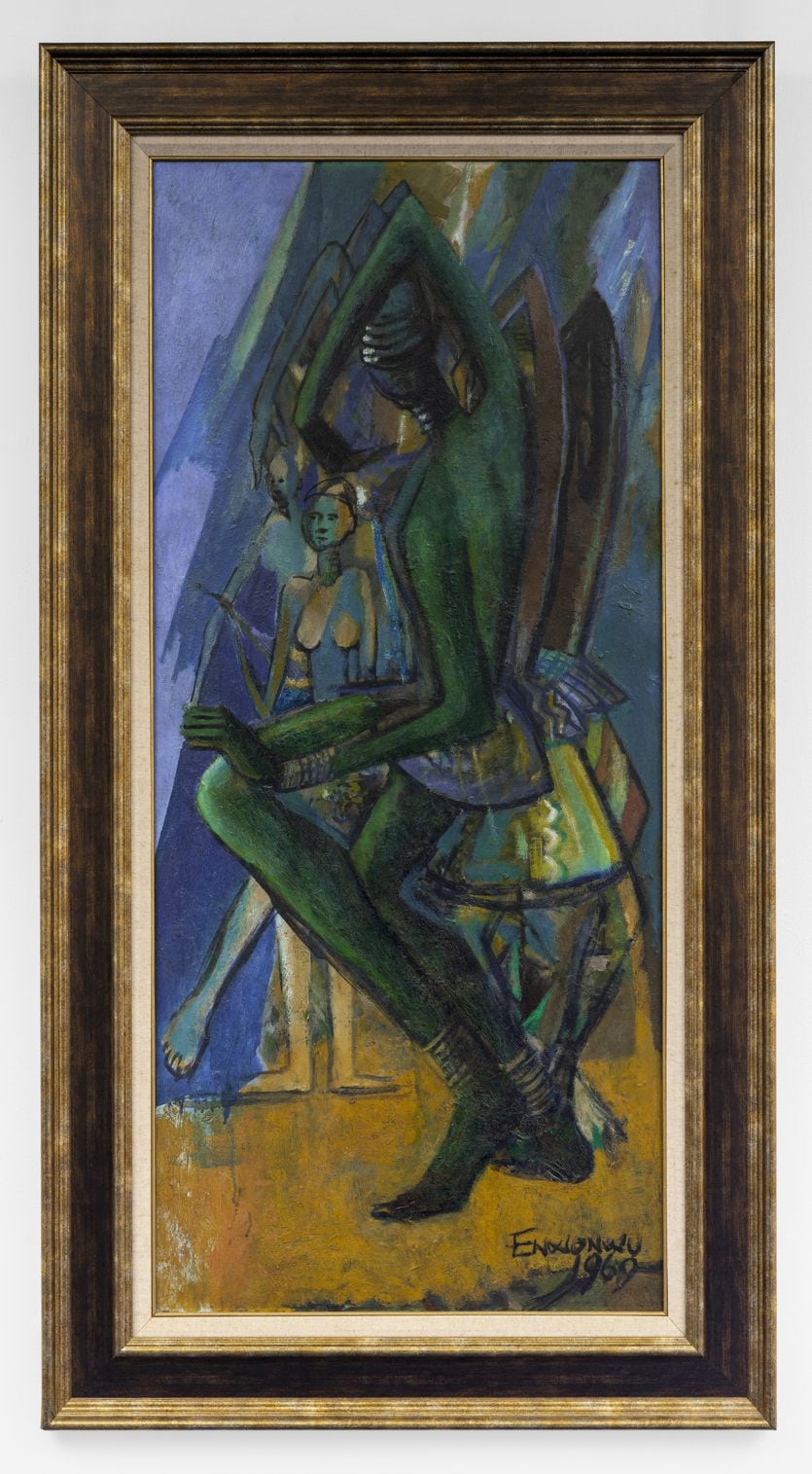
"Nigerian modernism tells an important part of Nigeria's history, it took shape during the years of independence, it was a period of great hope for the country," reflects gallery owner Kavita Chellaram, who for years has represented some of Nigeria's best known modern masters, such as Bruce Onobrakpeya (1932), Yossuf Grillo (1934-2021), Demas Nwoko (1935) and Uke Okeke (1933-2016). In 1958, then students at the Nigerian College of Arts, they founded the collective Zaria Art Society with the aim of decolonising the teaching of the visual arts, with a view to a strongly identity-based freedom of expression. Through painting, Nwoko portrayed his people and nature with "strong colours and an essential narrative. As an architect, he was always critical of the use of imported materials from the West, always sticking to the use of indigenous elements for his projects. In 2023, the Venice Biennale awarded him the Golden Lion for Lifetime Achievement.
Bruce Onobrakpeya expressed himself as a sculptor, painter and printmaker. In his work, mythological iconographies and Urhobo (his ethnic group) folklore are clearly evident, which the artist transformed into a contemporary pan-Nigerian art form. At the Nsukka Art School, Obiora Udechukwu (1946), now one of the most popular artists on the art market, was trained. In the same way as the Zaria Art Society collective, Udechukwu started from traditional Nigerian culture as a founding element of his work. With a first-class painting technique, Obiora devoted much of his research to the theme of Uli design, an abstract form of traditional representation used in celebrations as body decoration and for the walls of houses in south-eastern Nigeria.