

Speed and production: the two driving forces behind modern conflicts
Innovations, industry contributions and new procurement models. This is where one of the most difficult challenges for security arises: how can we sustain intensive, prolonged operations and replenish systems that are being used up at a rapid rate?

Key points
The conflicts in Ukraine and the Middle East have brought to light a reality that is hard to ignore: a war can rapidly deplete resources that take years to replenish. It is not enough to have effective defence systems; we must be able to sustain them for the duration of the conflict.
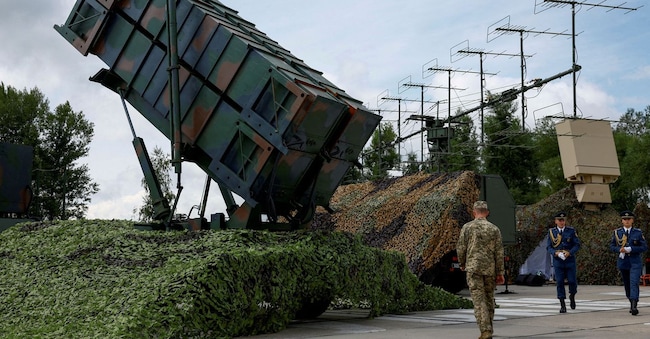
In the early months of operations in the Middle East, which began in late February 2026, US and Gulf States defence systems intercepted thousands of missiles and drones. Rapidly replenishing stocks of interceptors and other munitions is a priority for governments and industry. This raises a key question: how can we sustain intense and prolonged military operations whilst replenishing stocks that are being depleted at a rapid rate?
The defence capability of a single country
A country’s ability to sustain a conflict depends on two clocks: that of military operations and that of industrial production. The first ticks quickly, with a constant drain on resources and a pace dictated by events. The second moves more slowly, with planned investments, complex supply chains and long production lead times. Just like in a marathon, it is not enough to have the speed to start strongly; you need to be able to sustain the effort right to the end.
Reducing this gap between operational lead times and production lead times has become a priority. In the United States, the government is urging the defence industry to increase production capacity and accelerate development. The major conglomerates are responding by investing in production expansion, automation, digitalisation and artificial intelligence. Lockheed Martin has earmarked between 8 and 9 billion dollars to expand its production capacity. At the same time, companies from other sectors are also getting involved, contributing their expertise and production capacity to increase production speed and volumes.
The contribution of the civilian sector is not limited to manufacturing alone, but also encompasses technologies developed in rapidly evolving sectors. Lockheed Martin, for example, collaborates with technology companies to integrate commercial innovations – ranging from advanced communications to artificial intelligence – into defence systems. These technologies can accelerate the evolution of command and control systems, enabling the rapid transformation of ever-increasing amounts of information into operational decisions.

