The enabling act

Energy, Italy towards nuclear power by 2030: the government's strategy in ten questions and answers

The aim is to achieve, with the contribution of this energy source, the decarbonisation and energy security 'targets', as outlined in the National Integrated Energy and Climate Plan

by Redaction Rome

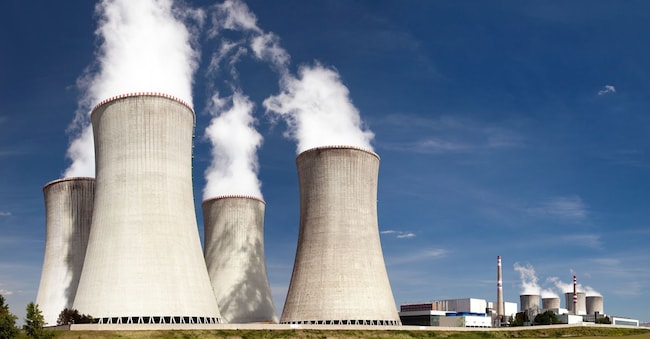
Nuclear power plant Dukovany - cooling towers, field and beautiful sky - Czech Republic

6' min read

6' min read

The Council of Ministers has approved, in preliminary examination, a bill to delegate authority to the executive on new sustainable nuclear power. The text, which consists of four articles, aims to intervene organically on the subject of sustainable nuclear and fusion energy production. It is a framework of rules. The aim is to achieve, with the contribution of this energy source, the 'targets' of decarbonisation and energy security, as outlined in the National Integrated Energy and Climate Plan. At the same Council of Ministers meeting, the green light was given to the decree against high energy bills.

Pichetto, by 2030 we will have nuclear power in Italy

'By 2030 we will have nuclear power in Italy. I am convinced of this,' said Environment Minister Gilberto Pichetto Fratin, interviewed by Bruno Vespa at the Forum in Masseria at Terme di Saturnia. 'The delegated law will go to Parliament next week and there will certainly be much debate. I hope that it will be approved by the end of the year - is the minister's hope -. From there we have 12 months to have the legislative decrees. Then we will have a legal framework' and 'we will be ready, we will be able to make an assessment on the merits and on the costs'.

Loading...

The scope of delegation

.

The proxy on sustainable nuclear power approved by the government envisages that the government will adopt a series of legislative decrees, within 12 months of its entry into force, to organically regulate the entire life cycle of the new sustainable energy, through the drafting of a National Programme: from the experimentation, siting, construction and operation of the new modules, to the issue of fuel fabrication and reprocessing will be addressed in a circular economy vision. Action will also be taken on the decommissioning and dismantling of existing plants, the management of waste and spent fuel, research, development and utilisation of fusion energy, and the reorganisation of competences and functions, including with the establishment of an independent authority for safety, supervision and control. The delegation will also serve to provide training and information tools, train new technicians and professional figures in the sector, and identify benefits for the territories concerned.

Here in five questions and answers is what you need to know about the measure.

Why did the government decide to go for nuclear power?

Also as a result of the events that have taken place in recent years at the international level - geopolitically, climatically, environmentally and socio-economically - the need has emerged to adopt measures that guarantee, also in terms of energy security, the stability of the population's well-being. Italy is currently significantly dependent on electricity imports, especially at night. The ageing of France's nuclear park and the increase in demand even in countries that are currently exporters could make this source of supply less reliable in the long term, even if geopolitical balances change. Although the increase of renewable energy and the extraction of greater quantities of energy resources on national territory contribute to the reduction of energy dependence of EU countries, this does not seem to be sufficient. According to the executive, the current energy mix (fossil, gas, renewables and others) should be replaced by a new national energy mix, which could also include the development of a programmable and continuous low-carbon source such as nuclear power.

Are there any other countries in Europe focusing on nuclear power?

In the European Union, nuclear power is still the 'backbone' of low-carbon energy production and the number one energy source. A number of EU countries (including France, Sweden, Finland, Estonia, Bulgaria, the Czech Republic, Hungary, Poland, Romania and Slovakia) plan to increase or start nuclear power generation, for electrical and non-electrical applications.

Where are we and what is the timing?

Technological developments in the field of nuclear research, which have led to 'advanced third-generation nuclear power' and, hopefully soon, 'fourth-generation nuclear power', have ensured a quantum leap in terms of safety and efficiency. This also applies to small modular reactors, on which European and global efforts are under way to start commercialisation as early as the early 2030s. At the press conference held at the end of the Council of Ministers meeting, the Minister for the Environment and Energy Security, Gilberto Pichetto Fratin recalled that the estimate regarding the operation of the first new-generation plants comes "from the National Platform for Sustainable Nuclear Power and from the elements that come from the various research centres. The Pniec,' he said, 'predicted the next decade; analysts say the product, new-generation reactors, around 2030'.

What is the Italian industrial potential in the nuclear sector?

Speaking at a hearing before the House's VIII (Environment, Territory and Public Works) and X (Productive Activities, Trade and Tourism) Committees, Enea explained that thanks to research and development activities in the nuclear fusion field, and international collaborations with countries that use fission as an energy source, Italy has a highly developed industrial supply chain: In the sector of water-cooled reactors (the so-called SMR - Small Modular Reactor), Italian companies start with a gap because they are 'miniaturising' reactors that are already in operation, and those who already build large reactors have an advantage. For liquid-cooled reactors (the so-called AMR - Advanced Modular Reactor), on the other hand, Italian industries, with the support of Enea, are well positioned with respect to foreign industrial sectors: in this sector the potential is significant because the greater sustainability of this technology, once demonstrated in the field, will allow the development of a market in which Italy can play a leading role. As regards costs and benefits, it can be assumed that the costs of building the first small-scale reactors may be quite high, with repercussions on the cost of the kWh produced. This cost, however, is destined to decrease, to the point of being competitive with that from renewable sources, as the number of reactors installed increases due to the mass production of components. In addition, these reactors are characterised by a higher level of safety systems than large reactors and do not emit climate-changing gases in their operating cycle.

Scientific, technical and technological progress in recent years has been considerable: lead technologies, on which the most promising latest-generation systems are based, see a significant Italian commitment, both in terms of research and development and in terms of implementation and subsequent demonstration.

What is meant by 'overcoming previous nuclear experience'?

.

With this measure, the executive is moving in the direction of a clear break with the nuclear plants of the past (so-called 'first' or 'second generation'), destined for definitive decommissioning, subject to possible reconversion, and the use of the best available technologies, including modular and advanced technologies. With this in mind, consideration will be given to setting up an independent nuclear safety authority with the tasks of regulating, supervising and monitoring nuclear infrastructure.

Does the bill outline a clear path to nuclear energy?

This document regulates the procedure for the adoption of legislative decrees, specifying that the exercise of the envisaged delegation may also take place by means of codification. In particular, the legislative decrees will have to be adopted, within twelve months from the date of entry into force of the law, on the proposal of the Minister of the Environment and Energy Security, in agreement, for the aspects of competence in relation to the subject matter of the decrees themselves, with the Ministers of Business and the Made in Italy, University and Research. All this is subject to the agreement of the Unified Conference, the opinion of the Council of State and the opinion of the parliamentary commissions responsible for the subject matter and financial profiles. It is also provided that, should the deadline for expressing the opinion of the parliamentary committees expire in the thirty days preceding the expiry of the deadline for exercising the delegation of powers, or later, the latter shall be extended by ninety days. The bill provides for the possibility of supplementary and corrective measures within two years.

What is the subject of the proxy?

.

The provision of a national programme, aimed at developing the production of energy from sustainable nuclear sources; the provision of a national programme, aimed at developing the production of energy from sustainable nuclear sources; the regulation of the decommissioning and dismantling of nuclear facilities existing in Italy at the time the law comes into force. Among the solutions that are the subject of the delegation of powers is also the regulation, in accordance with the principle of regulating the entire life cycle of the plants, of the testing, siting, construction and operation of new plants for the production of energy from sustainable nuclear sources, of plants for the fabrication and reprocessing of nuclear fuel on national territory and the related safety and radiation protection systems, and of plants for the temporary storage of radioactive waste and spent fuel, as well as plants for final disposal and related financial guarantees to be borne by the proponents.

What is the approach to the whole life cycle of nuclear energy?

.

The draft law provides for a comprehensive regulation of the entire life cycle of nuclear energy (possible testing phase - design - authorisation of plants - operation of plants - management, storage and disposal of radioactive waste - decommissioning of plants).

Is there any coordination with electricity grid operators?

The Government emphasises that the development of the new nuclear policy is also assessed in its impact on the overall structure of the national electricity system, including the electricity market.

Are there any guarantees to cover the costs?

.

The promoters of nuclear projects must provide adequate financial and legal guarantees to cover the costs of construction, operation and decommissioning of the plants and for the risks, including those not directly attributable to them, arising from nuclear activity.

Brand connect

Loading...

Newsletter

Notizie e approfondimenti sugli avvenimenti politici, economici e finanziari.

Iscriviti