
Maritime activities

Ports: Tangier Med tops the Mediterranean rankings. Who’s up and who’s down among the competitors

Among the seven leading Mediterranean seaports, the Moroccan port holds numerous records. It is hot on the heels of Valencia, which offers the best balance between container throughput and access to the large domestic market. Next come Marseille, Piraeus, Genoa and Trieste

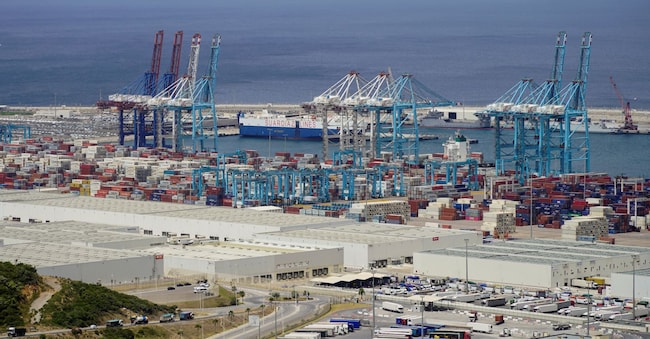
Una veduta panoramica del porto di Tanger Med, sullo Stretto di Gibilterra, a est di Tangeri, in Marocco, 6 giugno 2024.  (REUTERS/Abdelhak Balhaki)

5' min read

Translated by AI
Versione italiana

5' min read

Translated by AI
Versione italiana

The central hub for freight traffic in the Mediterranean is increasingly shifting towards Morocco. This is borne out by an analysis of data from various studies, which place Tanger Med at the forefront of the ports of the Mare Nostrum, even though Valencia remains the region’s most important container gateway. Lagging behind in terms of traffic volumes (though not exclusively), whilst still retaining characteristics of significant importance, other ports which, in the recent past, have experienced periods of strong growth (but also slowdowns), such as Piraeus in Greece and Trieste in Italia, and others which nevertheless hold important positions in terms of traffic, logistics and the types of goods handled, such as Genoa and Marseille-Fos. Gioia Tauro, which is Italy’s most significant transhipment port (i.e. for transferring containers from larger vessels to feeder vessels) and serves as the MSC Cargo Group’s flagship hub in the country, has instead recorded an increase in traffic but remains a long way behind its Moroccan counterpart.

We have focused our attention on these seven ports, as part of a necessary process of shortlisting (which nevertheless also took into account the other operators in the area), in an attempt to identify the potential port capital of the Mediterranean in 2026. We have taken into account factors such as traffic volumes, connectivity, access to the hinterland, operational efficiency, industrial integration, investment capacity and strategic importance. All this takes place against a backdrop of a rapidly changing geopolitical landscape, in which the crises in the Red Sea and the Strait of Hormuz have led to rerouting via the Cape of Good Hope, longer shipping distances between Asia and Europe, increased bunkering, the reorganisation of ports and volatility in transhipment.

Loading...

Against this backdrop, Tanger Med, as highlighted in a report produced by the NextMed Observatory – supplemented by figures from SRM (a research centre affiliated with Intesa Sanpaolo) and Assoporti – recorded, in 2025, 11.1 million TEUs (a unit of measurement equivalent to a 20-foot container), representing an increase of 8.3 per cent on 2024, whilst also setting a record of 161 million tonnes of cargo handled, an increase of 13.3 per cent. These records are largely attributable to transhipment, the port’s location at the Strait of Gibraltar – straddling the Mediterranean and the Atlantic Ocean – and its integration with a Moroccan industrial platform designed by the state.

The Tanger Med Group reports over 3,000 hectares of industrial and logistics parks, more than 1,400 companies and an industrial turnover of around 17.4 billion euros in the automotive, aeronautics, textiles, agri-food and logistics sectors. And this marks the difference between a purely transhipment terminal, such as Gioia Tauro, and the Moroccan port, where a growing proportion of traffic is linked to Morocco’s industrial processing and exports, particularly in the automotive sector.
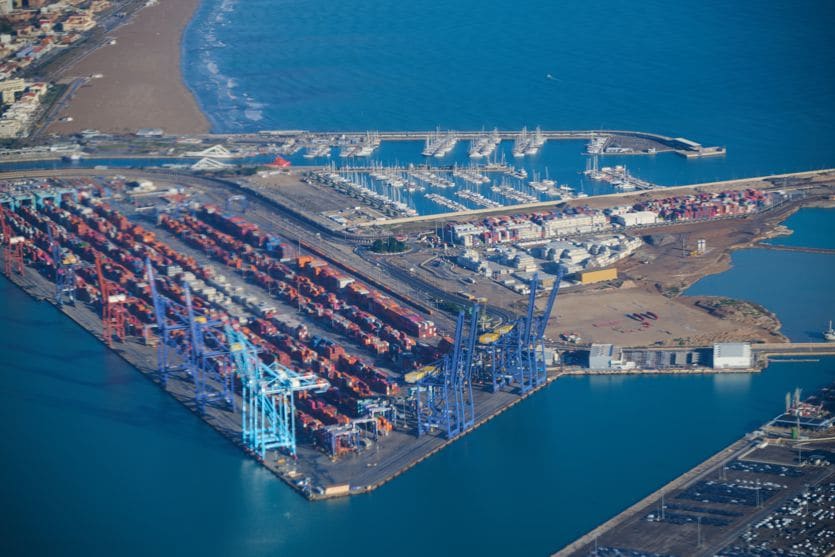
Valencia dall’alto

Una vista della città ripresa dal finestrino di un aereo nei pressi di Valencia, in Spagna, il 2 febbraio 2025. (Foto di Jaap Arriens/NurPhoto/via Reuters)

Valencia, on the other hand, serves as a major port for the storage and distribution of containers to the European mainland. In 2025, it handled 5.66 million TEUs (+3.41 per cent) and 80 million tonnes of cargo (-0.75 per cent). Its main target markets are China, Italia and the US. Moreover, via the Spanish port – which last year recorded a 5.56 per cent increase in containerised exports and a 15.55 per cent rise in imports – a larger proportion of containers enters and leaves the economies of Spain and Europe than is the case with Tanger Med. Furthermore, rail connections are on the rise.
Continuing the overview in order of traffic volume, Piraeus handled 4.64 million TEUs in 2025, marking a fall of 3.1 per cent; whilst the tonnage of cargo is not recorded, but historically (according to the Athens Stock Exchange) it has ranged between 60 and 70 million tonnes. The Greek port is being severely affected by both the Suez crisis and the Hormuz crisis; and the fact that its Port Authority is 67 per cent owned by the Chinese state-owned company Cosco, which controls a large number of strategic assets (including, directly, Piraeus’s Piers II and III), is viewed with concern by NATO member states.

Gioia Tauro handled 4.49 million TEUs in 2025, representing growth of 14 per cent, and reaffirmed its position as Italia’s leading container transhipment port. Although it is a highly competitive transhipment terminal in the Mediterranean, it is noted that a very high proportion of containers do not enter the Italian economy; the industrial hinterland is significantly underdeveloped, not to say almost non-existent; the traffic generates less urban value than in Valencia, Genoa or Trieste; furthermore, the dependence on MSC and the group’s network strategies represents both a strength and a risk of concentration.

Lo scalo ligure

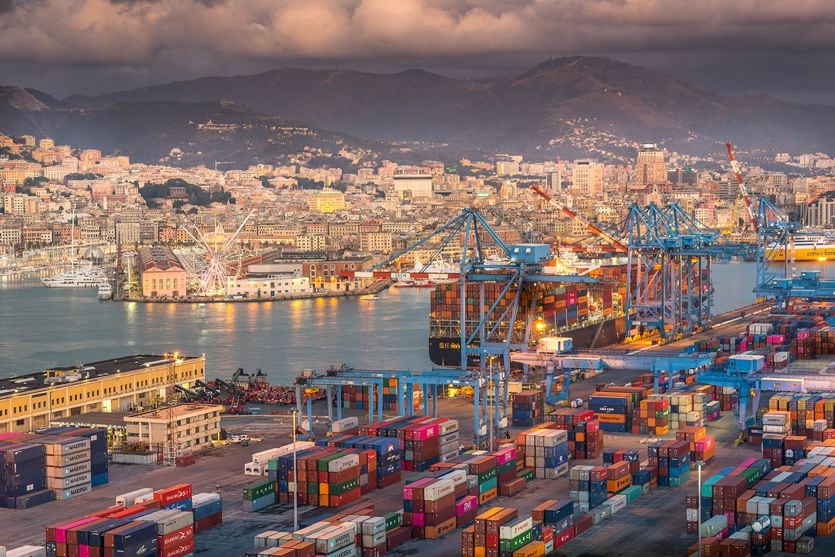
Porto di Genova (Adobe Stock)

Staying in Italia, the port of Genoa handled 2.4 million TEUs (-1.6%) in 2025; however, this figure rises to 2.99 million (+6.3%) when the Savona-Vado terminal – which forms part of the same port authority – is included. Meanwhile, the volume of cargo in Genoa stood at 46.6 million tonnes (-1.71 per cent) and rose to 62.9 million tonnes when Savona is included (-0.8 per cent compared with 2024). The Ligurian port is the most comprehensive in Italia from an urban, commercial and logistical perspective, handling containers, ferries, cruise ships, shipbuilding, industry, maritime services and providing access to Northern Italy’s manufacturing sector. And whilst, on the one hand, the port does not appear to have suffered particularly from the crisis in the Middle East (which has, in fact, led to an increase in traffic), on the other hand, it faces critical issues in terms of transport links, both by rail and, above all, motorway transport of goods – particularly to the EU – due to the severe shortcomings of the Ligurian road network.

Moving on to France, Marseille-Fos handled 1.45 million containers (+0%) and 74 million tonnes of cargo (+5%) in 2025. It is the Mediterranean port system in which cargo tonnage is most closely linked to a complex industrial and energy network, comprising oil terminals, refineries, petrochemical plants, steelworks, storage facilities, LNG terminals, logistics and rail links; as well as the Rhône river corridor. Furthermore, it is one of Europe’s main landing hubs for submarine telecommunications cables.

Finally, Trieste, which is a case in its own right. Despite low container traffic of 681,000 TEUs – down by 19.05%, incidentally – and cargo handling of around 60 million tonnes (+0.72% on 2024), the port continues to capitalise on its strengths – railways and ‘motorways of the sea’ – despite being affected by the blockades in the straits. In 2025, over 317,000 ro-ro vessels passed through (+7.42%), thanks in part to the launch of new shipping routes to Turkey. This confirms the port’s role as a key hub for rolling stock between the Mediterranean and Central Europe. Rail transport is also on the rise: the Trieste and Monfalcone network handled 11,600 trains (+3.85 per cent) and the Port of Trieste alone handled 7,939 trains (+1.65 per cent). Trieste, therefore, stands out as Italia’s most strategic port in terms of energy (with the Siot oil terminal and coastal storage facilities); connections with Austria, southern Germany and Central Europe; access to continental markets; its role in the Baltic-Adriatic corridor; and, as mentioned, rail transport.

Loading...

I PRINCIPALI SCALI DEL MEDITERRANEO

Loading...

Ultimately, when compared with other Mediterranean ports, it is Tangier Med that comes out on top; according to the NextMed report, it offers five key strengths: the largest container throughput, higher growth than its main competitors, its location between the Atlantic and the Mediterranean, integration with industrial and logistics zones, and the government’s ability to implement a strategy spanning several decades, given that Morocco is building a national port hierarchy with Tanger Med as a global hub, Casablanca as an economic gateway and Nador West Med as a new industrial and energy hub. The main competitor to the port of Tangier is Valencia, which, despite handling only half the volume, boasts the best balance between the number of containers handled and access to a large domestic market.

Copyright reserved ©
Loading...

Brand connect

Loading...

Newsletter

Notizie e approfondimenti sugli avvenimenti politici, economici e finanziari.

Iscriviti