Outside the home

Territorial identity and sustainability: restaurants where game is at the centre of the menu

Fine and selected meats, skilfully crafted processing, maturation, smoking and fermentation, traditional recipes and ancestral yet innovative cooking methods: more and more restaurants are giving new life to the tradition of game

by Camilla Rocca and Emiliano Sgambato

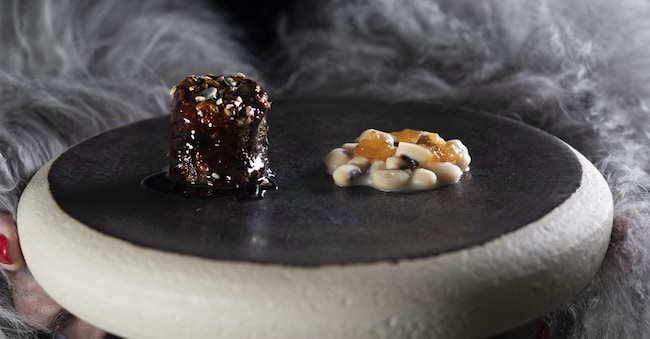
Un piatto dal menu di Grow

6' min read

Translated by AI
Versione italiana

6' min read

Translated by AI
Versione italiana

In Italia, game represents a gastronomic heritage of great breadth, which today takes on even greater value in a meat market that is changing and increasingly attentive to sustainability. The growing interest in natural products is accompanied by significant data: according to Coldiretti, the wild boar population exceeds one million specimens; roe deer occupies 64% of the provinces, with an estimated 456 thousand heads, and rising; and then deer and fallow deer, respectively 70 thousand and 20 thousand specimens. The European hare and the white hare, both huntable according to Law 157/1992, maintain an important role in the hunting tradition.

This widespread availability is combined with a trend whereby game is emerging as a quality resource: a segment that in Europe is still only worth 2-4% of total meat consumption, but which is enjoying increasing interest due to its superior nutritional characteristics with protein at 21-26% and fat often less than 3-4%.

Loading...

The hunting supply chain, if guided by effective and scientifically proven management models, can therefore transform an ecological need - the control of fauna - into an economic lever with high added value, capable of generating products of excellence: precious cuts, artisanal processing, historical cured meats and identity recipes. It is a perspective that aims not only at enhancing the quality of meat, but also at consolidating a modern hunting culture, based on respect for the environment, monitoring and safeguarding wild populations.
There are many Italian restaurants for which game is the flagship, here is a small selection.

Grow

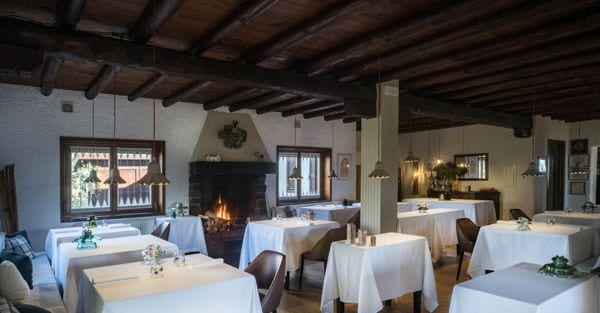
To understand the extent to which game is a new frontier of experimentation, sustainability and respect for raw materials rather than a remnant of dusty tradition (as some clichés might lead one to think), one need only cite the year of birth of Matteo and Riccardo Vergine, brothers in the kitchen and dining room respectively of the Grow in Albiate, Brianza: 1997 and 1994. The restaurant immediately focused on game, with essential and rigorous cooking. In 2022 he lit the cooker, or rather the embers, but governed on several levels and with selected woods, so as not to tire and cover, so as not to make the dishes resemble each other; a year later he was awarded the green star and in 2024 the red star. The chef was also awardedMichelin Young Chef Awards for 2025. The philosophy of the restaurant - elegant and sober even in its contemporary furnishings, far from the collective imagination of hunting, and discreet in its location, 'hidden' in a traditional Lombard courtyard - is inspired by the Trappeur style, made up of essentiality, nature and cooking over an open fire. Throughout the year, it offers a menu based on game from sustainable hunting and fishing, with menu variations depending on the season. A few examples? Deer bresaola and buckwheat chips; smoked pheasant leg, herbs and creamed corn; hay brisket cooked over charcoal, chicory and peanuts; beeswaxed venison, honey, oxidised walnuts, country herbs, savoury herb cake.
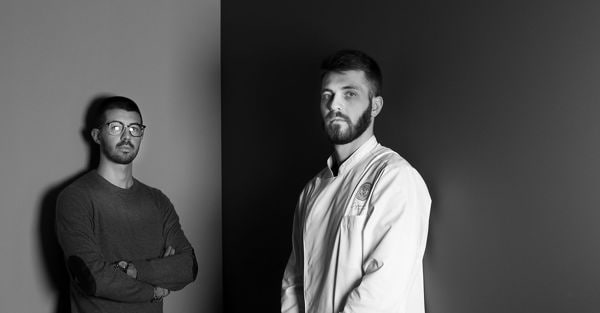
Matteo e Riccardo Vergine di Grow

Grow's is a modernity that, however, shuns the chaos of the city, is rooted in the essential and feeds on time: from knowing how to wait for the land in its seasonality both for hunting and for the vegetable garden, which the two brothers tend just a few metres from their restaurant, to that of maturing (with beeswax to slow down oxidation) and fermentations (for example for garum, an ancient liquid sauce made from fermented fish, already used by the Romans as a condiment to enhance the flavour of dishes) and preserves. Grow also offers grow.pop a menu where for a small fee you can enjoy a star-studded culinary experience, with a service that allows you to enjoy it even in the short time of a lunch break (from Tuesday to Friday 2 courses with coffee water and service for 25 euro, 30 with dessert)
Florida

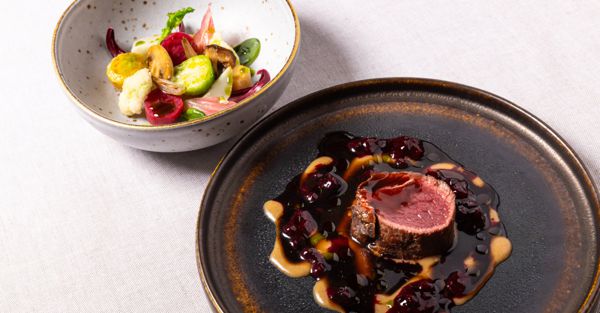
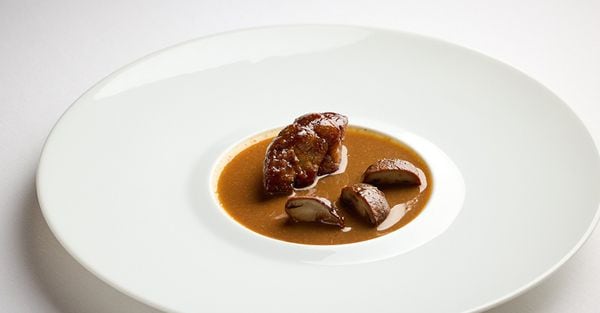
Piatto del ristorante La Presef

Even in Florida, in Valtellina, game enters a dimension of sustainable haute cuisine. The restaurant La Presef, led by chef Gianni Tarabini and awarded one Michelin star and one green star, constructs a gastronomic journey that combines technical elegance and environmental care. Meats such as deer, roe deer and wild duck are 'lightened', supplemented with spontaneous herbs, roots, berries, natural extracts, resulting in essential but profound dishes. The forest becomes a creative palette, the raw material an element respected and reinterpreted with contemporary sensitivity. A proposal that makes nature and cuisine dialogue with rare balance.

From Cain

Una creazione della chef Valeria Piccini

At Da Caino, a self-taught chef since the 1970s has been putting the best of the deepest Maremma into her dishes: a rural heritage transformed into gastronomic excellence, worth two Michelin stars. The legendary Valeria Piccini at the hob, with her son Andrea Menichetti - who in the dining room brings his visceral passion for the wines he selects for his very deep cellar, well beyond his role as sommelier - have built a method that is now a national reference: absolute respect for the hunting industry, punctual selection of animals and calibrated cooking that enhances the biodiversity of an area where wildlife management is part of the local economy. A game that speaks of landscapes, tradition and nature. Hare, wild boar and roe deer are treated with a technical rigour that cleanses the taste of any rustic excess, restoring clean, elegant meat with a complex but readable aromatic profile.

Al Casin del Gamba

La sala accogliente del Casin del Gamba

Since 1976, the Dal Lago family has run Al Casin del Gamba, one of the most authoritative voices in Vicenza's local cuisine, specialising in 'wild meat'. Chef Antonio Dal Lago, a self-taught chef of great sensitivity, signs a cuisine rooted in tradition but not afraid to innovate. Mushrooms, snails and game have become iconic dishes, loved by fans all over Italia. In the dining room, Daria Cerato greets diners with elegance, while Luca Dal Lago looks after a rigorously constructed wine cellar of great labels and small local producers. Theuninterrupted Michelin star since 1992 testifies to a perfect balance between continuity, identity and the ability to renew itself without losing its soul.

Malga Panna

At Malga Panna, in Moena (Tn), game is not a seasonal off-menu, but the lintel of a cuisine that interprets the Alpine arc as an ecosystem. Deer, venison and feathered animals come from a short and controlled supply chain, managed according to wildlife plans that guarantee balance and constant quality. Thestarred chef Paolo Donei processes the meat with Nordic precision: clean extractions, targeted maturation and delicate cooking that preserves the aromatic verticality of the mountains. The result is a virtuous model of high-altitude catering, where game becomes an ambassador of the territory and a lever of attraction for a gastronomic tourism that supports, in a concrete way, the economy of the valleys.

Lokanda Devetak

Eating at Lokanda Devetak is a plunge into the most intense Friuli. Wild game is the living heritage of a border area, where gastronomic identity is born from the meeting of cultures. Grawn meat, wild boar and hare are processed in the Karst tradition: long marinades, slow cooking, skilful use of wood and fermentations that amplify the depth and texture of taste. The Devetak family guards ancient knowledge, transforming game into a cultural as well as gastronomic preserve. A cuisine that makes sustainable management of fauna an element of identity. The winery - one of the most solid in the North-East - completes an experience that enhances rural economies and small cross-border supply chains.

Locanda del Daino

Locanda del Daino #casadicaccia

In a secluded portion of the Apennines between Pieonte and Liguria (at Grondona), where the territory of the Quattro Province is cloaked in the silent woods of the farming and hunting reserve Cascina Emanuele - created in 1947 by Edoardo Garrone to protect this dense and wild nature - stands the Locanda del Daino #casadicaccia, a place that seems to guard the very breath of the landscape.
In the kitchen work the chefs Giacomo dell'Aglio and Tommaso Picollo, young interpreters of a tradition that here is not memory, but living continuity: intense backgrounds, slow cooking, aromas of undergrowth that intertwine with game treated with absolute respect. Deer, roe deer, hare and wild boar thus become the authentic tale of a territory that is offered without filters, transformed into dishes that speak the language of the mountain and its ancient rhythm. A pure, sincere cuisine of the territory that makes the inn a garrison of flavour and identity.

Ostaria Siracusa

At Ostaria Siracusa, the real star is the Josper oven, which allows perfect cooking for all Dry Age meats, yielding fragrant crusts and juicy interiors. Here, game is often the star of the "off the menu", so hare and venison find masterful interpretations: full flavours, never loaded, enhanced by light smoking and an almost sartorial attention to temperatures. Supporting the gastronomic proposal is an ample and well-curated wine cellar: in addition to Sicilian wines, it is rich in Nebbiolo, Amarone, Brunello, Supertuscan and champagne, designed to accompany the aromatic complexity of matured cuts and game with character.

Copyright reserved ©
Loading...

Brand connect

Loading...

Newsletter

Notizie e approfondimenti sugli avvenimenti politici, economici e finanziari.

Iscriviti