
Berlinale against dictatorships protested over silence on Gaza. Golden Bear for the film Yellow Letters
Two filmmakers turned down award for silence on Palestine

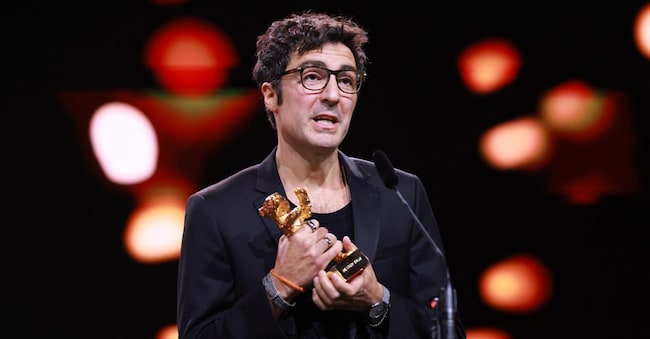
The first thing Tricia Tuttle, director of the Berlinale, did at the opening of the 76th edition's awards ceremony, amid applause and some booing, was to apologise for not allowing politics into the festival. She said that she understands and feels the anger of those who rightly protest against the injustices of the world and that she sees the protests against the Berlinale as a sign of the centrality of the German festival and the great polarisation of the times. But a word on Gaza, which everyone expected from her after the controversy against the silence on Palestine, she did not say. Thus the Lebanese director Marie-Rose Osta refused the Golden Bear for best short film for Someday a Child, since her film was about an 11-year-old boy who experiments with magical powers to overcome the evil of war. When they tried to put a patch on it by awarding the Palestinian Abdallah Alkhatib with Chronicles of siege the director took the stage saying that we will remember who has been with us and without us and accused the German government of standing by Israel. A few cries against Hamas came from the audience, the presenter, Luxembourgian actress Désirée Nosbusch, in amusement.
A step backwards
Let us take a step back. At the festival's opening conference, Wim Wenders, president of the jury, had asked for cinema and not politics to speak. There was an immediate reaction from Arundathy Roy, who cancelled his participation on the grounds that artists must speak about politics. Kaouther ben Hania, director of The Voice of Hind Rajab, refused the Cinema for Peace award a few days ago, while over 90 authors, including Ken Loach, Tilda Swinton and Javier Bardem, signed a letter addressed to the organisation against the silence imposed on Gaza. Wenders arrived on stage at the award ceremony and spoke of complexity and avoiding the superficiality of internet compulsors
The Golden Bear
It should have won the Golden Bear Rose, instead, the prize went to Yellow Letters by İlker Çatak. The yellow letters are the ones the regime sends you when it has to send you to rest and it is a film, said Wenders, that fights against the dictatorships that surround us. The work tells the parable of an artist couple crushed by the censorship of the Ankara regime, Derya and Aziz, who in an incident at the premiere of their new play offend the politicians. From there they lose their jobs and their home and are forced to move to Istanbul. A great distance begins to grow between them: Aziz remains true to his convictions and is forced to fall back on small jobs, Derya bends to the system. A fine film that does not, however, have the strength of İlker Çatak's previous film, The Teachers' Room, also about power relations.
The Grand Jury Prize
The Grand Jury Prize was won by Emin Alper's Kurtuluş (Salvation): the return of an exiled clan to a remote village in the Turkish mountains, between action and soap opera with ghosts and predictions. Not a favourite for the writer, but Alper's speech was beautiful, reminding us that the Palestinians, the Iranians, the oppressed peoples of the Middle East are not alone.
The Jury Prize
The Jury Prize went to Queen at sea by Lance Hammer about the inability of a daughter, Juliette Binoche, to understand the poetry of love in old age (to quote a beautiful book by Vivian Lamarque) and among younger people. In particular, her inability to decipher the delectate bond between her stepfather Martin (Tom Courtenay) and her mother Amanda (Anna Calder-Marshall), who suffers from dementia. A film about loneliness, about the unwritten rules of loving, filial and parental relationships. A difficult and delicate portrait of what they call the Third Age.
The Best Director Award
Grant Gee's direction for Everybody Digs Bill Evans was undoubtedly remarkable with many quick frame changes to follow the musical instruments and the grief: it was quite churlish to assign it to Gee. The black-and-white film begins in Ny in 1961 following legendary jazz pianist Bill Evans after the death of bassist Scott LaFaro, an indispensable part of his trio. Evans' creative vein dried up and he fell into the darkest crisis of depression and addiction. Beautiful in the first 20 minutes, then the lack of notes makes it almost pointless.


