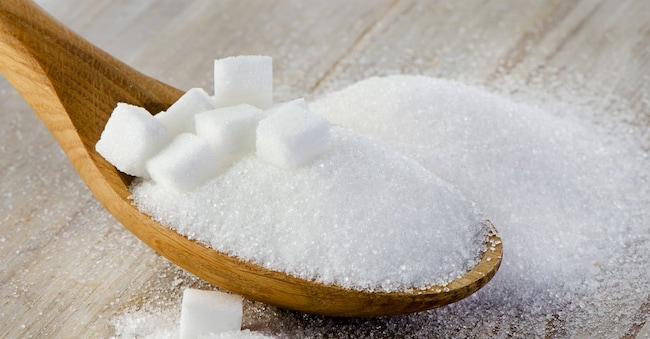
In Italia, 'the last Japanese' also gives up. Coprob-Italia Zuccheri, Italy's only domestic sugar producer - two factories that manage the entire beet supply chain, from processing to storage - announces the seasonal suspension of the Veneto beet processing plant.
For 2026 in Pontelongo (Padua) - 200 workers, both permanent and seasonal, and 2,000 conferring farmers - only the packaging site will be maintained, but 'the structural modernisation project with the EUR 3 million Pnrr project will be completed'.
Loading...
It was a very painful decision,' says the Cooperative, 'which came at the end of the last board meeting.
'The decision,' reads a statement, 'is the result of in-depth technical-economic-financial analyses, among which emerge as negative variables the persistent crisis in the cost of sugar on a European and non-European scale, the drastic decrease in the Veneto region's beet-growing area (from 30,000 to 19,000 hectares) and the huge cost of maintaining and servicing the Padua plant.
The plant in Minerbio, in the province of Bologna, will remain operational, where the beet quantities contracted by members in the Veneto region will flow.
Loading...
'In Italia we struggle to produce beet in the fields,' says Coprob Italia Zuccheri vice-president Giovanni Tamburini (Confagricoltura). "Until 2018 it was around 8.5-9 tonnes of sucrose per hectare, in the last five years we have dropped below the average of 7.5," he continues. 'The sector is unprofitable and farmers are abandoning'.
The squeeze on molecules, useful to combat climate change and pathogens, weighs like a boulder. "In Italia we have dropped from 98 to 55 available active ingredients," he says. "This way we are not moving forward.
The cooperative pledges to manage this phase 'with the utmost sense of responsibility, in dialogue with the trade union representatives'. Fai, Flai and Uila ask for a meeting with the Minister of Agriculture, Francesco Lollobrigida. On the table in Via Venti Settembre, in Rome, they will bring a topic: can our country still consider sugar a strategic ingredient for food processing and therefore for the strengthening of food sovereignty and Made in Italy?
Contro il diabete da adulti, meno zucchero per i bambini
The Crisis in Europe
In Europe, the latest announcement - in chronological order - came from Nordzucker. At the end of the production season, Germany's second-largest sugar refiner will cease production at its Slovakian plant in Trenčianska Teplá, which will continue to be used as a logistical-commercial hub. Half of the 180 jobs will be cut.
Südzucker, the leader of the German agribusiness and one of the world's largest sugar producers, also collapsed on the stock exchange and the board of directors proposed the suspension of the dividend.
Loading...
The fact that even Northern Europe - which has always had a vocation for the industry due to climatic conditions - is raising its first white flags, says a lot about how deeply the bite of the crisis has penetrated the production fabric.
'As of 2017,' Marie-Christine Ribera, director general of Cefs (European Sugar Producers Association), tells Il Sole 24 Ore, out of 103 sugar factories, 21 have closed: five only in 2025, another will cease operations by 2027, which means that only 81 beet sugar factories will be operating in Europe during the next marketing year.
For the supply chain - which has been poised for years between extreme weather conditions and super-aggressive pathogens - the blow has come from the surplus of product that has been flooding the market of the Twenty-Seven since liberalisation, with the end of quotas, was triggered in September 2017.
Now the crisis spiral has entered its most critical phase and not even area cuts can compensate for the oversupply on the market.
The scenarios outlined on the horizon by the upcoming trade agreements are not comforting: 190,000 tonnes of product are looming from Mercosur (while sugar has been granted sensitive product status under the EU-India agreement).
'Today,' explains Ribera, 'the potential availability of foreign sugar (white and raw) amounts to 1.6 million tonnes, equivalent to 12% of EU consumption. Brazil alone has over 600 thousand tonnes of access'.
Large import flows from Ukraine (100,000 tonnes) contributed substantially to the surplus in Europe. In the sugar sector white sugar can be exported with an authorisation (inward processing regime), generating licences that grant the right to import raw sugar for tariff-free refining. This is because the equivalence of sugar beet and raw cane sugar creates an artificial processing link between exports of white sugar and imports of raw cane sugar for refining. 'In practice, exports that should free up the market,' explains Ribera, 'are used to generate import rights sold at €15-20/tonne, in a parallel activity that benefits the individual operator to the detriment of the wider market. This scheme currently allows companies to import sugar without tariffs or quantity limits, provided the sugar is refined or processed into food products and then exported outside the EU. According to data from the European Commission, in the marketing year 2024/25 imports of raw sugar under the inward processing regime reached 587 thousand metric tonnes, an increase of 19% from the previous year. Brazil was the source of 95% of these imports. White sugar imports under the same programme totalled 155 thousand metric tonnes in 2024/25, an increase of 5% year-on-year. Brazil supplied 43% of this quantity, followed by Morocco, Egypt and Ukraine. "In 2025," says MEP Stefano Bonaccini (S&D), "the sugar quotas entering the EU at zero tariffs reached the highest level in the last five years. This supply surplus has caused sugar prices to fall to their lowest level in three years.
Lollobrigida: Più controlli su import in Ue, entrino solo prodotti che rispettano i nostri standard
The Brussels Strategy
'The EU Commission,' Bonaccini continued, 'has announced the exclusion of sugar from the EU-India trade agreement, not only following the WTO's condemnation of the Indian administration for distortionary subsidies, but above all because the country remains the single most destabilising sugar producer on the world market.
Neutralising the danger to India, EU Agriculture Commissioner Christophe Hansen announced on X that to alleviate the pressure on producers, he would propose a temporary suspension of the scheme.
How long will this suspension last and, above all, when will it come? "We have asked for at least one year's suspension," answers Tamburini, who is also president of Cefs (European Sugar Producers Association), "but it will take at least another six weeks to obtain it. The path is not smooth: 'There are many technical complexities, we have to agree with Customs, moreover there is no Customs Authority to preside over and coordinate the different specificities. And then there is the whole transitional phase to manage. From when will the suspension start? How will we deal with the past?'.
In 2027 there will be coupled aid and then the new CAP. Tamburini launches a proposal: the implementation of Article 222 of the Single CMO Regulation, which, as an exception to the general prohibition of anti-competitive agreements laid down by the Antitrust Authority, allows actors in the chain to establish voluntary agreements to limit production. "To date we are not allowed to confront each other because of the risk of cartels," he says. "But there are only a few of us left," he adds. "We have to be able to talk, we have to find an understanding to survive."