
Catering: the value of chains rises to 9 billion, but there is a shortage of staff
Growth remains faster than in the rest of the sector, despite being held back by the slump in consumer spending and difficulties in recruiting staff

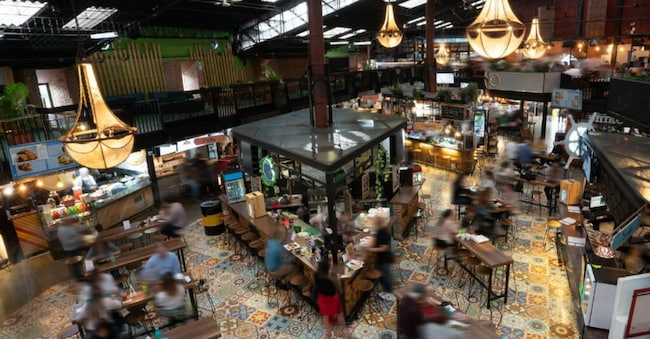
Restaurant chains account for around 11 per cent of the sector’s turnover (9 billion out of a total of 84) but continue to be the segment with the best growth prospects in the Italian foodservice sector. According to Deloitte, by 2025 the value generated will have grown by 6.3 per cent, compared with 0.4 per cent for so-called independent establishments. And since before the Covid-19 pandemic, the average annual growth rate has been 7.2 per cent, compared with 0.6 per cent.
This is a trend that looks set to maintain its momentum, despite the general slowdown not only in out-of-home consumption but also across the entire economy, which is in the grip of inflation caused by the international crisis. Although forecasts should always be treated with caution at a time of uncertainty such as the present, the turnover of ‘quick-service restaurants’ – ‘quick-service’ outlets, of which chains with more than ten outlets account for just 18 per cent of the total – are estimated to grow by an average of 1.2 per cent per annum until 2030 (CAGR at constant prices, i.e. adjusted for inflation) compared with a decline of 0.9 per cent for ‘full-service restaurants’ (i.e. ‘traditional’ restaurants with full table service). ‘Regardless of the market situation that arises in the coming years, it is highly likely that chains will drive the catering sector,’ comments Tommaso Nastasi, Deloitte Strategy and Value Creation Leader – “and the market will become more selective, rewarding those brands that have a clear and distinctive positioning compared to the competition.”
This is the scenario that was discussed a few days ago at Aigrim Day, the association’s annual event which, within Fipe Confcommercio, represents “large-scale catering and multi-site service businesses”. Although the growth recorded is above the sector average, many observers had probably expected better performance, given the post-Covid recovery and the significant gap with the rest of Europe, where chains account for 27 per cent of the market’s total value of the total market and 15 per cent of the number of outlets, compared with 11 per cent and 3–4 per cent respectively in Italia.
“There is certainly still room for growth,” notes Riccardo Orlandi, president of Aigrim. “It is not certain that we will be able to achieve the market shares seen in other countries, partly because Italia has a strong tradition centred on classic full-service catering, but particularly in the travel sector (where the current market is worth around 3 billion euros, ed.) the potential is high, thanks in part to rising tourist numbers and the fact that there is still significant scope for growth. There are also good prospects for development in city centres and shopping centres, even though these areas are more saturated. It is also clear that over the past year our sector has experienced a cyclical slowdown: on the one hand, there is a general trend towards eating out less; on the other, in the case of travel retail, reduced flight numbers and high petrol prices have limited travel and, consequently, opportunities for spending.”
Another factor holding back more steady growth is the difficulty in finding skilled labour, a long-standing issue that was the focus of yesterday’s meeting. “Whilst this problem simply did not exist before the pandemic, it has now become structural,” continues Orlandi. In our sector, there is a pressing need for staff, who are difficult to replace. Unlike traditional restaurants, we cannot easily change opening hours or decide on arbitrary closures, for example on motorways or at stations. Despite the introduction of self-service kiosks, the need for staff has tripled. Failing to recruit qualified staff means limiting the growth potential of a sector that continues to invest, recruit and create jobs. We need to make the national collective agreement even more attractive; it already offers good conditions but is due for renewal. And, alongside the tax relief measures for certain contractual provisions introduced to support workers’ incomes, equally important measures are needed to reduce labour costs. On this strategic issue, we hope for close dialogue with political parties and institutions – in my view, including on the specific issue of migration flows’.


