
The fight against food waste becomes a tool in the battle against food poverty
Marco Piuri, president of the Banco Alimentare Foundation: “We need to diversify our supply chains and gain a thorough understanding of the issue”

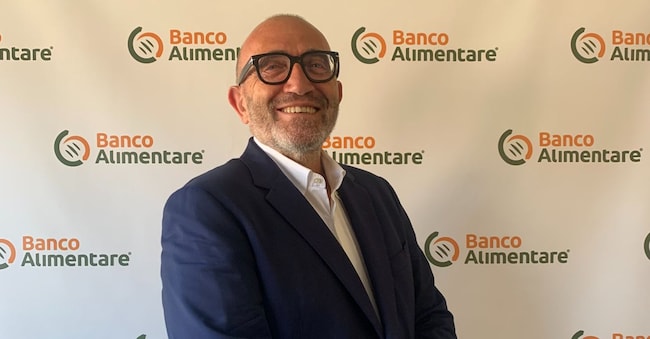
Turning the fight against waste into a positive way to shield against against food poverty in Italia. And to harness the culture of giving to strengthen the civic and social responsibility of citizens and businesses. With a view to synergy and inclusion. The Banco Alimentare Ets Foundation is working along these lines, having translated its objectives and slogans into tangible actions in recent years. As its president, Marco Piuri, explains, backed by the figures.
Ten years on from its entry into force, what impact has the Gadda Act had on those, like you, who are working to tackle food poverty?
The law has been, and remains, essential because it has systematised and reorganised an area – that of asset management and waste – which was previously fragmented. And it has done so with the genuine involvement of all operators in the sector, including the Food Bank. It was a collaborative effort, which subsequently bore fruit in practical terms, particularly in the large-scale retail sector: as far as we are concerned and the recovery of surplus food, for example, between 2016 and 2025 donations rose from less than five thousand tonnes to 24,000. Of course, in light of changing challenges and times, this can certainly be revised. For instance, by understanding how much and how to expand the range of eligible goods. And by making donations more cost-effective within the framework of the social and circular economy. Breathing new life into surplus produce – that is, goods outside the traditional commercial circuit but which are edible and consumable – carries significant weight. This cannot be attributed solely to the intrinsic value of the goods themselves, but also to the economic and social impact of these circular mechanisms. This also affects the state’s finances.
Moving from the general to the specific and looking at your business, what assessment would you make of it?
We have always worked to meet a key need: food. And we have done so by expanding, for example, our supply sources through various initiatives and projects. Such as Ri-pescato, an agreement in place for Sicily whereby illegally caught tuna is not discarded but donated to the Banco, which processes it, transforms it and supplies it to the operators with whom it collaborates. There has been a significant evolution: the proportion of fresh food is growing, as is the contribution on food education is becoming more widespread. In numerical terms, in 2025, 120,000 tonnes of food were collected and distributed (equivalent to 180 million meals) and the number of people reached – thanks in part to a network that, in addition to the Foundation, includes 21 regional food banks and over 7,600 organisations across the country - 1.8 million people. These are significant figures, but they reflect a reality that no longer affects only marginalised sections of the population and still requires a great deal of work: our aim remains not only to combat food insecurity but also to ensure that it does not lead to loneliness, abandonment and a lack of hope for the future.

