
The heat is causing fruit to spoil: wholesale prices are falling
A good harvest for peaches and apricots, combined with high temperatures, is increasing the volume of produce available and putting downward pressure on prices. However, the number of hectares under cultivation is falling

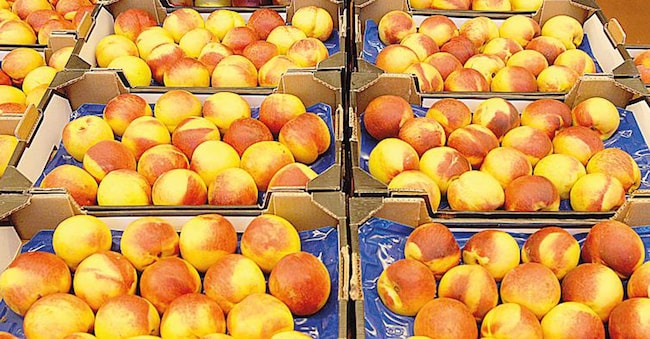
The tropical climate is driving down the prices of summer fruit, which – in addition to benefiting from a favourable harvest – is now more affordable for consumers, despite the growing demand for fresh, thirst-quenching fruit that is rich in vitamins.
“We are seeing a general fall in wholesale prices,” confirms Fabio Massimo Pallottini, president of Italmercati (22 facilities across the country, 7 million tonnes of goods handled annually, €11 billion in turnover). He explains why: “The severe heatwave is accelerating the spoilage of fruit after harvest, prompting operators to prioritise a rapid flow of goods.”
“Apricot prices continue to fall, with prices ranging from 1.30 to 1.80 euros per kilogram depending on the variety,” says Pallottini. “It’s been an excellent season for peaches, and particularly for nectarines, which are seeing falling prices and are very good value, especially for small to medium sizes, offering consumers excellent opportunities to save money whilst beating the summer heat,” he concludes.
In general, the forecasts for the 2026 season for stone fruit – the ‘queen of summer’ – are positive, indicating either an increase in production or substantial stability. Above all , the 24 per cent increase in cherries stands out, with production expected to reach 120,000 tonnes: “This is the most marked recovery compared to the disastrous 2025 season,” comments Elisa Macchi, director of CSO-Italy.
Estimates compiled by the research centre at Ferrara also show that apricot production is facing a sharp structural decline: the area under cultivation has fallen from 20,200 hectares in 2021 to 16,500 in 2026 (-20% over 5 years, -4% in the last year alone) due to sensitivity to frost, low profitability and plant diseases. Production, however, is estimated at 194,000 tonnes, 1 per cent higher than in 2025. A recovery is being seen in the North (Emilia-Romagna and Veneto) following the frost of 2025; production is down in the Centre-South (Campania, Basilicata, Sicily) due to crop rotation and previous water stress, with the exception of Calabria.

