The historical Berkel and other solutions for slicing and cutting at home
Berkel was also chosen by Iberian charcuterie producer Arturo Sánchez to 'replace' the traditional 'cortadores' who specialise in hand-cutting the famous jamon

5' min read
Key points
5' min read
Once again, the success of a small household appliance came about because or 'because of' the long period of isolation due to Covid. As in fact happened with the air fryers and food processors, the (electric) slicer also registered the gastronomic enthusiasm of families who, having much more time on their hands, dedicated themselves to experimenting with new recipes, taking care of all the details.
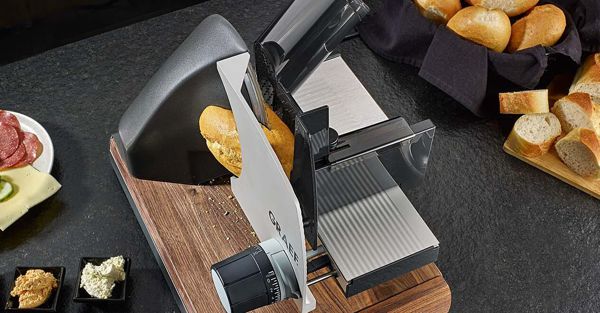
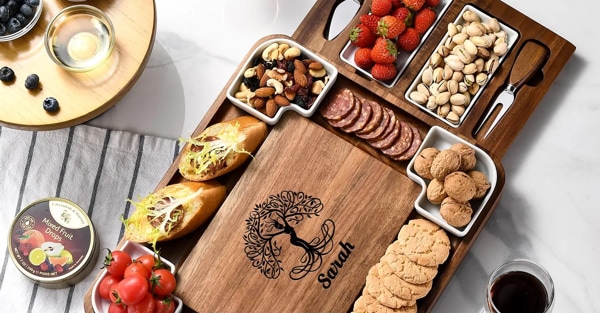
So the slicing machine, in the domestic version of the professional tool, entered homes, allowing the mise en place of the slice or 'cutting board' to be prepared with special care - as TikTok documented and still documents today - for the decorations, colours, and shapes. Not only with cold cuts, but also with cheese, meat, vegetables and even fruit. But the basic condition to achieve these results is to have a (semi-)professional slicer.
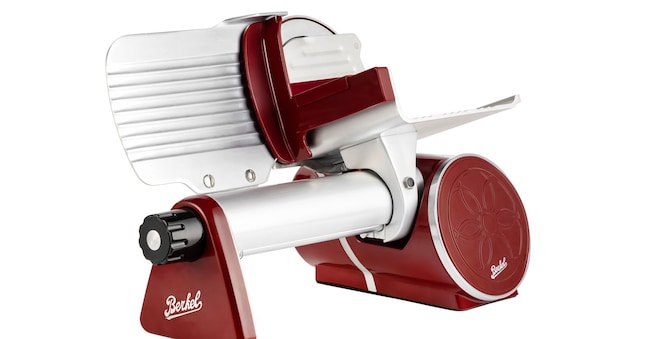
Berkel, a history of perfect slices
.Berkel, the brand par excellence of slicing machines, famous for having invented them more than a hundred years ago, on the one hand presented new domestic models, simplified reissues of its most beloved and popular professional tools. On the other it has explored new avenues of excellence, as in the case of its collaboration with a brand like Arturo Sánchez, a benchmark in artisanal Iberian charcuterie. At the heart of the collaboration is the Corte Perfecto concept, which combines the technical rigour of Berkel slicers with the organoleptic delicacy of Arturo Sánchez products. A special slicing machine has been designed with a curved blade to replicate as closely as possible the traditional manual cutting of the famous hamon bellota, now available not only in starred restaurants but also on private kitchen tables.
Berkel has also released new versions of the iconic flywheel machines, in spectacular shapes, colours and materials.
_20250620191425-U20440824858uiw-600x313@IlSole24Ore-Web.jpg)
To slice perfectly without fraying, without compromising flavours and nutrients, and without wasting food, the small slicer costing a few tens of euros is totally unsuitable. You need an instrument that keeps even the most difficult foods to slice, such as soft foods, intact. The secret lies in the ingenious intuition of Whilhelmus Andrianus van Berkel: that is, the ability to mechanically reproduce the movement of the slicing hand with the knife, with, in addition, an extraordinary precision and adjustable stability of the cut. Today, Berkel is part of the Rovagnati Group and is known and diffused all over the world thanks to the range of fine knives that help refine and define food preparation.
From cutting to vacuum, the virtuous supply chain
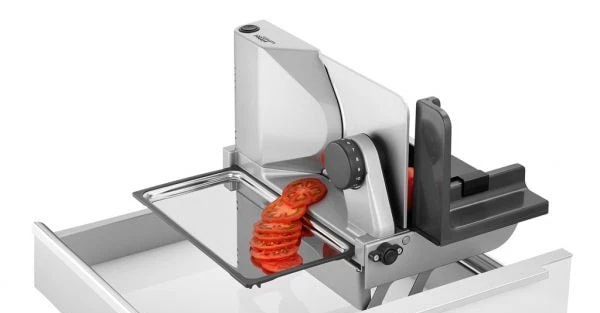
."Berkel is well known not only in Italy in countries such as Germany and Switzerland, but we have recently introduced the brand in the Middle and Far East, with excellent partners who are spreading awareness of our brand and the Italian character it represents in the most unexpected places. This is because Berkel," Francesco Iori, the company's managing director, told Food24, "has always represented aesthetic and manufacturing excellence in the market segments in which it operates, first and foremost the iconic flywheel slicers. In order to make our brand more accessible to a broad audience of consumers, who for various reasons do not want to buy a luxury product, we have decided to enter fast-growing niche markets that are easier to purchase, such as the world of vacuum-packed products (a fast-growing trend due to the undoubted advantages it brings to the end consumer, ed. We have also recently unveiled an extremely competitive slicer, the Icon Line Slicer, which we will sell for EUR 399..
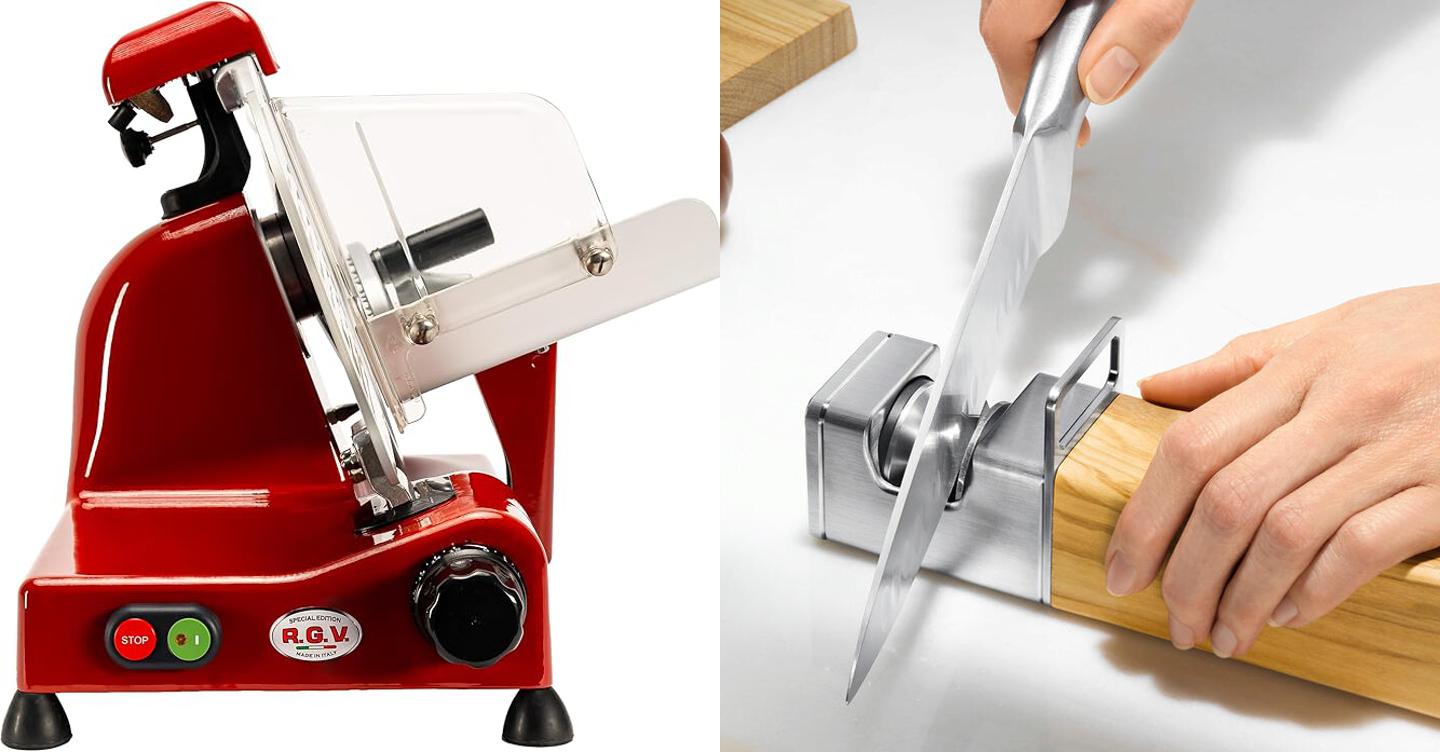
The precision of the slicing machine and knives means that nothing is wasted and, along with the vacuum-packing machine, the virtuous chain of chefs can also be replicated in the home kitchen. Sausages and all sliced foodstuffs in fact degrade quickly even when stored in the fridge, and only by vacuum-packing are they kept intact, even if in tiny pieces.