

Along the Danube, the agro-combines pose a risk to the European single market
The former socialist agricultural cooperatives have long since been converted into logistics hubs situated close to Corridors X and VII, and they handle significant quantities of raw materials. They have opaque corporate structures and do not ensure transparency throughout the supply chain

Key points
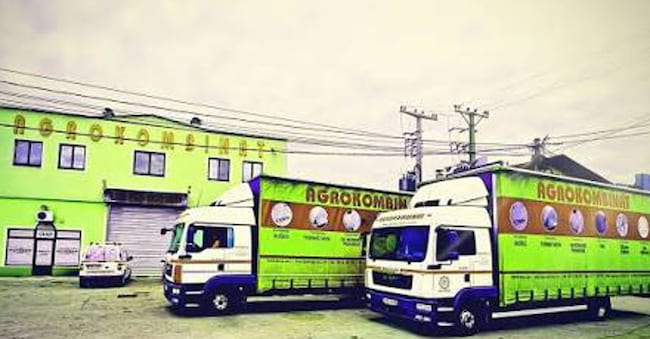
The structural transformation of the former socialist agricultural cooperatives (Agrokombinat) along the Danube basin has emerged as one of the most critical infrastructure and security vulnerabilities on the European Union’s eastern borders. Between the autonomous province of Vojvodina (Serbia) and the regions of Slavonia and Baranja, large-scale rural property complexes are being systematically converted into dual-use logistics hubs. Benefiting from direct access to Pan-European Corridors X (rail/road) and VII (the Danube waterway), these facilities are being used for high-capacity storage, vehicle retrofitting and the management of supply chains linking non-EU markets with the European single market.
The history of the Agrokombinats
The operational capacity of the current Danube logistics hubs stems from the industrial architecture of the second half of the 20th century. The socialist Agrokombinats were not simply agricultural enterprises, but self-sufficient complexes with extensive infrastructure: equipped with mechanical workshops for heavy goods vehicles, high-voltage electrical substations, reinforced concrete silos with a capacity of tens of thousands of tonnes, underground storage facilities and private railway junctions directly linked to the national networks. Following privatisation and the subsequent fragmentation of land ownership, large portions of this heritage have been acquired by private consortia, logistics intermediaries and, in some cases, offshore shell companies. Under the formal guise of agricultural modernisation and the storage of grain or fertilisers, key facilities have undergone major refurbishment: reinforced concrete flooring, the installation of high-capacity overhead cranes, fibre-optic perimeter video surveillance systems and the refurbishment of hangars.
The geographical axis: Corridors X and VII
The strategic value of these complexes lies in their geographical location at the crossroads of major continental transport routes. Corridor X links Central Europe with the Balkans and Turkey, whilst Corridor VII (the Danube) ensures uninterrupted river transport from the Black Sea to the heart of Germany. The hubs located in Vojvodina (Subotica, Sombor, Novi Sad, Sremska Mitrovica) enable operators to take advantage of Serbia’s non-EU regulatory framework, creating operational platforms outside the direct control of European customs authorities. Just across the border, in the Croatian counties of Osijek-Baranja and Vukovar-Srijem (Beli Manastir, Osijek, Vukovar), similar facilities offer direct access to the Schengen Area and the single market. By utilising the facilitation mechanisms of CEFTA (Central European Free Trade Agreement) and the Green Lanes based on the SEED (Systematic Exchange of Electronic Data) electronic system, agricultural shipments benefit from fast-track customs clearance.
Logistics flows passing through the Balkans are channelled along the motorway and railway corridor that converges on the Trieste border crossing and the ports of the Upper Adriatic (Trieste, Venice, Ravenna). The Italian industrial system — in particular the automotive, engineering, chemical and steel sectors — is closely integrated with the Danube-Balkan region. The presence of opaque logistics hubs along these routes exposes the Italian economy to risks of unfair competition, untraceable trade triangulation and circumvention of international sanctions regimes.
Dual-use mechanisms and opaque finance
The dual-use operations within these complexes are based on the overlap between seasonal agricultural activities and the handling of special goods or grey-market commercial goods. Old workshops are converted into covered maintenance bays, fitted with overhead cranes, industrial extraction systems and equipment for plasma cutting and heavy-duty welding. These facilities enable structural modifications, armouring and the installation of specialised equipment on fleets of commercial and light vehicles away from traceable industrial centres. From a financial perspective, ownership of the properties is often obscured through multi-tiered corporate structures. Title deeds are rarely held directly by the end operators; they are managed by local special purpose vehicles (SPVs) controlled by offshore holding companies based in opaque jurisdictions. The financial flows used to fund infrastructure upgrades often exploit trade-based money laundering techniques — such as the over-invoicing of agricultural goods and fertilisers — alongside the misappropriation of public funds intended for rural development.

