
Neighbourhood screening

The factory that supplies Italia is in the Balkans. But the competition is fierce

The EU has earmarked 6 billion in grants and loans for the region, linked to reforms. Investing in infrastructure yields returns in terms of production costs, logistics and industrial development. Germany, China, Turkey and the United Arab Emirates have different approaches: some focus on strategic hubs, others on urban platforms. Italia is present through a wide range of companies, but a public-private fund would make all the difference

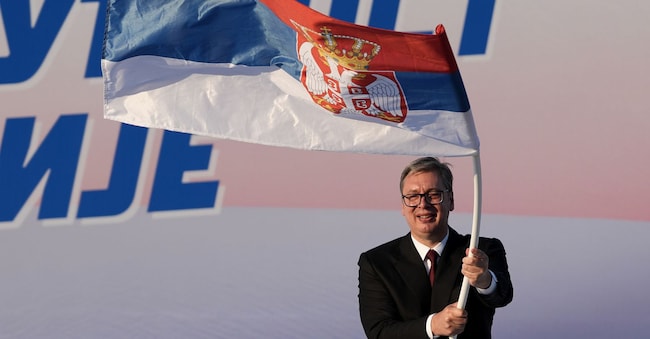
Aleksandar Vučić, presidente della repubblica serba (AP Photo/Darko Vojinovic)

6' min read

Translated by AI
Versione italiana

6' min read

Translated by AI
Versione italiana

On 5 June 2026, in Tivat, Montenegro, the President of the European Council, António Costa, described the accession of the Western Balkans as ‘a crucial geopolitical investment’. At the summit between the European Union and Albania, Bosnia and Herzegovina, Kosovo, North Macedonia, Montenegro and Serbia, the discussion did not focus solely on the opening of negotiation chapters. The leaders linked enlargement to gradual integration into the single market, the Growth Plan, security, cyber resilience and protection against foreign interference.

The main financial instrument is the Reform and Growth Facility, which has a budget of €6 billion for the period 2024–2027: €2 billion in grants and €4 billion in soft loans, disbursed in line with the implementation of reforms.

Loading...

It is a mechanism that gradually reduces the risk premium applied to a Serbian company, an Albanian power station, a Montenegrin terminal or a Bosnian mechanical engineering supplier.

When payment costs, customs processing times, regulatory uncertainty and infrastructural isolation are reduced, a company’s profits do not necessarily have to double for its value to increase: it is sufficient for the cost of capital to fall and for the likelihood of sustained sales in the European market to rise.

In 2025, trade in goods between the European Union and the Western Balkans rose by 5.2 per cent, exceeding 87.7 billion euros.

Europe mainly imports machinery, equipment, base metals, minerals and chemicals from the region; it exports machinery, transport equipment, metals, minerals and chemicals.

The production structure is therefore already European: cables, automotive components, metalworking, pharmaceuticals, food processing, electrical equipment and digital services are all part of the continent’s supply chains.

The quality of the work

What needs to change is the quality of this integration. By 2025, the European Investment Bank committed 822 million euros in the Western Balkans in the form of loans, guarantees and grants, intended to mobilise around 1.5 billion in total investment.

The funding comprised 664 million in loans and guarantees, 151.1 million in EU grants through the Western Balkans Investment Framework, and 6.5 million through the Economic Resilience Initiative.

58 per cent of the projects were directly linked to climate action and sustainability; over the course of the year, new projects worth 1.4 billion were approved and 610 million was disbursed. A railway funded by the EU does more than just upgrade the tracks.

Loading...

Re-evaluate industrial sites, warehouses, freight forwarders, workshops, quarries, terminals and companies that can deliver to Germany or Italia without accumulating days of delay and unproductive stock. A new electricity interconnector not only enhances energy security: it makes renewable energy plants, storage systems and industries that need to demonstrate a carbon footprint compliant with European regulations financially viable.

Other countries

Germany has the deepest presence in the supply chain. Around 900 German-owned companies operate in Serbia, employing approximately 80,000 people. Among the industrial investments recorded by Germany Trade & Invest are around €900 million from Stada-Hemofarm, €430 million from ZF, €91 million from Bosch, €60 million from Siemens and €33 million from Bizerba. ZF and Bosch also have research and development departments: this means not just low-cost assembly, therefore, but control over specifications, technology, software and end customers.

China has chosen fewer companies, but more strategic hubs. According to the German Federal Agency for Foreign Trade, in 2025 Chinese investors accounted for around 30 per cent of foreign direct investment in Serbia, with a strong focus on natural resources and production intended for export to Europe.

Beijing is already active in the steel, copper, gold, tyres and rail infrastructure sectors. On 26 May 2026, Chinese President Xi Jinping and Serbian President Aleksandar Vučić identified artificial intelligence, the digital economy, green energy and advanced manufacturing as new areas for cooperation.

Turkey is building a different system, combining business, construction, banking, telecommunications, diplomacy and defence. On 26 July 2025, following the Balkan Peace Platform meeting in Istanbul, Foreign Minister Hakan Fidan confirmed that the participating countries had discussed trade, energy, connectivity, defence and cooperation in the defence industry, including in relation to the European initiatives SAFE and ReArm Europe.

The United Arab Emirates operate with concentrated and patient capital, focusing on logistics, agriculture, infrastructure and urban platforms. A port, an agricultural company or a digital freight management system can influence a value chain that is far broader than the balance sheet of the acquired company. Their advantage lies not in German-style manufacturing density, but in their ability to rapidly acquire strategic high-leverage assets.

Italia is strong, but fragmented

Italia is by no means starting from scratch. There are around 1,200 Italian-owned companies registered in Serbia, which, including related industries, employ around 50,000 people and account for 5.5 per cent of Serbia’s gross domestic product. Since 2007, Italia has accounted for 10.9 per cent of foreign investment projects and 11.8 per cent of their value. Intesa Sanpaolo and UniCredit together hold 27.1 per cent of the local banking market; Generali and UnipolSai-DDOR hold 32 per cent of the insurance market. Stellantis has started production of the Grande Panda at its Kragujevac plant.

Trade between Italia and Serbia reached 4.47 billion euros in 2024.

Serbian imports from Italia totalled 2.77 billion, with general-purpose industrial machinery up by 17.3% to 232 million. Exports to Italia reached 1.69 billion, driven, amongst other things, by cereals and cereal products, which rose by 57.8 per cent, and non-ferrous metals, which rose by 85.6 per cent. In the same year, Germany recorded trade with Serbia totalling 9.28 billion, whilst China’s trade stood at 6.88 billion, up by 23.9 per cent. These figures demonstrate a significant Italian presence, but do not yet reflect a strategy for gaining a dominant position.

Leading companies

The target is not necessarily the largest company. It could be a small workshop with military certifications, a transformer manufacturer, a laboratory that grants access to the European market, an industrial software company, a railway terminal, a mining concession, a network maintenance firm or a cold chain operator. The first category includes defence, munitions, explosives, specialised manufacturing, electronics and vehicle maintenance. The second concerns energy and networks: hydroelectric power, storage, transmission, dispatching software and access to low-emission electricity.

The third category includes copper, bauxite, lead, zinc and processing plants. This is followed by ports, intermodal terminals, fibre-optic cables, data centres, telecommunications, seeds, fertilisers, silos and food processing. The strategic value stems from a combination of six factors: scarcity of the asset, difficulty of substitution, access to the single market, technological dependence, relevance to security and the potential for integration with an Italian group. A full acquisition is not always necessary: a stake with governance rights, an option, a long-term supply agreement or a right of first refusal can ensure sufficient control at a lower cost.

The 2026–2031 window

The timeframe for the operation is tight. We would need a register of strategic assets in the Balkans and to identify at least one hundred targets. Then, the first wave of acquisitions should be launched in the sectors most amenable to integration: precision engineering, energy, cyber security, logistics and agri-industry. Subsequently, as European transport corridors and interconnections progress, the priority should shift to ports, terminals, industrial land, networks and telecommunications.

By 2030, the acquired companies are expected to become regional platforms capable of acquiring smaller suppliers. By 2031, the aim should be integration. A public-private vehicle of at least €1.5–2 billion would be required, capable of mobilising further capital through banks, industrial groups, CDP, SIMEST, SACE, the EIB and the EBRD. The fund should not acquire companies with a view to reselling them quickly, but should retain them long enough to finance their development

The Price of Waiting

The risk for Italia is not that it will disappear from the Balkans. It is to remain there everywhere without controlling anything of decisive importance: financing companies owned by others, supplying machinery to factories integrated into foreign supply chains, using ports whose terminals are controlled by competing capital, and depending on components manufactured using non-European technologies and data. On 10 July 2026, Tajani argued that security, competitiveness and enlargement are now inseparable, and that the Balkans link the Adriatic, the eastern Mediterranean and Central Europe.

The day before, Rome had brought together the “Friends of the Western Balkans” to promote the region’s contribution to European strategic autonomy in food security, supply chains and connectivity. Italia has the geography, the banks, the technology, the ports, the diplomacy and the financial instruments. The next step is the acquisition strategy. The European factory of the coming decade is already up and running on the other side of the Adriatic. Every reform increases its value, every piece of infrastructure reduces its risk, and every foreign acquisition narrows the available scope.

Charlye Ghezzi is a geopolitical analyst and a specialist in technology and government security

Copyright reserved ©
Loading...

Brand connect

Loading...

Newsletter

Notizie e approfondimenti sugli avvenimenti politici, economici e finanziari.

Iscriviti