The new life of the European flax between innovation and sustainability
On the continent, production and land cultivated with flax, which the fashion industry is rediscovering and increasingly demanding, has doubled in 10 years. The Terre de Lin cooperative: 'We invest to protect what remains of the European supply chain'.

4' min read
4' min read
From our correspondent - SAINT-PIERRE-LE-VIGER (NORMANDIA).
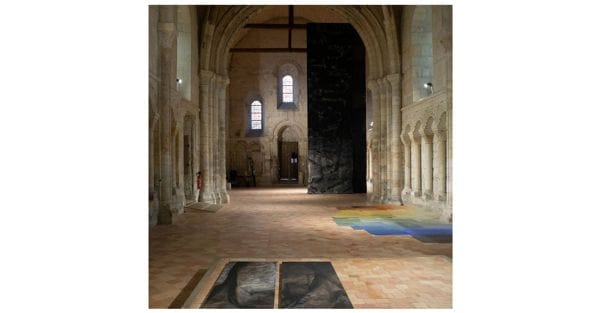
The most eagerly awaited event is the circus show on linen ropes by the Hanged Company, which tonight, in the 17th-century Château de Silleron, will open the new edition of the Festival du Lin et de la Fibre Artistique, from today until Sunday in ten municipalities of the Seine-Maritime district. It has been organised since 2001 to make known and appreciate the plant historically cultivated in this region of Normandy, the first producer of high-quality flax on the planet. Its textile fibre is the oldest used by mankind (some fragments found in Georgia date back 36,000 years); traversing the history of the Mediterranean, it has found its chosen home in France, thanks in part to Charlemagne, who in 789 imposed on every family in the country to have the tools to weave it.
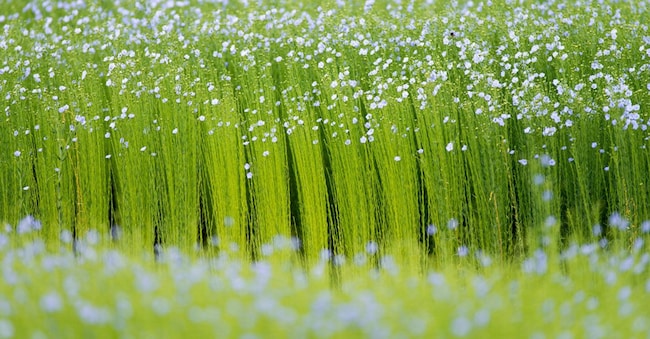
And even though today, according to Textile Exchange, it makes up just 0.5% of fibres (polyester dominates with 57%), it is experiencing renewed, widespread success thanks to the demand of a fashion industry hungry for increasingly sustainable and traceable materials.Between 2014 and 2024, the land cultivated with flax in Europe increased by 128% and production doubled to 200,000 tonnes. Flax does not need irrigation or pesticides, its processing is free of synthetic chemicals and any waste is reused, from construction to animal husbandry. Even the US dollar note is 25% flax fibre. Because with its delicate blue flowers, which in this area 10 km from the English Channel sway like another vegetable sea, the flax plant is strong and tough. The tall stalks are crisp under the footsteps of those who visit the fields spread out in an almost boundless horizontality, interrupted only by bell towers and oaks.
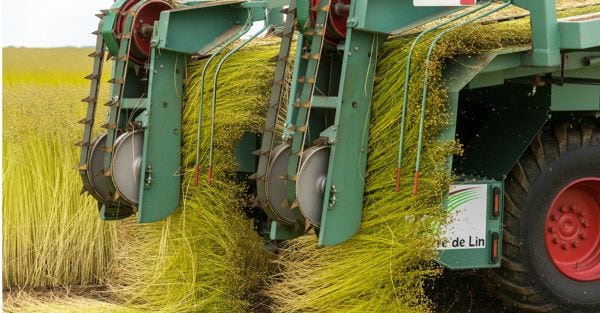
'This flax is the best in the world,' explains Thierry Goujon, general manager of the Terre de Lin cooperative, Europe's largest flax producer, which was founded in 1940 and today unites 780 companies, as he caresses the plants. The soil is optimal, the long roots of the plant can go down as much as a metre. The climate is perfect, we have the humidity we need. This enables us to obtain very long fibres of excellent quality, the most valuable and sought-after ones'. The flax is weeded in summer and left to macerate on the ground until mid-September, when the stalks are harvested for scutching (the separation of the fibres from the woody core of the stalks) and combing.
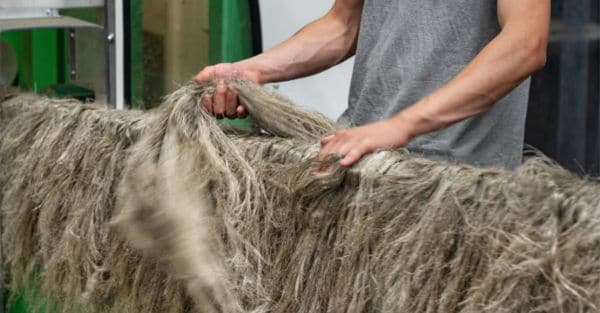
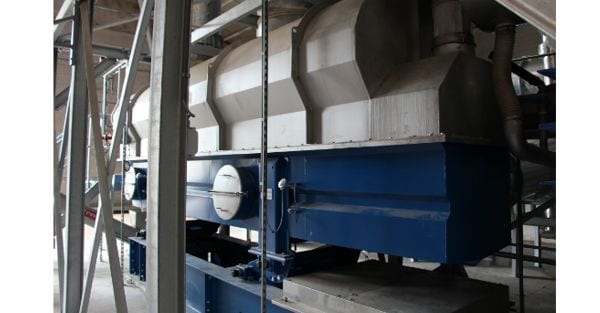
Never was a term from the textile universe more appropriate to talk about linen, since the processed fibre looks like a mass of thick blond hair ('Her hair was blonder than flax,' wrote Jean Froissart in L'Espinette amoureuse in the 14th century). 'Although there is a lot of research and technology, production is a very old art, which requires a lot of sensitivity in farmers,' adds Goujon. From the field, we move to the Terre de Lin industrial plant in Saint-Pierre-le-Viger, a village of 290 inhabitants crossed by the Dun stream, which looks like something out of a Perrault fairy tale. Goujon takes a hank of combed fibre and runs his fingers through it: 'That's how we understand quality and finesse, it's something we learn over time and want to pass on'.