
Journey to Claudia Cardinale's film locations
The other face of Terni with The Cube Girl
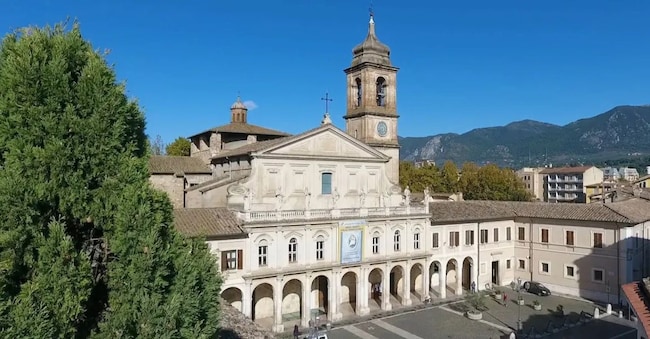
Terni in Umbria is considered the city of steel, but it is also where La ragazza di Bube was filmed, another jewel of a film embellished by Claudia's performance, not by chance recalled in recent days with a public meeting at the Literary Café in the Municipal Library. Well, Luigi Comencini made a courageous choice by deciding that many scenes had as their backdrop these very places that were still suffering at the time from the wartime damage suffered. Today, in Terni, one can admire the Cathedral of Santa Maria Assunta, which was a Romanesque basilica, as shown by the central portal and the walls around the portico. The design of the monumental organ is attributed to Gian Lorenzo Bernini while the high altar in polychrome marble was certainly made in the 18th century to a design by Carlo Murena, a pupil of Luigi Vanvitelli. The CAOS Centro Arti Opificio Siri must be visited, because it brings together the Aurelio De Felice Museum of Modern and Contemporary Art, the Claudia Giontella Archaeological Museum and the Sergio Secci Theatre. Nor should the Paleolab, or the Museum of Palaeontological Collections of Southern Umbria, and the Roman amphitheatre be overlooked. Perhaps Cardinale would be intrigued by the Lance of Light, Arnaldo Pomodoro's obelisk that sublimates the local art of casting raw iron to the point of making it look golden. The Marmore waterfall formed by the Nera river that plunges headlong from a height of 165 metres and the Roman site of a city of Carsulae dating back to the end of the 3rd century B.C. should also be visited to capture the energy of this area that permeates the film.

