
The postal passbook must be reimbursed 50% to the surviving co-owner
Under the 2002 rule, the co-heir cannot object to the specific clause

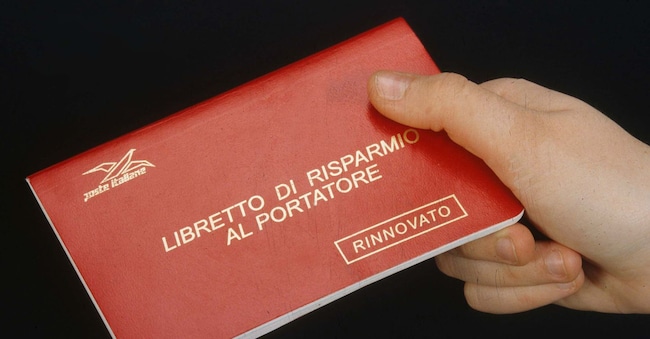
In the case of co-owned postal passbooks with an equal redemption clause, the death of one of the co-owners does not block payment to the superstitious co-owner: the Post Office must pay the required amount, unless specific legal measures prevent it from doing so. This is the decision of the Supreme Court of Cassation, in its order 28935/2025, which once again pronounces on the regime of co-owned postal passbooks with an "equal redemption right" clause, redefining the limits of joint operation after the death of one of the co-owners.
The case
The dispute, which reached the supreme court, pitted Poste Italiane against a surviving joint account holder, who had been denied the repayment of 50% of the sums deposited following the opposition of a coheir of the deceased joint account holder. Poste Italiane argued that the passbook, originally opened in 1991 and only subsequently replaced in 2003, should remain governed by the old rules on postal deposits (Presidential Decree 156/1973 and 256/1989), which allowed heirs to oppose the repayment.
The Supreme Court held, however, that since the relationship actually arose in 2003, the new discipline introduced by the Ministerial Decree of 6 June 2002 was applicable, which eliminated the possibility of opposition by heirs and provided for a different criterion of protection limited solely to the position of the intermediary, consistent with the transformation of postal savings into a fully banking relationship.
The orientation of the Supreme Court
According to the Court of Cassation, the 2002 regulation no longer protects the heirs of the deceased co-heirs, but only Poste Italiane: the institution may refuse payment 'only in the presence of notified deeds showing that the claim is no longer at the disposal of each co-heir'. This clause does not give the co-heirs an automatic blocking power, but serves solely to avoid payments in the absence of a person entitled to collect.
In arriving at its decision, the Court reconstructs the codified reference framework, recalling the rules contained in Articles 1295 and 1298 of the Civil Code: active solidarity between joint holders does not cease with the death of one of them; his share is taken over by the heirs, but the surviving joint holder retains full entitlement to collection, remaining obliged in internal relations towards the joint holders.

