
The comeback of bread and baked goods: the bakery section is the fastest-growing section in supermarkets
The decline in bread purchases has levelled off at 41 kg per capita per year, representing a business worth 12.5 billion and the range is becoming increasingly varied, created in-store or by external producers (who are joining forces

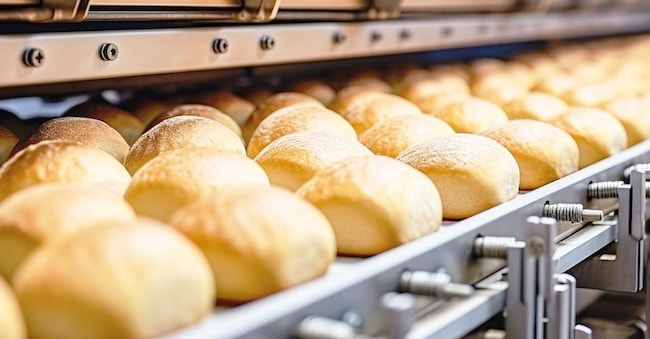
Bread consumption is on the rise again. The decline in consumption has come to a halt, stabilising at 41 kg per capita per year and bringing annual expenditure to 12.5 billion euros (source Sigep). However, purchasing habits have changed. Purchases are no longer made on a daily basis; there is a shift towards speciality breads, and they are more often made at large-scale retail outlets, where the bakery section was the fastest-growing category in 2025 (+3.5%) and is performing even better in 2026 (+4%), according to NielsenIQ.
Whilst last year just over 18,000 bakeries sold 1.3 million tonnes of bread (source: Aibi), a further 1.1 million tonnes of loose products were sold through the bakery sections of large-scale retailers. These figures come from the first survey of the self-service bakery counter, carried out by Vandemoortele (a company specialising in the sector with projected 2025 revenues of 2.2 billion euros, of which 156 million in the Italian retail sector) with the support of NielsenIQ.
In large-scale retail, the range is becoming ever wider, reaching a record 90 different types of fresh and defrosted bread. Fresh bread, supplied mainly by local producers, is favoured above all by organised retail operators who are well established in their local areas and whose product range is carefully tailored to local specialities, as well as by some major chains (such as Iper La grande i, Tosano and Esselunga), which, however, produce their own bread in-house. Other retailers are also focusing on in-house bread production, such as Maiora (580 outlets in central and southern Italy) and the Ciro Amodio group (50 directly-operated outlets in Campania), which have recently invested to increase production.
Discount stores, on the other hand, stock almost exclusively frozen products, which are reheated or finished off in-store (bake-off), as they are easier to manage and also cheaper. However, many of the premium-priced breads that are gaining ground in supermarkets – such as those containing seeds, stone-baked or made with sourdough – are also produced from products that have been fully or partially cooked and then frozen. “We estimate that frozen products could gain one percentage point of market share per year because they manage to combine ease of handling with a wide range of products, meeting the demand for quality and value,” explains Antonio Evangelista, retail marketing manager at Vandemoortele. This is the case with speciality breads (such as those with high hydration or multigrain varieties), which now account for around 14 per cent of the market and are doubling in sales year on year.
“What used to be a simple mixture of flour, water, yeast and salt is increasingly becoming a blend of new and ancient ingredients,” explains Mario Porrone, president of Assopanificatori Confesercenti, which has recorded a 60 per cent increase over two years in the sale of breads made with local flours and ancient grains, a 35–40 per cent increase in those with long fermentation times and sourdough starter, a 20 per cent rise in ‘low-carb’ varieties and those enriched with pulses or fibre. This consumer trend requires operators to refresh their product ranges and develop an ever-wider selection of breads. It also adds to the complexity of a market already undergoing a significant and challenging transformation, where small and medium-sized producers are struggling to withstand increasingly global and structured competition and where we are witnessing a concentration of production.

