
The vibrant, contemporary and creative chaos of Phnom Penh
The vibrant, contemporary and creative chaos of Phnom Penh

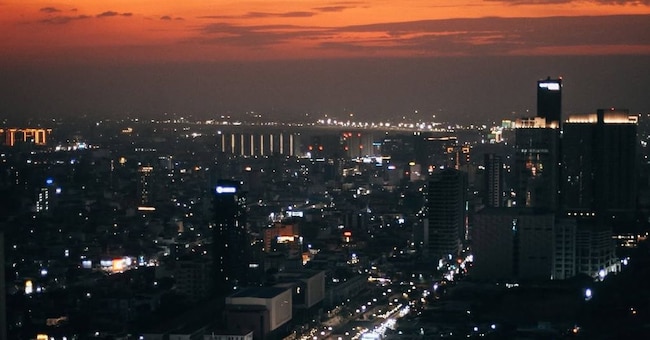
Chaos is still the unwritten law of Phnom Penh, but it has become somewhat more civilised in recent times. So now, the desire to spend a few days in Cambodia’s capital allows you not only to visit the Tuol Sleng Genocide Museum, housed in the former detention and interrogation centre of the Khmer Rouge regime, It also allows you to explore the rooms open to the public in the Royal Palace, built in 1866 by His Majesty Preah Bat Norodom, great-great-grandfather of the current King, precisely on the site of the ancient city, chosen by a commission of royal ministers and astrologers who, better than anyone else, were able to identify the most fitting setting for the King’s life – he being considered a direct descendant of the gods and called upon to live and rule on earth under the influence of the heavens. Even the new airport, designed by Norman Foster + Partners, whose shape and ceiling are reminiscent of a nest or, rather, a traditional woven basket, bears witness to the transformation and opening up to a new era of this Asian country dotted with rice paddies, which aims to focus on culture and modernity. Indeed, Phnom Penh, with its trendy hotels and restaurants, the temple towers reflected on the façades of skyscrapers, and the silhouette of the National Stadium designed by architect Vann Molyvann – who also designed the library within the Royal University – situated right opposite massage parlours and more traditional restaurants, is increasingly captivating those who love to travel in Asia.

