
Rome en plein air among parks, terraces, cultural experiences
Three churches with special artistic effects
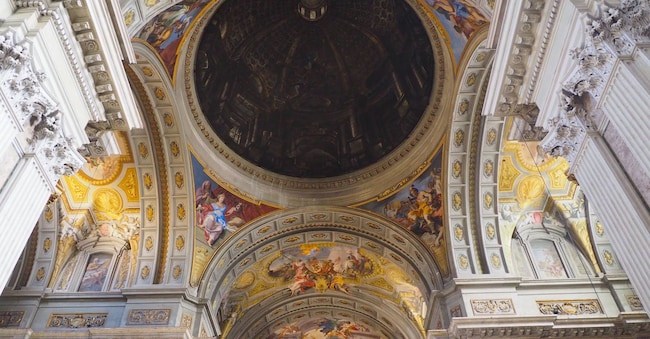
After so many outdoor experiences, it would be a pity to miss the opportunity, among the hundreds of Roman churches, to discover some, perhaps lesser known, that would have aroused in Stendhal the syndrome attributed to him. For example, the Basilica of San Silvestro in Capite: it rests on the ruins of the Temple of the Sun and was built during the pontificate of Stephen II (752-757), although it was his brother, who also rose to the papal throne with the name of Paul I, who completed it and entrusted it to the Benedictines. It was added to the name in capite because the relic of the head of St John the Baptist was venerated in the adjacent church of St John the Baptist. If the façade impresses because it is beautifully tripartite with pilasters and adorned with statues, inside in the early afternoon light bathes the altar in a dazzling glow. The barrel vault frescoed by Giacinto Brandi, the choir loft with organ and above all the St Francis receiving the stigmata painted by Orazio Gentileschi provoke genuine awe. Another almost secret jewel is the Christ Crucified attributed to Antoon van Dyck in the sacristy of the Church of San Marcello al Corso, whose wooden ceiling is a masterpiece of craftsmanship, while the frescoes in the vault are the work of Perin del Vaga and Daniele da Volterra. This church is famous for its wooden crucifix believed to be miraculous: it was saved from the fire of 1519, protected the city from a plague and in front of it, during the pandemic, Pope Francis knelt to pray. However, one has to insist with the custodian to be brought before the most hidden masterpiece, that Jesus painted by the Flemish artist affixed to a smaller cross than a Christ about to breathe his last breaths. His face is almost purplish, while his body still exudes vigour and youthfulness, in a physical and spiritual twist that sends shivers down your spine. Certainly, the Church of St Ignatius of Loyola in Campo Marzio is better known and frequented, but rather than simply observing, through the mirror placed vertically on the floor to magnify them, the figures that populate the vault of the nave painted by Andrea Pozzo, one must take a few steps forward. Thus realising that the one located at the junction with the transept is actually a fake dome, i.e. a canvas 13 metres in diameter, on which Pozzo himself gave shape to the perspective effect of the fictitious architecture. Next to the tomb in which the remains of San Luigi Gonzaga rest, one can admire a wooden miniature of the Temple of Christ the King made by the Neapolitan cabinetmaker Vincenzo Pandolfi in which famous places of worship representing all the world's religions are chiselled.

