
Time change: what happened to the proposal to abolish it in Europe?
After being voted in favour by the European Parliament in 2019, the proposal remained blocked due to divisions between the Member States. Spain is now trying to reopen the issue
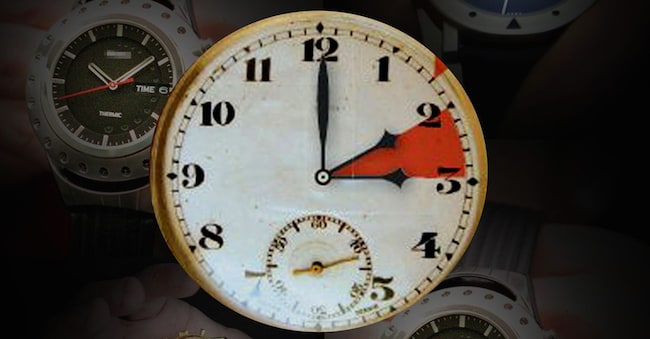
The video released on X by Spanish Prime Minister Pedro Sánchez, in which he calls it "meaningless" to move the hands twice a year, has rekindled a discussion that had long seemed closed. The Socialist leader has brought back into the spotlight a topic that often returns to the debate but remains unresolved: the possibility of definitively abolishing the change between summer and winter time in Europe.
The Origins of the Debate
The idea of doing away with the time change is not a recent one. The proposal began to take shape in 2018, when the European Commission, then chaired by Jean-Claude Juncker, launched a public consultation to gauge citizens' opinion on the issue. 4.6 million people took part in the survey, of whom 84% were in favour of abolishing the six-monthly change, with peaks of 93% in Spain.
On the basis of these results, the Commission proposed to the European Parliament to put an end to the system, leaving the Member States free to choose between keeping solar time or summer time.
On 26 March 2019, the hemicycle passed the motion with 410 votes in favour, 192 against and 51 abstentions. In the official communiqué, the parliament announced that each member state would decide on its own standard timetable and that the last seasonal change would take place in 2021.
At that point, the matter was left to negotiations between the EU Parliament and Council, the body that brings together the competent ministers of all EU governments. It was here that the process came to a halt: several states were sceptical, fearing that the removal of the time change without precise coordination could create confusion.

