
Industrial tomatoes, safeguards for Made in Italy against falling exports. Rodolfi new president of Anicav
Italia remains a global leader but lost 8% of foreign sales by 2025

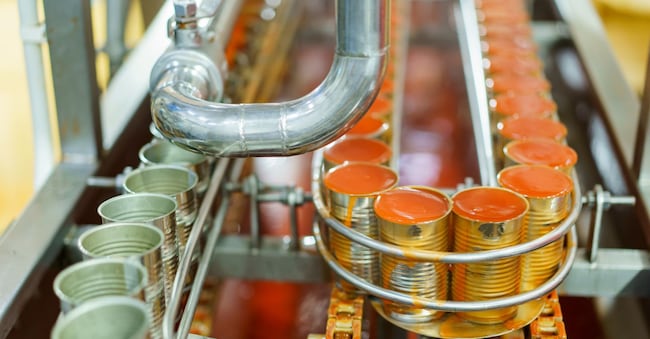
To unite around the sector and relaunch the export of processing tomatoes (in decline for the first time in ten years), defending it from external attacks and fighting unfair competition. Strengthening - in a word - its reputation as a 'Made in Italy' product. This is the spirit with which Aldo Rodolfi, the new president of Anicav, the largest association representing tomato processing companies in the world, is preparing to lead the sector for the next four years.
The entrepreneur who heads the Rodolfi Mansueto family business, the oldest of the member companies of Anicav, was elected at the annual members' meeting held yesterday in Rome. The theme of reciprocity on controls - the leitmotif of the sector - to break up unfair competition from foreign countries that put products on the European market that are below our quality standards (above all China and, more recently, Egypt) and rising costs due to geopolitical chaos, are the nerve centres of the sector, with which the new president will have to contend.

The high cost of energy is a thorn in our side. "Ours is an energy-intensive sector, and Spanish and Portuguese competitors are working with costs that are a quarter of ours. With the war in Iran and the Hormuz crisis, the conditions are dangerously reconfiguring for stratospheric bill costs, as in 2022. 'We are still a long way from these peaks,' he says, 'but they have certainly doubled since last year.
The processing tomato chain represents one of the pillars of Italy's agri-food industry with a total turnover, in 2025, of around 5.2 billion euros. If we also add pulses (1.2 billion), the total comes to 6.4 billion euros. More than 50% of production is destined for export to Europe (Germany, France, the United Kingdom) and the USA, Japan and Australia. The export market share is worth 3.5 billion euro: 2.8 billion for tomatoes and 0.7 billion for pulses.
The drop in exports recorded last year is mainly felt in values (-8%), but also in volumes (-2%) compared to 2024. The employment impact is also significant, with around 10,000 permanent and 25,000 seasonal workers in addition to allied industries. The election of the new president comes in a phase of resumption of the industry-farming dialogue in the Central-South Basin, to arrive at a definition of the contract that will set the price of the product for the next agricultural campaign (the one for the Northern Basin is already closed).

