The interview

‘Tailor-made training for employees and professionals’

Marco Natali, President of Confprofessioni: data-driven decisions and strategies

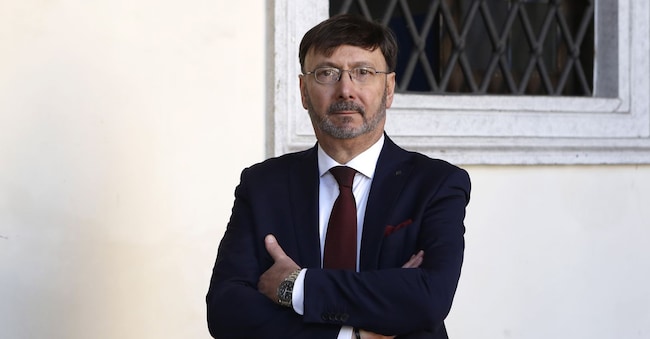
Marco Natali. (Imagoeconomica) IMAGOECONOMICA

3' min read

Translated by AI
Versione italiana

3' min read

Translated by AI
Versione italiana

“The renewal of the contract for professional practices represents an important step towards a more inclusive and sustainable working model. The innovations introduced in the areas of welfare, parental protection and integration of young people meet the needs of a rapidly evolving labour market. ‘The focus has been placed on the individual and the quality of working life.’

Marco Natali, who has been president of Confprofessioni for almost a year, outlines the priorities underpinning the collective agreement – the labour regulations that can serve as a catalyst for the growth of professional firms.

Loading...

Question: Mr President, in light of the data collected by the Observatory, what is the current state of the liberal professions?

Answer: The Observatory is a tool for understanding and monitoring the world of the liberal professions, whether regulated by professional bodies or organised into associations. The Observatory’s data is certified by Istat: we are the only organisation to carry out a comprehensive analysis of this economic sector. The study is essential for understanding and making decisions in a constantly changing landscape. As for the state of the professions, there are both positives and negatives.

Q: What do you mean? 

A: All the statistics show that professionals need to join forces: it is essential if they are to compete and improve their income. It is a market requirement: businesses need to be provided with a multidisciplinary and integrated service. Instead, professional firms continue to be too small, although there is a noticeable trend towards consolidation.

Q: The tax reform has set in motion a process of simplification with the neutral regime for asset transfers. 

A: Yes, but we also need to address the tax disadvantage compared with the flat-rate scheme, and the double supplementary contributions for both the shareholder and the company must be abolished.

Q: Did you also use the Observatory to gauge professionals’ attitudes towards artificial intelligence?

A: There is a great deal of curiosity and interest surrounding AI. As Fondoprofessioni, we will be investing in training for practice staff. For professionals, we are working on agreements with certain northern regions and autonomous provinces: we need to be prepared. However, innovation in firms will not come about through artificial intelligence that reasons in terms of averages, discarding the most creative solutions, but artificial intelligence tools will simplify part of the work.

Loading...

Q: Welfare is a cornerstone of the contract for professional firms. This applies to employees as well as employers.

A: In these practices, employees and owners sit on the same side of the desk: it is the entire organisation that creates value by listening to and responding to clients’ concerns. This is why the safeguards are inclusive – for employees, their families and the professionals themselves.

Q: Young people: what initiatives are in place to attract the next generation, apart from work experience through apprenticeships?

A: Young people can also take part in work-based learning programmes whilst studying: through Ebipro, we have provided a grant of one thousand euros: 250 in book vouchers for the student and 750 to compensate for the time spent on training.

Q: The other issue is retaining staff not only through welfare schemes but also through training and upskilling. How do you encourage this approach?

A: The bilateral organisation may contribute towards the cost of training an employee, up to 40 hours per year. I would point out that our calls for proposals are increasingly focusing on tailored training.

Q: In your research and in some of your initiatives, you have also included professions not regulated by professional bodies. Will you continue along this path?

A: Yes, we cannot overlook the world of new professions that are emerging in response to the market’s changing needs.

Q: What are you asking the legislator to do?

A: To be treated like everyone else. As professionals , we are a source of innovation and value – including economic value – for the country. Yet this is often overlooked. Perhaps we have failed to convey who we are and what we do to support the business sector and, more broadly, our clients. We play a vital role in economic growth, whilst upholding the rule of law. This is where we must start.

Copyright reserved ©

Brand connect

Loading...

Newsletter

Notizie e approfondimenti sugli avvenimenti politici, economici e finanziari.

Iscriviti