
Traps and digital mapping against fruit pests
The Enea project in Lazio introduces new models of phytosanitary management with predictive analysis and biological control strategies

2' min read
2' min read
From innovative monitoring to intelligent traps: these are the recipes put in place todefend Lazio's fruit cultivation from pests. One above all, the Asian fruit bug. This is the aim of the project that researchers from ENEA and Crea are carrying out, as part of the Simodrofila programme, in defence of regional production and in which the Agricultural Society Colle Difesa (leader), the Fondazione per lo Studio degli Alimenti e della Nutrizione and various farms in the Sabina part of the province of Rome are participating as partners.
A fundamental element is the presence of a network of traps distributed in the Sabina orchards. Through georeferenced monitoring, as emphasised by Maurizio Calvitti, a researcher in the Sustainable Agri-Food Systems division of ENEA and scientific coordinator of the project, 'real-time mapping of infestations' was carried out. The data, collected on a weekly basis, enabled farmers to intervene promptly in so-called hot-spots, thus limiting the spread of infestations. Red wine, apple vinegar and sugar placed in traps have the ability to attract and capture the Asian fruit fly Drosophila suzukii or specific chemical mixes for the Mediterranean fruit fly Ceratitis capitata.
"With this project we aim to innovate phytosanitary management models by introducing new technologies, predictive models and biological control strategies," the project leader argues. "The objective is twofold: on the one hand to increase the competitiveness of local companies, and on the other hand to reduce the environmental impact by favouring a more conscious and targeted use of insecticides to be applied only when really necessary and at the most vulnerable stage of the insect.
In the course of the programme, a solar-powered IoT ttrap, equipped with a micro-camera and humidity and temperature sensors, was developed and tested, which captures insects and at the same time sends real-time images and data directly to the farmer, enabling remote monitoring and timely intervention.
In addition to the Mediterranean fruit fly and the Asian fruit fly, among the most insidious threats to fruit crops, especially cherry trees, is the Rhagoletis cerasi fly.
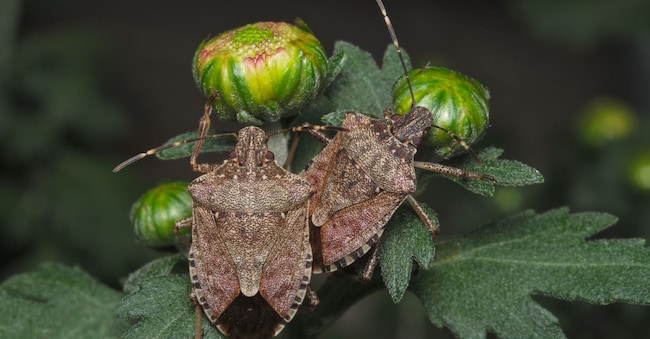
"Also not to be underestimated," emphasises entomologist Raffaele Sasso, "is the Asian fruit fly (Halyomorpha halys), which is a cause for concern due to its extraordinary adaptability and voracity and which has already caused severe losses in kiwi, hazel, peach and cherry crops, especially in northern Italy, but which is now also an emergency for fruit cultivation in Lazio.
Another innovative aspect of the project is the selection of cherry and peach cultivars that are less attractive to pests.

