
Trump: 'I consider postponing duties on cars'. Then he hits tomatoes from Mexico and insists on drugs and chips
The president suggested temporarily exempting car manufacturers from tariffs to give them time to adapt their supply chains. Meanwhile, China blocks rare earths

2' min read
2' min read
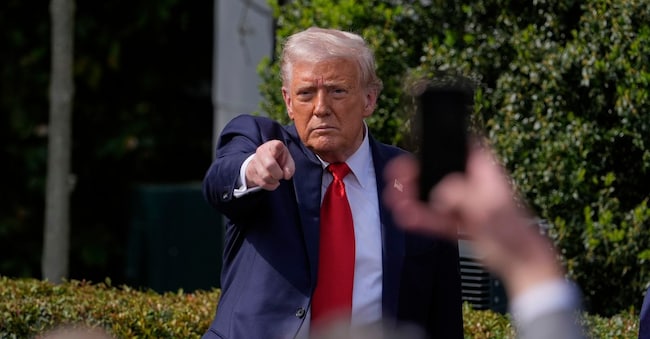
Donald Trump could make yet another turnaround on tariffs, this time on the 25 per cent imposed on cars. Speaking to reporters, the president suggested temporarily exempting carmakers from the tariffs to give them time to adapt their supply chains. "I'm considering a solution that would help some automakers in this regard," he said, explaining that they need time to shift production from Canada, Mexico and other countries.
"They need some time because they will produce their products here, but they need some time. So I'm talking about things like that," he said. Matt Blunt, president of the American Automotive Policy Council, an association representing Ford, General Motors and Stellantis, said the group shares Trump's goals of increasing domestic production. "There is a growing awareness that extended duties on components could undermine our shared goal of building a thriving and growing American auto industry, and that many of these supply chain transitions will take time," Blunt said.
The Trump administration then announced tariffs of 20.9 per cent on most tomato imports from neighbouring Mexico, which is a major supplier of this US-imported product. The US Department of Commerce terminated a 2019 agreement because it 'failed to protect US tomato growers from unfairly priced Mexican imports'. "This action will allow US tomato growers to compete fairly in the marketplace," the ministry added.
Trump therefore continues to sow chaos in his global trade war, revealing that he will announce tariffs on semiconductors as early as this week, although there will be flexibility with some companies in the sector. This means that the exclusion of smartphones and computers from reciprocal tariffs with China will be short-lived. The president also confirmed that he will also hit pharmaceuticals.
Meanwhile, the tycoon boasts of his trade policies to take credit for the move by Nvidia, which will produce its artificial intelligence supercomputers entirely in the United States to the tune of $500 billion over the next four years. And while China blocks the export of rare earths in retaliation, Seoul allocates 4.9 billion as an anti US tariff on microchips.

