

Tunisia–EU: Elmed’s 1.42 billion deal – energy and investment to bring the two sides closer together
The interconnection with Italia is entering the contract phase. The new Mediterranean Pact aims to strengthen production chains and security of supply, but for Tunis the challenge lies in upgrading the grid and its ability to attract capital

Key points
An estimated investment of 1.42 billion euros, a bidirectional exchange capacity of 600 megawatts and a national grid that needs to be upgraded to connect electricity generation in the central and southern regions to European markets. It is around Elmed, the electricity interconnector between Tunisia and Italia, that one of the most tangible industrial components of the partnership between Brussels and Tunis is taking shape. A relationship that the new Pact for the Mediterranean aims to shift from emergency management to economic integration, with energy, investment and supply chain security at its heart.
This political development emerged at the 28th edition of the International Forum organised by the magazine Réalités, in Hammamet. The European Union’s Ambassador to Tunisia, Giuseppe Perrone, the French Ambassador Anne Gueguen and the Italian Ambassador Alessandro Prunas identified mutual interests as the prerequisite for reviving cooperation. For Europe, this involves strengthening strategic autonomy and diversifying supplies; for Tunisia, it means consolidating energy, food and economic security, whilst increasing the added value generated within the country.
The industrial phase of interconnection
The test case is the connection across the Strait of Sicily. According to the latest update from the Tunisian consultancy firm Aius, in June 2026 Steg, the Tunisian Electricity and Gas Company, and Terna have awarded Hitachi Energy the contract to build the two conversion stations, worth approximately 770 million euros. The plants will be built in Mlaabi, in the Menzel Temime area, in the governorate of Nabeul, and in Partanna, Sicily.
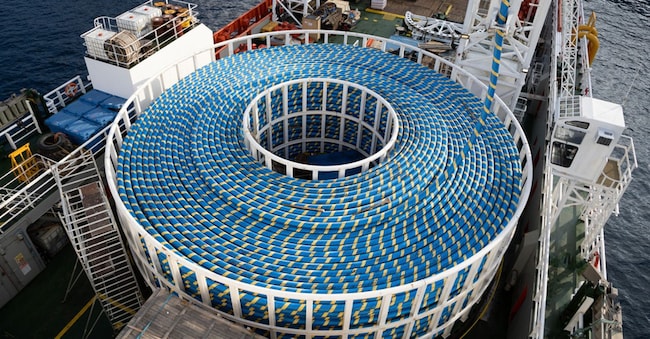
Prysmian, on the other hand, has been awarded the contract for the subsea cable, worth approximately 460 million. The section running beneath the Mediterranean will stretch for around 200 kilometres. It is expected to come into service between 2028 and 2030, although the timetable remains subject to possible delays.
The European funding comprises a grant of €307.6 million through the Connecting Europe Facility. The World Bank, the European Bank for Reconstruction and Development, the European Investment Bank and KfW are also contributing to the project’s financing.

