

The seabed: the new frontier for Italian security
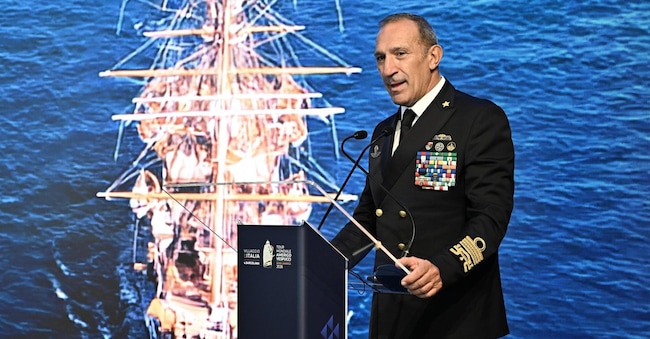
Tomorrow at 2.30 pm, on channel 63 of digital terrestrial television, a recording of the event ‘The Underwater World: Italia at the Forefront of Global Underwater Activities’ – held on Saturday at the Molo dei Bersaglieri in Trieste – will be broadcast. Participants: the Chief of the Naval Staff, Admiral Giuseppe Berutti Bergotto; the President of the National Underwater Centre Foundation, Roberta Pinotti; the Director-General of the Agency for the Safety of Underwater Activities, Admiral Giacinto Sciandra; and the President of Fincantieri, Biagio Mazzotta
by 24Ore NextMed
 Aggiungi Il Sole 24 Ore
ai preferiti su Google
Those who understand the depths rule the surface. It is on this ground that the world’s powers will compete in the future – rather than on issues of space and the maritime routes that govern global trade. A decisive part of geopolitical competition is already taking place on the seabed, where communication networks pass through, energy infrastructure is being developed and cables through which data flows. For Italia, situated at the heart of the Mediterranean and with a significant industrial presence in this sector, the protection of the seabed is a matter of national security.
The topic was the focus of a meeting on underwater operations, organised by Difesa e Servizi spa in Trieste, at the Molo dei Bersaglieri, attended by the Chief of the Naval Staff, Vice-Admiral Giuseppe Berutti Bergotto, the President of the National Underwater Activities Foundation, Roberta Pinotti, the Director-General of the Agency for the Safety of Underwater Activities, Admiral Giacinto Sciandra, and the Chairman of Fincantieri, Biagio Mazzotta. The event will be broadcast tomorrow at 2.30 pm on channel 63 on digital terrestrial television, the TV channel of Sole 24 Ore.
“Until a few years ago,” says Admiral Berutti Bergotto, “installing infrastructure at great depths provided a form of natural protection: the technologies available at the time made it difficult to reach and interfere with it. Today’, he warns, ‘operating at depths of up to 3,000 metres has become possible at a cost that is affordable even for non-state actors. For the Mediterranean, the problem persists because only 15 per cent of its area is deeper than 3,000 metres, whilst over the years strategic Italian and European infrastructure has multiplied on the seabed”. Over 95 per cent of today’s communications pass through submarine cables. Indeed, 40 per cent of the cables crossing the Mediterranean are owned or operated by Italian companies. It is easy to see that the disruption of one of these systems would be disastrous and would have potentially damaging consequences for countless sectors in the country, and beyond.
However, our understanding of the marine environment is far from complete. Only 27.3 per cent of the seabed has been mapped. The international project Seabed 2030 aims to produce a much more detailed map of the seas by the end of the decade. But in order to protect existing infrastructure, it is necessary to develop autonomous vehicles, sensors, identification systems and platforms capable of operating at great depths, thereby reducing dependence on foreign technologies.
The Cluster and the Industrial Supply Chain
This strategy includes the National Centre for Underwater Activities, established to bring together the Navy, businesses, universities and research centres. The centre was inaugurated in December 2023. The ecosystem now involves over 260 organisations, including around 20 large companies and 56 universities and research centres. The Centre has already launched 21 projects linked to specific technological areas, with the aim of fostering the development of Italian solutions for infrastructure protection and deep-sea exploration.

