
UN: This El Niño is set to be the strongest in the last fifty years
As early as September, droughts and floods will leave a further 50 million people worldwide facing starvation. Secretary-General Guterres: ‘The planet is in uncharted waters’

This year, the El Niño phenomenon is set to reach ‘enormous proportions’. Yesterday, the UN’s climate agency (WMO) issued its most serious warning in fifty years: the warming of the surface waters of the tropical Pacific Ocean, which periodically influences rainfall and temperatures across vast areas of the world, will have unprecedented repercussions in 2026. ‘El Niño is intensifying before our very eyes,’ said UN Secretary-General António Guterres yesterday. ‘Science leaves no room for doubt: the planet is in uncharted waters, and these waters are warming. Temperatures continue to rise and the world is threatened by extreme weather conditions.’
It has been known for some time that this year’s El Niño would be stronger, but yesterday experts confirmed that they now have highly accurate estimates, and that the phenomenon will reach a strength never before recorded. The United Nations agency forecasts a probability of close to 100 per cent that El Niño, fuelled by exceptionally high sea surface temperatures in the Pacific Ocean, will persist until February 2027. El Niño has already had worrying repercussions this year on agricultural commodities in tropical regions, contributing to a severe food crisis in Central America. “If this trajectory continues,” said WMO Secretary-General Celeste Saulo, “it could be stronger than any event observed since we began monitoring. Literally off the scale.”
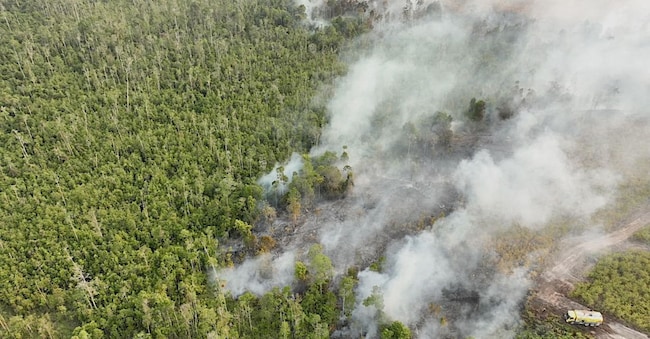
A very intense El Niño can significantly alter rainfall and temperature patterns across the globe and contribute to extreme weather events, such as typhoons and floods on the one hand, or severe drought on the other. All these events pose a risk to the environment, undermine people’s safety and also cause damage to the global economy. The rise in temperatures caused by El Niño, for example, has exacerbated forest fires in Indonesia and weakened the monsoon rains in India, which are vital for the country’s harvest. Later in the year, experts say, the effects will spread to Australia, where the risk of bushfires will increase, and to South America, where the danger of severe flooding will grow.
It is the people of Central America and southern Africa who will pay the heaviest price for this climate upheaval. The UN World Food Programme has estimated that, as early as this month, due to El Niño, a further 50 million people could face a severe food crisis. By next year, the proportion of people at risk of severe food insecurity could rise by 22 per cent: some 274 million more people suffering from malnutrition. The impact of El Niño will also be felt in East Africa and South-East Asia: some of these countries are already experiencing below-average rainfall, or flooding and unusually high temperatures, whilst others are expected to face worsening conditions during the coming sowing and harvesting seasons.
The 2015 Paris Climate Agreement set out a commitment to limit the rise in global temperatures to 1.5 degrees above pre-industrial levels, but according to the UN climate agency, beneath the surface of the Pacific Ocean, in some places, temperatures have now exceeded the average by more than 8 degrees. Above-average sea temperatures are also forecast in other parts of the world, including the Indian Ocean, the tropical Atlantic and parts of the Australian coast. For this reason, the WMO yesterday strongly urged governments to make an urgent commitment to accelerate the phase-out of fossil fuels, reduce methane pollution and protect land, forests and oceans.


