
Urbani Tartufi: 174 years of history bringing Italian excellence to the world
Olga Urbani talks about the changing market: “China and India are now key markets; Korea has a highly sophisticated food culture and we’re receiving a lot of enquiries from there, and South Africa is also growing.”

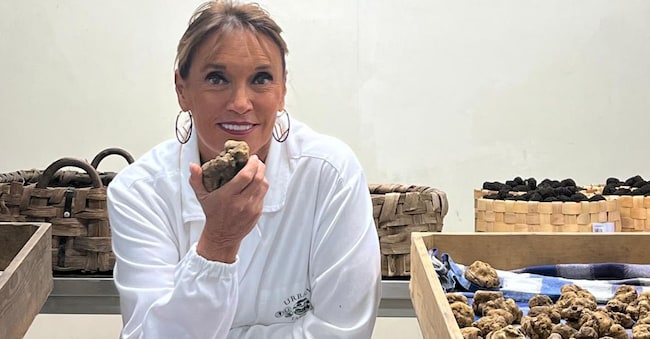
A small business founded 174 years ago is now a group that manages over 1,500 hectares of farmland, exports to 75 countries and is the world’s largest operator in the truffle sector. Chairwoman Olga Urbani, a Cavaliere del Lavoro since 2022, continues to ensure that family continuity today and sets out the next milestone: “We are approaching 100 million in turnover.” Urbani Tartufi’s growth is driven primarily by its processed products – around 600 different types of items containing truffles – which are rapidly boosting revenue to around 50 million a year.
Founded in 1852 in Scheggino, in the province of Perugia, the company has built a business centred on truffles, encompassing agriculture, food production, hospitality, property and finance. Today, it is a member of the Unione Imprese Centenarie Italiane, which brings together the finest examples of ‘Made in Italy’ characterised by at least one hundred years of continuous and ethically sound production.
In Europe alone it has 22 branches, whilst in the United States it has six through Urbani Truffles USA , based in Manhattan. This international presence is underpinned by a supply chain which, according to the chairwoman, amounts to around 300 tonnes of truffles a year. The hub is the production centre in Sant’Anatolia di Narco, in the province of Perugia, where the truffles are processed, preserved and prepared for sale in various forms: fresh, or transformed into frozen products and food preparations.
The sales landscape is constantly changing: ‘Russia, Ukraine and the UAE were once key markets, but are now worth very little’. However, the company is managing to redirect its exports to other countries: “China and India are now key markets , Korea has a very sophisticated food culture and we’re receiving many enquiries from there, and South Africa is also growing.” In Japan, on the other hand, there is a trend towards the integration of different culinary cultures: “Pwe’ll be bringing books on sushi with truffles; we’re working to bring cultures together”, continues Urbani.
From a supply perspective, environmental factors – particularly the climate – are crucial. From the window of his office in Valnerina, Urbani describes an October with temperatures of 25 degrees: ‘We’re not finding any white truffles; it’s too hot’ . Climate change and soil conditions are reducing the availability of the raw material. ‘If truffles run out, what will we do?’ This is the question that prompted the family to invest in research and development to enable them to cultivate truffles.

