
Volkswagen agreement: closures avoided, but 35,000 exits by 2030
Ig Metall: 'There will be no compulsory redundancies'. The company: the reduction of the workforce will take place in a 'responsible' manner. One factory will be sold and one reconverted. The production capacity of the German plants will be reduced by more than 700,000 vehicles. Scholz: 'Good and socially acceptable solution'

3' min read
3' min read
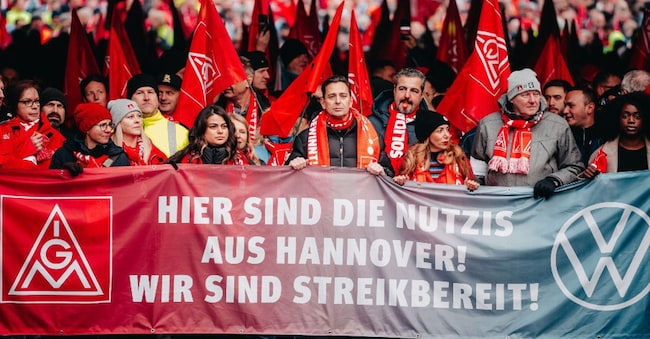
No redundancies and factory closures, but 35,000 'socially responsible' redundancies and capacity cuts. What began on Monday 16 December and ended on Friday 20 was the longest round of negotiations in Volkswagen's history, coming to an end after 70 hours of talks in a Hanover hotel. The latest chapter in the most dramatic dispute, opened in September by the company with the threat to close up to three plants in Germany, which has never happened in the group's 87-year history.
Ig Metall: "Christmas Miracle"
.Both sides look at the half-full glass of the compromise, which could not be painless. For Ig Metall, the agreement is a 'Christmas miracle', precisely because there will be no immediate site closures, compulsory redundancies or wage cuts. However, there will be major reductions in employees' bonuses. Who, in return, will be guaranteed employment until the end of 2030. The old agreement, made in 1994 to suspend collective redundancies, had been revoked unilaterally by the company. It was to expire in 2029.
As proposed by the union in November, the 5% pay increase that would have been due to employees will not go into their pay envelopes, but will go into a fund, which will be used to finance the reduction of flexible working hours for part of the workforce. The company had demanded a 10% reduction in wages.
"No sites will be closed, no one will be laid off for operational reasons, and our company wage agreement will be guaranteed for the long term. With this three-way agreement, we have reached a solid solution under the most difficult economic conditions,' said works council president Daniela Cavallo of Ig Metall.
Blume: "Important signal"
.The company stated that the agreement includes provisions to reduce more than 35,000 jobs in a 'socially responsible' manner by 2030, out of around 120,000 in total, and the production capacity of the German plants will be reduced by more than 700,000 vehicles. This is the price to be paid for the sales crisis. It is part of the solution to deal with the overcapacity of the Volkswagen plants, admitted Thorsten Gröger, chief negotiator of Ig Metall.


