
Volkswagen Id.Cross, the preview test of the compact electric SUV
Tested in a pre-series version with camouflaged body and interior, it is part of the new generation of the Volkswagen Group's electric compact cars built on the Meb+ platform

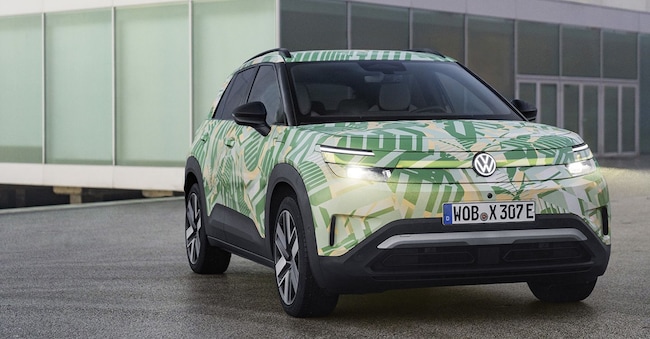
It is called Volkswagen Id.Cross but translates as electric T-Cross. The German brand is changing its strategy when it comes to names, saying goodbye to numbers, but above all when it comes to style and content. Goodbye 'innovative' designs with little success and a completely touch interior and a healthy return to the qualities that have made so many models successful, starting with the T-Cross. Built on the Meb+ platform, the Volkswagen Id.Cross shares 80 per cent of its components with the new Skoda Epiq, Cupra Raval and Volkswagen Id. Polo, models that will finally position the German group's brands among the compact electrics. The Volkswagen Id.Cross will arrive on the European market in autumn 2026. It is a compact electric SUV built on the MEB+ platform, with front-wheel drive and two battery sizes, 37 and 52 kWh net. The range includes three power levels, 116, 135 and 211 hp, with prices announced for the German market starting at around 28,000 euros. The tested model is still a pre-series prototype and is not yet for sale.
Dimensions
The Id.Cross measures 4,153 mm in length, 1,794 mm in width and 1,581 mm in height. The wheelbase is 2,601 mm. The ground clearance is 140 mm and the wheels range from 17 to 20 inches. For now no final photo, the car tested was covered by a full-size sticker, it is understood that the lines will be similar to those of the concept presented at the 2025 Munich Motor Show but with less convex sides.
Interior Volkswagen Id.Cross
Climbing aboard the Volkswagen Id.Cross we could only see and assess the steering wheel, the instrumentation, the touch screen, part of the buttons in the centre of the dashboard and the controls on the doors. The rest was covered or inconclusive. The first impression was that of having stepped into a 'Volkswagen', both in terms of materials and choices such as the return to physical buttons. Goodbye 'Tesla-style' solutions, as demonstrated by the many buttons on the door panel, steering wheel and centre console. The dashboard layout is horizontal. The digital instrumentation and central display are placed on the same visual plane. The Digital Cockpit measures 10.25 inches, while the infotainment touchscreen goes up to 12.9 inches. Among the features shown is a 'retro' instrument display, reminiscent of the latest Golf I, with a speedometer on the left and power indicator on the right. Behind the steering wheel are the gear lever and parking brake lever, while on the centre console remain physical controls for climate control, including temperature, fan, climate control activation, recirculation, windscreen defrost and rear window. At the bottom are the smartphone compartment with inductive charging depending on the trim, two cup holders and the armrest with storage compartment. There is also a dedicated audio knob. Features include bi-zone automatic climate control, a rear view camera, adaptive cruise control, matrix LED IQ.Light headlights, Keyless Access and Id.Light extended to the front doors as well, standard from the Style version. Options include 12-way power-adjustable front seats with massage function and driver's side memory, plus a 740 x 905 mm panoramic roof. Audio is provided by a 425-watt Harman Kardon system with ten speakers, including a centre and a subwoofer in the boot. On-board space is promoted, with the boot claiming 475 litres, which is 20 litres more than the T-Cross. Under the front bonnet is a 22-litre frunk, for the first time on an Id model. Designed for charging cables and small items.
Interior
Meb+ Platform
The technical basis is the Meb+, an evolution of the group's modular platform for electric vehicles. This platform is now front-wheel drive, a solution the brand has not adopted on its dedicated electric models since the e-up! and e-Golf. The engine is called APP290. The acronym indicates the parallel arrangement to the axle and the maximum torque of 290 Nm. The system uses a single-speed gearbox and a newly developed, in-house developed pulse inverter that manages power delivery, torque and energy recovery and converts the direct current from the battery into alternating current for the electric motor. The AC and DC charging socket is on the front right-hand side. Among the components integrated in the front of the vehicle are the battery charger and the electric air-conditioning compressor. The Id.Cross adopts a MacPherson layout at the front and an interconnected-wheel rear axle. The braking system is called 'One Box' and employs disc brakes on both axles. Adas devices include Connected Travel Assist using swarm data, traffic light and stop response within system limits and One-Pedal-Driving.

