War and aviation

Planes, war cancels flights and slows down leisure and business tourism in the Gulf

Airlines in the region try to recover, but Iran attacks force airspace closure. In Italia 204 flights cancelled

by Mara Monti

4' min read

Translated by AI
Versione italiana

4' min read

Translated by AI
Versione italiana

The Gulf countries never thought they would find themselves in a shower of missiles and drones when US President Donald Trump was elected. Business and agreements were on the agenda with the American superpower to the extent that Qatar Airlines to welcome the new occupant of the White House had given him one of its superjumbos, a Boeing 747, for the presidential Air Force One fleet. Now, however, they are having to deal with the closure of airspace in response to the threats posed by missiles and drones from Iran, with serious repercussions for air transport, tourism and the area's economy. On Monday, a drone caused a fire near Dubai airport and yesterday, for the second day in a row, flights were temporarily frozen.

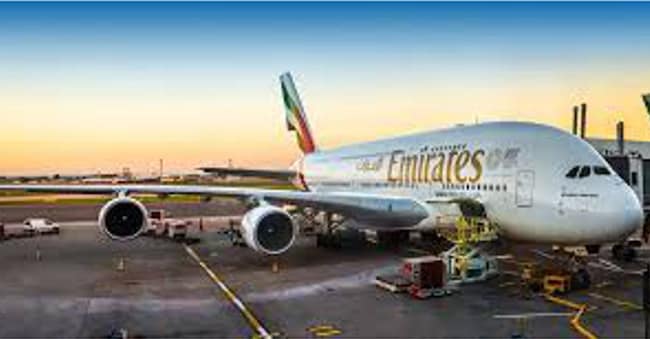
The Gulf airlines, Emirates, Ethiad, and Qatar, are the ones most affected by the war in the Middle East after decades of unstoppable growth except for the pandemic period, a hub that became central for connections between Europe and Asia, but are now facing cancellations for tens of thousands of flights, jeopardising the travel plans of millions of people.

Loading...

There have been some signs of recovery and the attempt to return to normality is shown by the number of flights that have returned to operation: from 1,173 cancellations on Saturday 14 March to 604 on Monday 16 March. Emirates said in a statement that it will continue to restore its network at a steady pace, provided this can be done safely, meanwhile it cancelled 78 out of 167 flights operating on Monday 16 March, according to Cirium data.

In Italia, the three main Gulf airlines cancelled 204 flights out of 273 operating flights equal to 74.4 per cent from 28 February to Tuesday 17 March. At the moment, Emirates' flights are totally cancelled at Bologna and Venice, Qatar Airlines' at Venice and 90 per cent at Rome Fiumicino and 93 per cent at Milan Malpensa. At the other Italian airports, cancellations are between 33% and 74%. But in the meantime, planes are flying empty, particularly those coming from Europe or the United States, which are the worst affected: according to Bloomberg, planes arriving from Prague and Budapest, for example, have an occupancy rate of between 5 and 10 per cent, when under normal conditions it is over 80 per cent.

Several planes arriving from New York flew with only a fifth of the tickets sold, and at least one flight last week left with fewer than 35 passengers on board the Airbus A380 jumbo aircraft that normally holds nearly 500. Even those departing from Chicago reportedly operated with half-empty cabins. Flights departing from Dubai, on the other hand, have a very different pattern, as many people try to leave the city aboard the small number of available planes. Before the war, the airline operated about 500 flights daily from Dubai International Airport, a figure that dropped to 89 take-offs on 16 March.

Like Emirates, Etihad Airways and Qatar Airways, the other major regional airlines, have also resumed a reduced service, focusing on transporting stranded passengers. Emirates is the largest carrier in the region and in normal times offers at least six times more flights than Qatar Airways, the second largest carrier in the Gulf.

The question that arises is how long it will take the Gulf airlines to recover once the war is over. One answer is provided by the CEO of the German Lufthansa group, Carsten Spohr, who predicts that the conflict will reduce the dominance of the Gulf airlines on Asian routes. So much so that last week he decided to relaunch by announcing new routes to Asia.

With no domestic flights, the Gulf companies have relied on international connections and the bases in Dubai, Doha and Abu Dhabi have made them natural transit hubs for those wishing to travel long distances such as New York-New Delhi, India or London-Sydney, Australia. Last year, 227 million people flew to and from the Gulf, according to Iata, the International Air Transport Association, which predicted world leadership in terms of profitability among airlines (9.3%) and the highest profit per passenger ($28.6), well above the global averages of 3.9% and $7.9 respectively.

But the war has paralysed traffic. Over 58,000 flights to and from the Middle East - more than half of all scheduled flights in the region - have been cancelled since the war began on 28 February, according to Cirium, and an estimated six million passengers have been affected. The hubs suffering the most are Dubai (4,227 cancelled flights or 52.7 per cent) and Doha (7,538 or 93.4 per cent), two airports that together handle over 140 million passengers a year. They are joined by Abu Dhabi with 3,466 flights cancelled since 28 February or 76.4% On the other end of the spectrum are Oman and Saudi Arabia which, bucking the trend, have not experienced any cancellations and have become the next hubs for emergency repatriations.

Meanwhile, costs are piling up and leasure and businees tourism in the region has come to a virtual standstill with the effects possibly extending far beyond the region, even to countries that have become dependent on the Persian Gulf, such as India and Australia.

The war could benefit other airlines, at least for the next few months. Carriers such as British Airways, Lufthansa, Qantas and Turkish Airlines are well positioned as passengers look for alternatives. The Lufthansa Group, for example, has announced plans for new flights to Asia and Africa such as Singapore, Cape Town and Riyadh (Saudi Arabia).

As state-owned companies controlled by the wealthy emirates, they have been able to access the most valuable source of fuel for an airline without difficulty. Moreover, the liquidity at their disposal allows them to withstand the current tensions although it is not known how long the conflict will last. Certainly these giants of the skies have withstood other attacks over the years and it will not be difficult for them to return to past glories.

Copyright reserved ©
Loading...

Brand connect

Loading...

Newsletter

Notizie e approfondimenti sugli avvenimenti politici, economici e finanziari.

Iscriviti