
West Nile virus in Italy: risks and modes of transmission
West Nile cases in Latina bring attention to the virus present in Italy and in the North also in the South. Parasitologist Sara Epis speaks

3' min read
3' min read
"The human cases of West Nile identified in Latina make noise because they are among the first of the year and because they were reported as indigenous to the Lazio region. However, this virus, as the various reports of the Istituto Superiore di Sanità (Iss), including last year's, indicate, as well as being highly present and endemic in northern Italy, especially in the Po Valley area, it also circulates in southern Italy, especially in animals: in birds, which are the main host, and in mosquitoes. And there have also been confirmed cases in the past in other regions of Central and Southern Italy'.
The transmission and the cases
.Drawing the picture to Adnkronos Salute is Sara Epis, associate professor of parasitology at the University of Milan and on the board of the Italian Society of Parasitology.
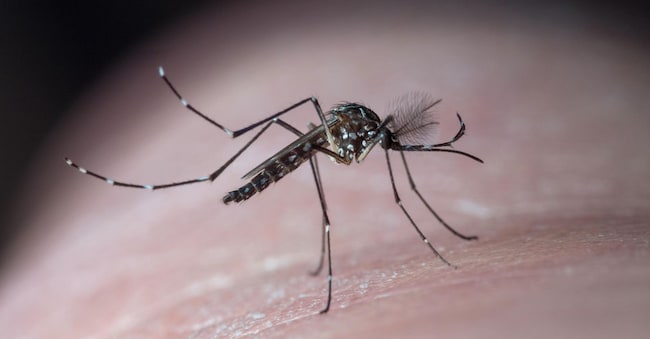
The West Nile virus, explains the expert, 'is in fact transmitted by mosquitoes that we call 'nocturnal', the Culex pipiens in particular. Mosquitoes that also circulate in the Centre-South. In these areas, then, we have seen birds that are positive for the virus, and birds are the main 'reservoir' of the pathogen. In short, the presence of native human cases is not surprising'.
There will be more cases as we move into the typical West Nile season. "We will certainly have them in northern Italy, where the first infections were already recorded in June, especially in the north-east. To give a number, last year there were more than 450 confirmed cases of West Nile in Italy, with also deaths. More or less in recent years, the figure has always been around 400 diagnosed cases, with a peak concentrated in July and especially August, followed by the tail end of September'.
The Man Guest
.What 'host' is man for this virus? "West Nile is basically maintained in nature by transmission by the infected mosquito and by birds, which are the reservoir,' the parasitologist clarifies. 'So these mosquitoes, which are 'ornithophilic', sting birds, but they can also accidentally sting humans and equids, so horses in particular. However, both equids and humans are accidental blind hosts. In humans, the virus does not reach high enough blood concentrations to allow infection of other mosquitoes through the bite, thus preventing the transmission cycle from being maintained. The West Nile cycle is maintained by mosquitoes, which act as vectors and amplifiers, and birds, which are the main reservoir of the virus'.

