Beverage

What are Italians drinking during this record-breaking heatwave? Energy drinks and sugar-free drinks are leading the soft drinks market

In a largely stable market where traditional products are struggling, energy drinks are showing a positive trend (+12 per cent) and fermented, flavoured and wellness-oriented products are gaining ground

4' min read

Translated by AI
Versione italiana

4' min read

Translated by AI
Versione italiana

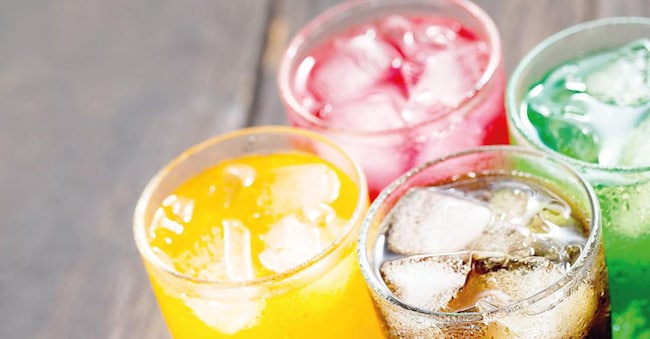
What are Italians drinking, especially during this sweltering summer of 2026? Fewer traditional soft drinks, flavoured waters and isotonic drinks, and more energy drinks, non-alcoholic beers and ‘modern sodas’ made with fruit juice (particularly lime, pink grapefruit or lemon). But also fermented drinks, flavoured cold milks (especially with matcha tea) and functional drinks, which, for example, promise to aid mental relaxation or hydrate the skin.

This change is also evident from the retail sales figures compiled for *Il Sole 24 Ore* by Niq and updated to May 2026. In a drinks market worth €12.7 billion and totalling 15.7 billion litres, which has remained broadly stable (+0.4% by value and -0.1% by volume over twelve months), where mineral waters alone account for 73 per cent of volumes (but 21.6 per cent of value) and are performing above average (+2.1 per cent by value and +1.4 per cent by volume), there are few segments showing a positive trend.

Loading...

Energy companies show no signs of slowing down

Energy drinks stand out, having been on a rapid rise for years; from May 2025 to the present, they have grown by a further 13.1 per cent by volume and 11.8 per cent by value (with peaks of +39 per cent for flavoured versions), exceeding 75 million litres and generating revenue of nearly 254 million euros.

“Energy drinks are growing thanks to strong demand across all product types, in contrast to juices, nectars and freshly squeezed juices, which have fallen by 5.5 per cent in value and 6.6 per cent in volume, continuing to be affected by weakening demand, and flavoured waters, which are going through a more challenging period with declines of around 5 per cent,” explains Elena Pezzotti of Niq.

Classic soft drinks are on the decline

Looking solely at soft drinks, which are worth a total of over 2.4 billion euros and 1.8 billion litres, there has been an overall decline in purchases, particularly for still drinks (-6.1 per cent). Carbonated drinks are holding up better (-1.2%), accounting for over 75 per cent of soft drinks purchased in large-scale retail outlets. A trend towards moderate consumption of soft drinks is emerging, reported by 61 per cent of Italians, according to a survey conducted by AstraRicerche for the trade association Assobibe. Furthermore, although taste and thirst-quenching properties remain the main criteria for choice (91% and 86% of responses respectively), low calorie content (60%) and low sugar content (58%) are also becoming increasingly important factors.

The ‘formula zero’ wins

Niq’s figures confirm this: whilst ‘standard’ soft drinks are performing worse than the market average (chinotto, orangeade, cola and iced tea are down by around 5 per cent in volume), sugar-free versions are performing better (+11.4% for colas and +4% for iced tea) and ‘zero’ versions even better still, to the extent that they account for nearly 30% of all colas sold in large-scale retail. More than one in three Italians and one in two members of Generation Z prefer the light and sugar-free versions from the outset.

It is always the younger generation who drive sales of ‘new’ soft drinks (such as bubble tea) or unusual, colourful drinks (such as the Sprite Zero-based drinks inspired by Japan or Brazil, offered by McDonald’s), which are also perfect for posting on social media.

Companies are adapting by reviewing, expanding and diversifying their product ranges. Coca-Cola is constantly renewing its portfolio, which comprises over 200 brands, and is firmly focusing on sugar-free, calorie-free and caffeine-free products. Another market leader, Red Bull, has also launched ‘light’ versions (sugar-free and zero), segments which are growing at twice the rate of the classic product (up 9.5 per cent and 4.7 per cent by volume, respectively).

The beer is also non-alcoholic

The health and wellness trend has also swept up the quintessential summer thirst-quencher, beer, which is gradually shifting from the world of alcoholic drinks (where it is losing sales) to that of soft drinks. In fact, the only beer segment showing growth is the non-alcoholic sector, which has risen by 11.2 per cent in volume in the retail sector over the past 12 months, totalling over 28 million litres and 60 million euros (+15.1 per cent).

Over the course of a year, the consumer base for non-alcoholic beer has risen by 16 per cent (source: YouGov), with 70 per cent of Gen Z having already tried it and 37 per cent consuming it every month, according to a survey by AstraRicerche for Heineken.

Loading...

Tastes change quickly

“In the space of just a few years, the world of beverages has changed so much that the traditional distinction between product categories is becoming increasingly irrelevant and is no longer sufficient to explain actual consumer behaviour,” explains Paolo Porcelli of the consultancy firm TradeLab – People no longer choose what to drink but why to drink it, shifting from a product-centred approach to an experiential one linked to the context of consumption and driven by emotional, functional and social needs. For companies and distributors, the challenge now is to design experiences, by developing, distributing and promoting products that enable them to tap into consumers’ life moments, needs and moods.”

Copyright reserved ©
Loading...

Brand connect

Loading...

Newsletter

Notizie e approfondimenti sugli avvenimenti politici, economici e finanziari.

Iscriviti