
Between Iran and the West

With the military missions now over, it is up to Iraq to manage its air defence and logistics corridors on its own

The international coalition withdrew on 30 September; only NATO-led training activities remain. Whilst the militias are being integrated into the army, the government must manage energy contracts, reform the financial system and deal with the debts incurred for infrastructure projects

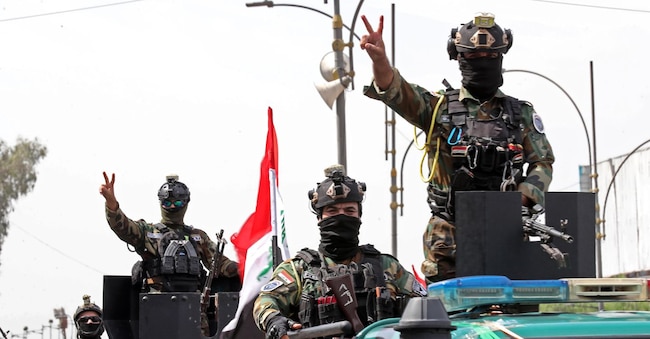
Militari iracheni su convoglio con bandiere nazionali celebrano il ritiro completo delle truppe statunitensi dal Paese EPA/CEERWAN AZIZ

5' min read

Translated by AI
Versione italiana

5' min read

Translated by AI
Versione italiana

The conclusion of the international coalition’s military mission on 30 September 2026 restored direct responsibility for the country’s security to the Iraqi government. Baghdad must ensure that the financial channels through which it collects and utilises oil revenues remain accessible, ensure that armed organisations are effectively brought under its control, protect the territory and transform energy and infrastructure investments into reliable services. For Iraq, the outcome of the withdrawal will therefore depend on the institutions’ ability to maintain a balance between all these elements.

The training camp

The statement issued on 30 September by the British Defence Minister Wes Streeting marks the conclusion of the coalition’s mission and the withdrawal of its forces, alongside the intention to develop a bilateral defence relationship. NATO, on the other hand, is maintaining its advisory mission, having transferred its personnel from Baghdad to the Allied Command in Naples in March 2026. These are different instruments, with different mandates and capabilities.

Loading...

The issue of air defence makes this distinction particularly tangible. In its press release of 28 September, the Ministry of Peshmerga Affairs of the Kurdistan Regional Government reported over a thousand strikes by drones and ballistic missiles during the regional conflict and denounced the lack of an alternative air defence system at the time of the withdrawal. This is the regional authority’s assessment, but the institutional problem it raises concerns the entire state: there is a need for early warning coverage, communications, response procedures and a division of responsibilities that can function effectively between Baghdad and Erbil.

Law No. 40 of 2016 places the Popular Mobilisation Commission within the Iraqi armed forces under the Commander-in-Chief and provides for military discipline, a chain of command and separation from political affiliations. The crucial point is the enforcement of these obligations when a unit contests an appointment, a transfer or an investigation. The handover of weapons only reduces a group’s capabilities if authority over access to depots, procurement, personnel and operational deployment also changes; otherwise, the government may secure a material concession whilst leaving intact the organisational structure that allows autonomy to be re-established.

According to the World Bank, oil accounts for 88 per cent of Iraq’s public revenue and 91 per cent of its exports: a concentration that links the continuity of external payments to the state’s ability to finance services, imports and domestic obligations. The history of the oil accounts in New York, however, requires clarification. The cessation, on 30 June 2011, of the deposit requirements for the Development Fund for Iraq altered the previous international regime; the continued existence of Iraqi accounts at the Federal Reserve Bank of New York does not transfer ownership of the resources to Washington. The constraint operates through access to the financial networks, the applicable rules and the behaviour of intermediaries.
The banking reform outlined by the International Monetary Fund in July 2025 takes on strategic significance here. Adequate capital, identifiable ownership, reliable records and anti-money laundering controls enable an institution to withstand scrutiny and safeguard legitimate transactions. Increasing the number of intermediaries without addressing these weaknesses would simply spread the problem across a wider network. Autonomy increases when the Iraqi administration can demonstrate that a transaction is lawful, identify the reason for a disruption and find a solution without turning every payment into a political negotiation.

The European outlook

All this has implications for the geopolitical landscape of the Old Continent. The major European economies face challenges that are both shared and distinct. For Italia, for example, stability in Iraq is by no means a negligible factor. Eni is involved in development activities at the Al-Zubair field, utilising associated gas for electricity generation, and programmes relating to water availability and treatment capacity. Furthermore, in May 2025, the Farnesina recalled the agreement signed the previous year by Sace with the Trade Bank of Iraq to facilitate one billion euros in export credit.

But Italia is not the only European player with interests in the region. France is aiming to bring energy links into operation. The Gas Growth Integrated Project accounts for a significant proportion of France’s involvement: TotalEnergies has announced a total investment of around 10 billion dollars, with the company holding a 45 per cent stake, Basrah Oil Company 30 per cent and QatarEnergy 25 per cent. The project integrates gas recovery, oil development, solar generation and seawater treatment. However, the benefit for Iraq depends on the effective operation of the links between these activities. The announced parameters include a solar power plant with a capacity of 1 GWac, an initial water treatment capacity of 5 million barrels per day and a production target for Ratawi of 210,000 barrels of oil per day from 2028. Their economic value becomes apparent when gas, electricity and water reach users on a continuous basis.

French diplomacy can complement this industrial dimension: in February 2026, Foreign Minister Jean-Noël Barrot highlighted regional cooperation in transport, water and electricity interconnections, alongside the intention to work towards a third Baghdad Conference. AFD and Expertise France also provide channels for services, economic recovery and skills development, the effectiveness of which depends on Iraq’s ability to incorporate the results into its day-to-day management.

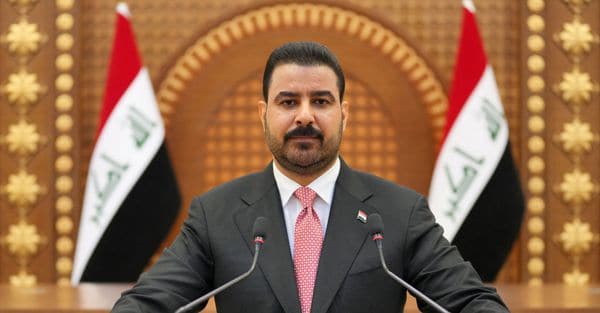
Il primo ministro iracheno Ali al-Zaidi durante un discorso in occasione della Giornata della Sovranità e del ritiro delle forze della coalizione guidata dagli Stati Uniti dall’Iraq (REUTERS)

A joint British-Iraqi statement in January 2025 announced a trade and export package worth up to 12.3 billion pounds, comprising a water project worth up to 5.3 billion, a project for Basra worth up to 3.3 billion, the rehabilitation of the Al-Qayyarah base worth 500 million, and border security equipment worth 66.5 million. These are announced figures, not investments that have already been completed. Support from UK Export Finance can make major projects financially viable, but it does not remove Iraq’s obligations: water projects require power supply, treatment, distribution and management; military rehabilitation requires personnel, command and maintenance.

Loading...

In July 2026 ConocoPhillips announced an agreement to acquire a 42 per cent stake in BP Energy Company of Kirkuk Limited, with the transaction expected to be completed by the end of the year, subject to the applicable conditions. The transaction expands international commercial exposure to the functioning of Iraqi institutions, but its announcement does not confirm its completion. In the defence sector too, the bilateral cooperation provided for in the 2025 declaration remains subject to UK export controls.

The coming years

The European Union has an institutional framework in place through the Partnership and Cooperation Agreement with Iraq, which entered into force on 1 August 2018, and a consultative mechanism through EUAM. The Council decision of April 2026 extends the mission until 31 October and sets a financial reference amount of €79,078,620.21 for the period May 2024–October 2026. This support may improve coordination and administration, but operates within a civilian mandate and in compliance with the applicable European restrictions, including those reimposed on Iran in September 2025.

The Iraq Transport Economic Corridors project, for which the World Bank approved 900 million dollars in June 2026, combines infrastructure, institutional strengthening and performance-based maintenance. It is this relationship between investment and operation that must also guide the energy, finance and security sectors.

Charlye Ghezzi is a geopolitical analyst and specialist in technology and government security

Copyright reserved ©

Brand connect

Loading...

Newsletter

Notizie e approfondimenti sugli avvenimenti politici, economici e finanziari.

Iscriviti