
Woolmark celebrates 60 years by focusing on recycled wool
The organisation launches a new certification to meet the growing demand for sustainable products. And invests in reducing the environmental impact of livestock farming

2' min read
2' min read
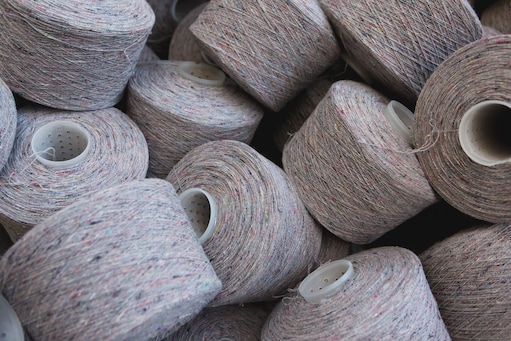
In 1963, when it was chosen, sustainability was not a priority for the fashion industry. And yet, the Woolmark logo created by Franco Grignani, designed as an elegant ball of yarn, was so innovative that it now also works perfectly for Woolmark's new certification. The brand that certifies the quality of pure virgin merino wool from Australia is celebrating its 60th anniversary with 'Recycled Wool', which guarantees that wool products contain at least 20 per cent recycled fibre, while meeting Woolmark's quality standards. Products can contain recycled wool from both pre-consumer sources, such as fabric cutting waste, and post-consumer sources, such as garments, certified by standards such as Grs and RCS.
"It is our response to a market that is demanding more and more sustainability and to the new European directives on eco-design," explains Francesco Magri, Woolmark's regional manager Central & Eastern Europe, "and reaffirms how wool is among the most natural and sustainable fibres. Not only that, it is also breathable, anti-odour, resistant, and protective against UV rays. Because of all this, it is increasingly in demand and used, not only by fashion, but also by sportswear and recently also by workwear, for example for overalls for construction workers'.
The crew uniforms of Luna Rossa Prada Pirelli, the swimming costumes of Arena and Vilebrequin, the trainers of Salomon, the interiors of some Volvo car models, are made of Woolmark-certified Australian merino wool, which is also investing tens of millions of dollars to further reduce the ecological footprint of wool production of its 60,000 farmers. For example, according to a 2021 study by the Swiss environmental association Ecoinvent, wool would produce 8 times more greenhouse gases than cotton, due to the large quantities of methane emitted by the sheep's digestive process: 'This is an issue we are addressing,' Magri continues, 'we have invested 11 million dollars in a project to develop Australian seaweed-based feeds precisely to reduce these emissions. The farmers with their farms are guardians of the environment's naturalness, for example by planting more and more trees to allow the sheep to have more shade'.
Another issue at the centre of the debate on the sustainability of wool is the practice of mulesing, which is an operation performed on animals to prevent a fly from depositing its larvae between the folds of the skin, eventually causing their death, considered a very painful and sometimes dangerous practice: 'Brands are always asking for more mulesing-free wool, but also thanks to the 60 million invested to support farmers, today mulesing is not carried out, or is done with anaesthetics. The priority is always to protect animal welfare, also because a less stressed sheep produces better wool. Human beings will continue to dress themselves and, as suggested by the projects presented by the young creatives who participate every year in our Woolmark Prize (the first edition of which was won by Yves Saint Laurent and Karl Lagerfeld, nda),' Magri concludes, 'we will increasingly focus on functionality and sustainability, to buy less but do it better. And wool, despite being one of the oldest fibres people have ever worn, will also play a leading role in the future of textiles'.


