
From Beijing to Europe: Xiaomi's strategy to conquer three markets
Smartphones -2.1% in Q2 but premium strategy holds. IoT record (+45%) and electric cars tripling (+234%). Integrated ecosystem target by 2027

2' min read
Key points
2' min read
Xiaomi ended Q2 2025 with results that confirm its transformation from smartphone manufacturer to diversified technology conglomerate. Revenues rose 30.5% year-on-year to $16 billion, the fifth consecutive quarter of double-digit growth. Adjusted net income soared 75% to $1.5 billion, while reported net income more than doubled to $1.6 billion. Profitability is supported by a gross margin at 22.5 per cent, up two points.
Smartphone: competitive pressure but premium strategy
The core business of smartphones retains the largest weight but is no longer the sole driver. The division's revenues fell 2.1% to USD 6.3 billion, with shipments stable at 42.4 million units. Competitive pressure in China and India is being felt, while in Europe - where Xiaomi is second with 23.4% share - and South-East Asia, performance remains robust. The premiumisation strategy seems to be winning: in China, models over USD 400 account for 27.6% of sales, up from 22% last year.
A prominent role is played by the proprietary XRing O1 chip, launched in May: a 10-core processor on 3nm technology that equals Apple's A18 Pro in benchmarks and outperforms it in some tests. With a team of 1,000 people led by a former Qualcomm executive, Xiaomi aims for independence from external suppliers to better control hardware-software integration in the ecosystem.
IoT and record-breaking lifestyle
.The biggest surprise in the quarter's accounts came from the IoT and lifestyle products segment, which reached a record $5.3 billion (+45%). Smart home appliances - air conditioners (+60%), refrigerators (+25%), washing machines (+45%) - and tablets (+42%) led the way, with Xiaomi now the fifth global player. Wearable devices and the new AI glasses also confirm the group's ability to preside over the "Human x Car x Home" ecosystem.
Electric vehicles: the real revolution
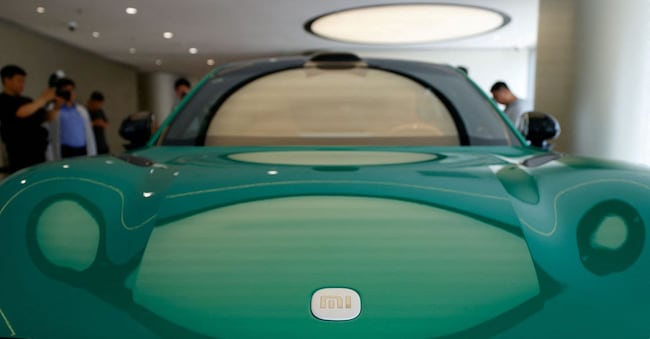
.The most dynamic item, however, was electric vehicles and new AI initiatives: $2.9 billion (+234%), accounting for a fifth of total revenues. Deliveries reached 81,300 units (+198%), with the YU7, a premium suv launched in June, recording 240,000 orders in 18 hours. Operating losses were reduced to USD 41 million, with gross margins rising to 26.4%. According to Daiwa, the break-even could arrive by the end of 2025.


